
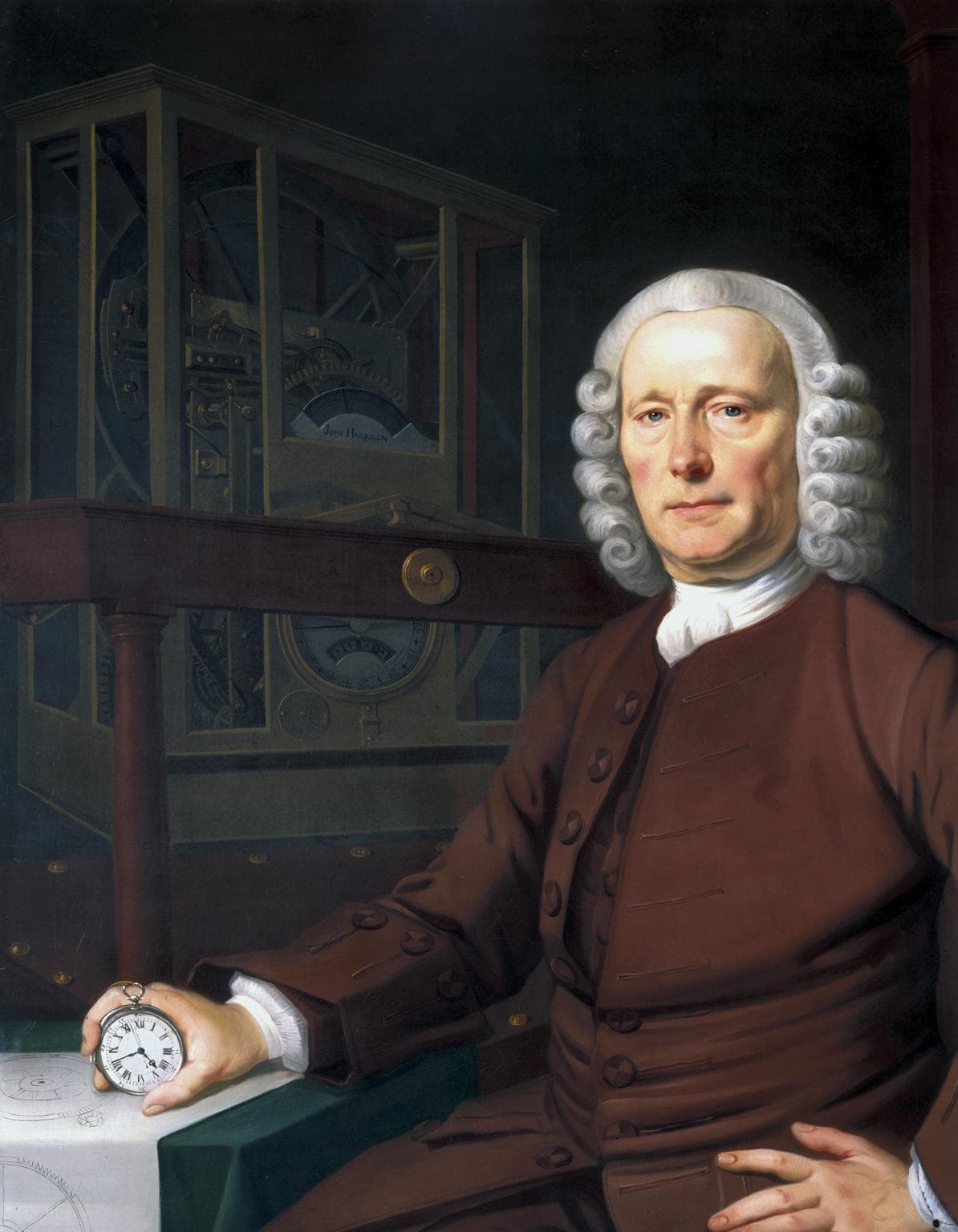
The Greatest Horologists Of Their Time: John Harrison (1693-1766)
In this occasional series, we will explore the life and achievements of the greatest and most respected horologists of their time. This feature will focus on John Harrison, marking the 250th anniversary of his death. He was an extraordinary English carpenter and clockmaker who invented the marine chronometer, a device for solving the problem of how to calculate longitude while at sea.
In the long arc of horological history, certain figures stand apart not merely for their craftsmanship, but for fundamentally altering humanity’s relationship with time itself. John Harrison belongs emphatically in this rarefied category. A self-taught English carpenter turned clockmaker, Harrison solved one of the greatest scientific challenges of the 18th century, namely, how to determine longitude at sea. In doing so, he did not just refine timekeeping, he reshaped navigation, trade, and the very map of the world.
Two hundred and fifty years after his death in March 1776, Harrison’s legacy remains as precise and enduring as the marine chronometers he pioneered.
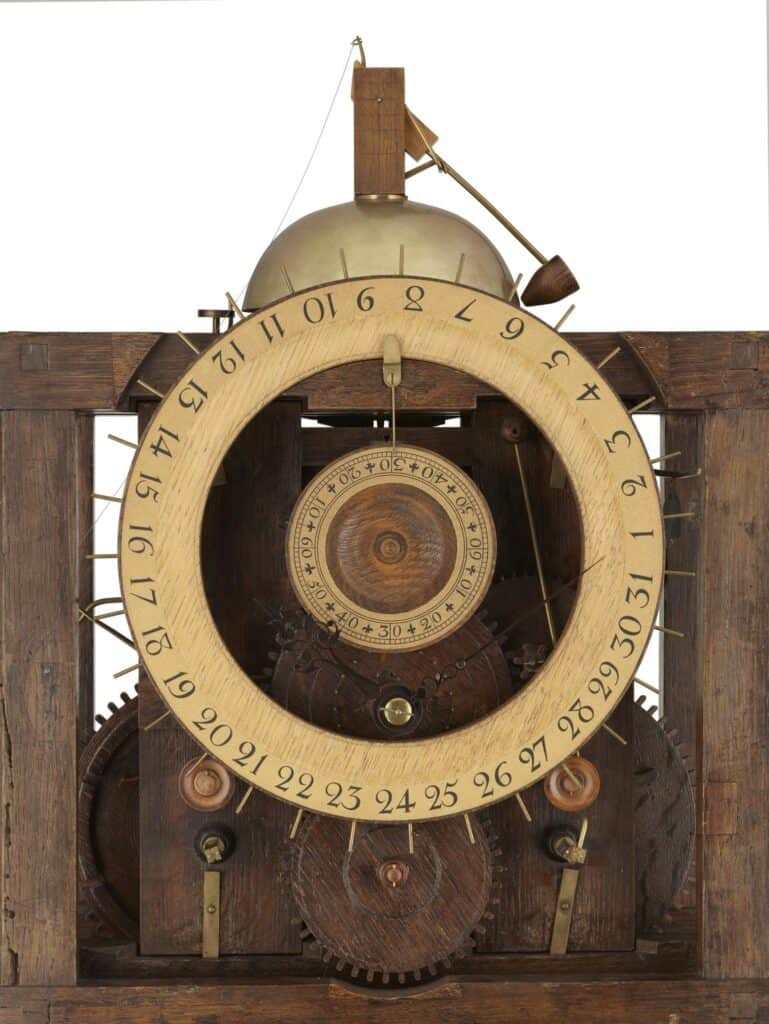
A Radical Approach to Precision
Harrison was not formally trained in horology, and perhaps that was his greatest advantage. Unburdened by convention, he approached the challenge with ingenuity and persistence.
His early longcase clocks already demonstrated extraordinary precision, incorporating innovations such as:
- The use of lignum vitae, a self-lubricating wood, to reduce friction
- The ‘grasshopper escapement’, a near-frictionless mechanism that required no oil
- Temperature-compensating pendulums to maintain consistency
But it was at sea that true innovation was required.
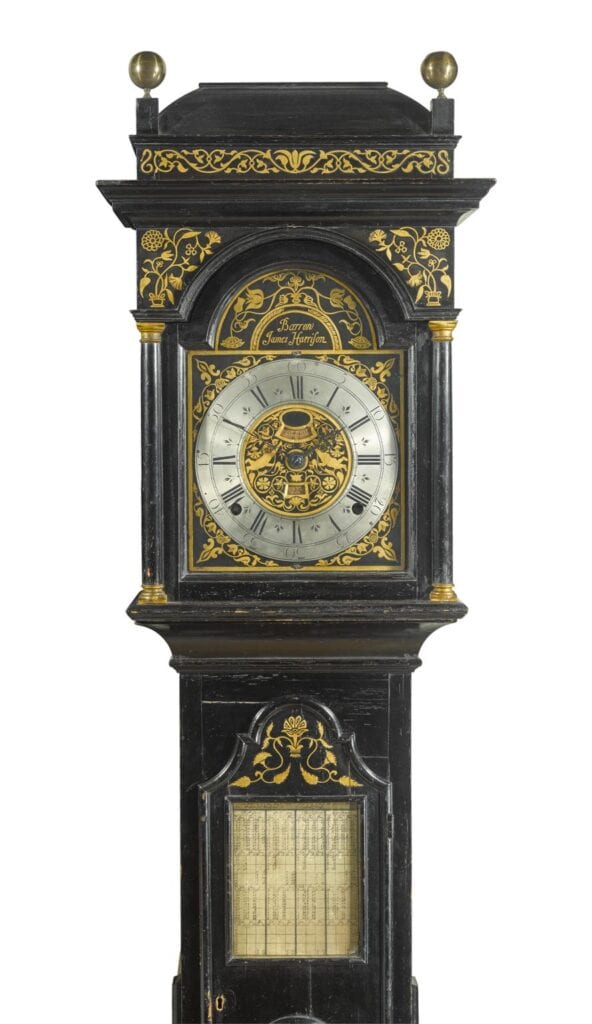
John Harrison and his younger brother James made three precision longcase clocks between the years 1725 and 1728. The above fine example is the third and has the grid-iron pendulum developed by Harrison around this time. All three clocks include this type of pendulum, although it is only this clock that was fitted with the grid-iron at the time the clock was made. The equation of time calculation on the door of the clock is said to be in the hand of John Harrison himself.
The Longitude Problem: Time as Survival
By the early 1700s, determining latitude at sea was relatively straightforward. Longitude, however, remained elusive, and deadly, as for every second you were out in your calculations, you ended up 4 miles off course. Miscalculations led to shipwrecks, (in particular the significant loss of life as a result of the 1707 naval disaster off the Isles of Scilly), lost cargo, and thousands of lives claimed by navigational error. The British government’s response was the Longitude Act of 1714, offering a vast reward for a practical solution.
The principle, in hindsight, seems simple, if a sailor knew the precise time at a fixed reference point (such as Greenwich) and compared it with local solar time, the difference could be converted into longitude. The difficulty lay in building a clock that could keep accurate time aboard a ship, amid temperature fluctuations, humidity, and constant motion.
This was the problem John Harrison set out to solve.
The Marine Timekeepers: H1 to H5
Harrison’s solution evolved across four groundbreaking timepieces, each more refined than the last.
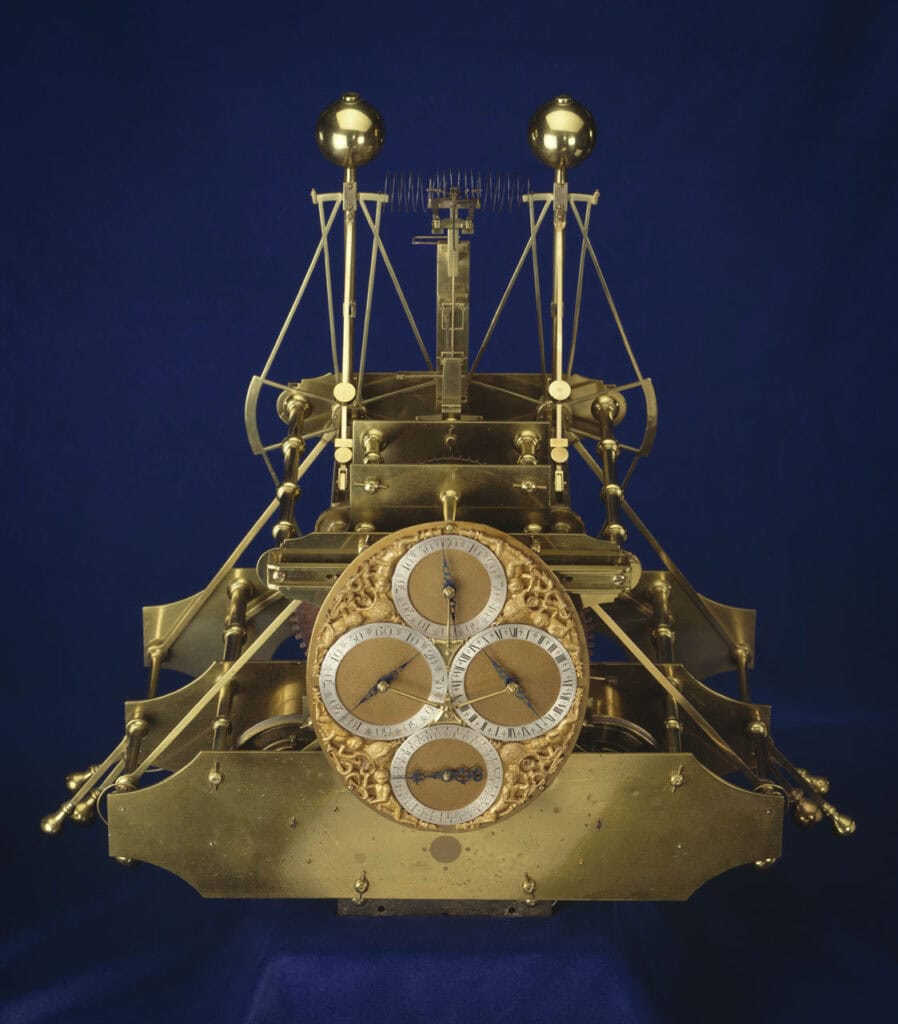
H1 (1730-1735) was unlike any clock before it, large, complex, and designed to counteract the motion of a ship using a system of interconnected balances. It proved remarkably accurate during sea trials, earning Harrison recognition, but not yet the full prize.
H2 and H3 followed, each incorporating further refinements. Harrison laboured over H3 for nearly two decades, introducing the bimetallic strip for temperature compensation and caged roller bearings, innovations that would echo through horology for centuries.
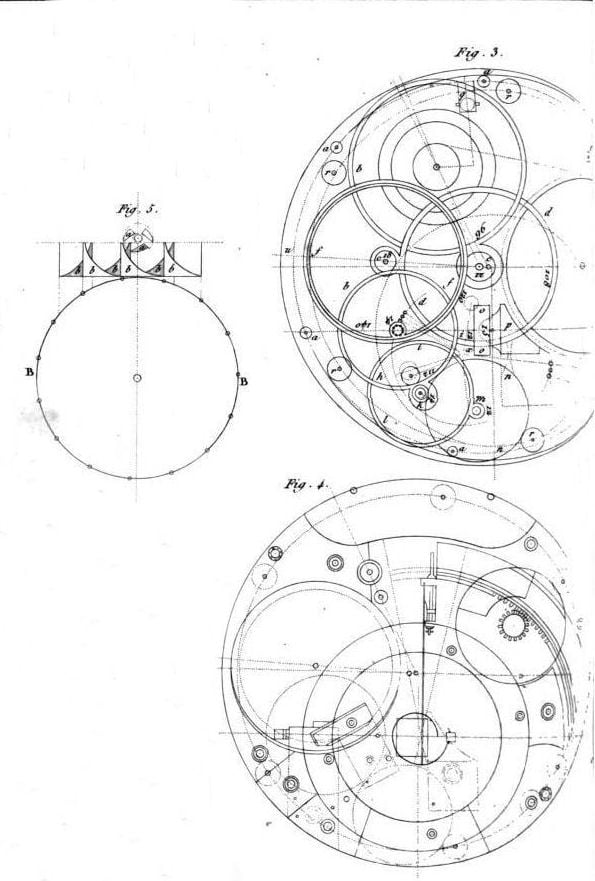
Yet it was H4 (1759) that changed everything. This was based on the watch Harrison commissioned John Jefferys to make based on his design. Harrison asked Jefferys to use different metals to compensate for temperature and a radically new type of balance. It worked so well that it became the prototype for H4. This is the watch Harrison is holding in his portrait.
Compact and resembling an oversized pocket watch, H4 abandoned the large-scale mechanical approach of its predecessors in favour of elegance and miniaturisation. During a trial voyage to Jamaica, it lost just seconds over several weeks, far exceeding the requirements for determining longitude.
Harrison had, in effect, created the first true marine chronometer.
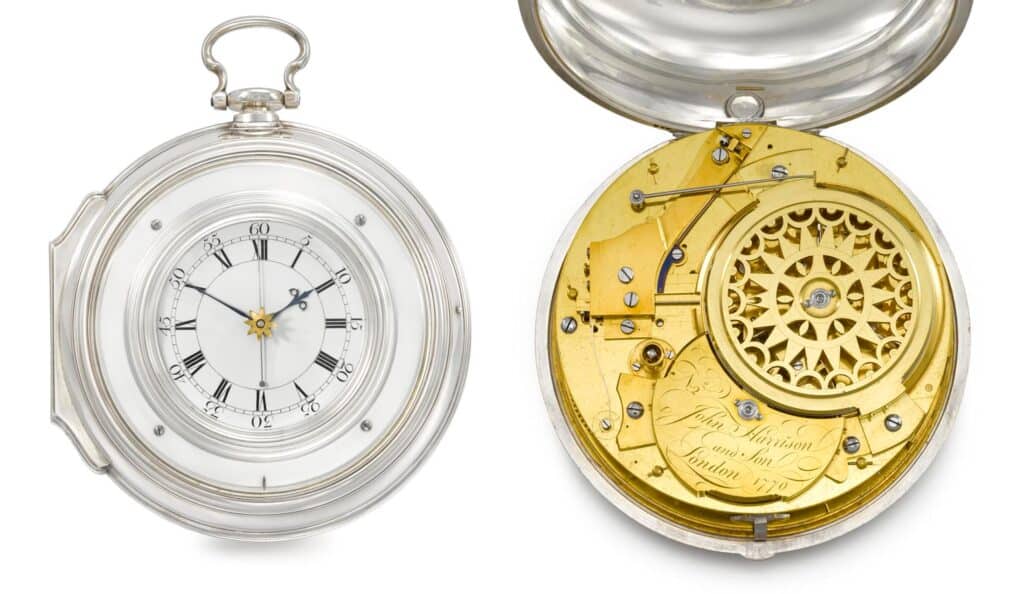
Harrison’s final chronometer was H5, often referred to as his masterpiece. This timekeeper is almost identical to that of his prize-winning longitude watch, H4. It was the fifth and last timekeeper that he produced as part of the ‘Longitude Reward’, and was completed in 1770 when he was 77. It was personally tested by King George III at his observatory in Kew. Over a 10-week period it lost just 5 seconds, and this timekeeper helped him secure the last part of his Longitude prize-money.
Recognition Hard Won
Despite his success, Harrison’s path to recognition was fraught with frustration. The Board of Longitude, tasked with awarding the prize, remained sceptical and demanded further tests and disclosures of his methods. Years passed in dispute, during which Harrison, by then an elderly man, fought tirelessly for acknowledgement. However, he spent 40-years solving the challenge to find a solution to the longitude problem and earned the £20,000 prize (£3-4 million today) in achieving his objective.
Legacy: Timekeeping Redefined
Harrison’s work laid the foundation for precision timekeeping at sea, enabling safer navigation and facilitating the expansion of global trade and exploration. The marine chronometer became an essential instrument aboard ships for more than a century, its lineage traceable directly to Harrison’s breakthroughs.
Beyond navigation, his innovations influenced:
- Temperature compensation systems still used in high-precision watchmaking
- Advances in escapement design
- The broader pursuit of accuracy that defines modern horology
Today, Harrison’s surviving timekeepers are preserved and celebrated, not merely as historical artefacts but as enduring symbols of ingenuity.
A Carpenter Who Changed the World
What makes John Harrison’s story so compelling is not only the brilliance of his invention, but the improbability of its origin. He was not a product of elite scientific circles, nor did he rely on established doctrine. Instead, he combined practical skill with relentless curiosity, pushing beyond accepted limits.
In an age when the measurement of time was still evolving, Harrison made it absolute, portable, reliable, and universal.
250 Years On
As we mark the 250th anniversary of his passing, Harrison’s contribution resonates more strongly than ever. In a world now governed by atomic clocks and satellite navigation, it is easy to overlook the fragile mechanical beginnings of precision timekeeping. Yet every accurate second we take for granted carries an echo of Harrison’s determination.
He did not simply build clocks. He gave humanity the means to find its place in the world.
And that is why John Harrison remains, unquestionably, one of the greatest horologists of their time if not all time.
Hero Image: John Harrison, oil on canvas, by Thomas King, 1767. Science Museum Group Collection © The Board of Trustees of the Science Museum