
Huguenot Masters of Their Time: Daniel Delander (1678-1733)
This occasional series explores the enduring legacy of Huguenot craftsmanship, and innovation, celebrating the artisans, who first came to London in the 17th century, and whose influence helped shape the art of fine watchmaking and precision engineering. From intricate techniques passed down through generations to bold contributions that transformed craftsmanship, this series shines a light on a remarkable community of makers whose work still resonates today.
London in the early 18th century was alive with invention, ambition, and artistry. Coffee houses and taverns buzzed with scientific debate, merchants prospered through expanding trade, and a new class of wealthy collectors sought objects that reflected refinement as much as utility. Into this world came a remarkable generation of immigrant craftsmen called the Huguenots. Among the finest of them was Daniel Delander (1678-1733).
Today, Delander is revered by collectors and historians for his extraordinary clocks, watches, and barometers. Yet his significance goes far beyond beautiful craftsmanship. He represents a pivotal moment when refugee artisans transformed London into the horological capital of Europe.
The Huguenot Influence
The story begins not in London, but in France. Following increasing religious persecution of Protestants during the reign of Louis XIV, thousands of Huguenots fled continental Europe in search of safety and opportunity. Many settled in London, particularly around Soho and Spitalfields, bringing with them exceptional skills in metalwork, engraving, enamelling, silk weaving, and clockmaking.
These émigré craftsmen would leave an indelible mark on English luxury industries. Delander was among the most talented. Believed to have been born in the Netherlands in 1678, to Huguenot parents, he established himself in London at precisely the moment English horology was entering its golden age. By the early 1700s, London had become a centre of scientific innovation and precision craftsmanship, led by legendary figures such as Thomas Tompion and George Graham.
Delander brought something different to this environment: continental elegance fused with English mechanical excellence.
A Distinctive Style
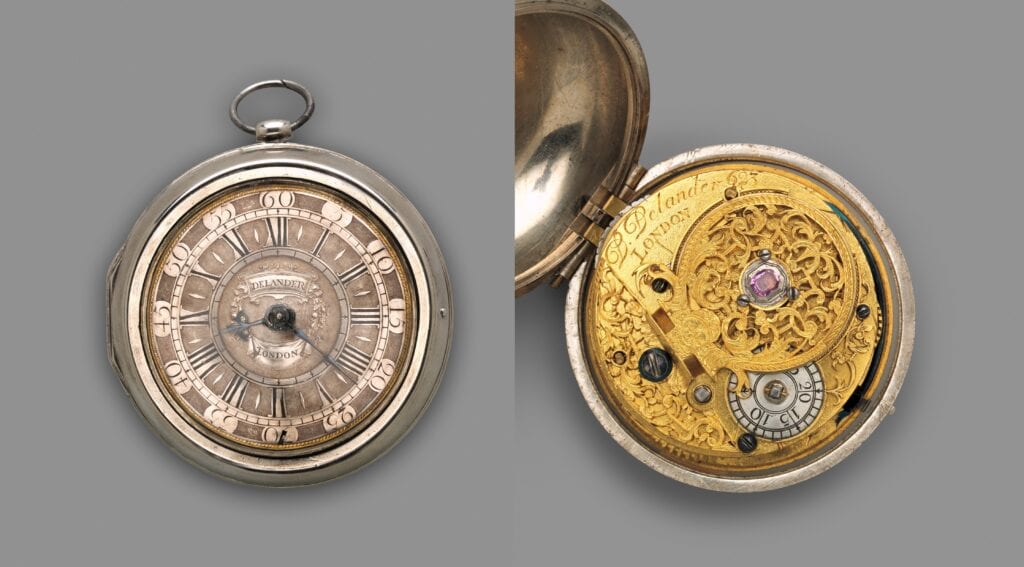
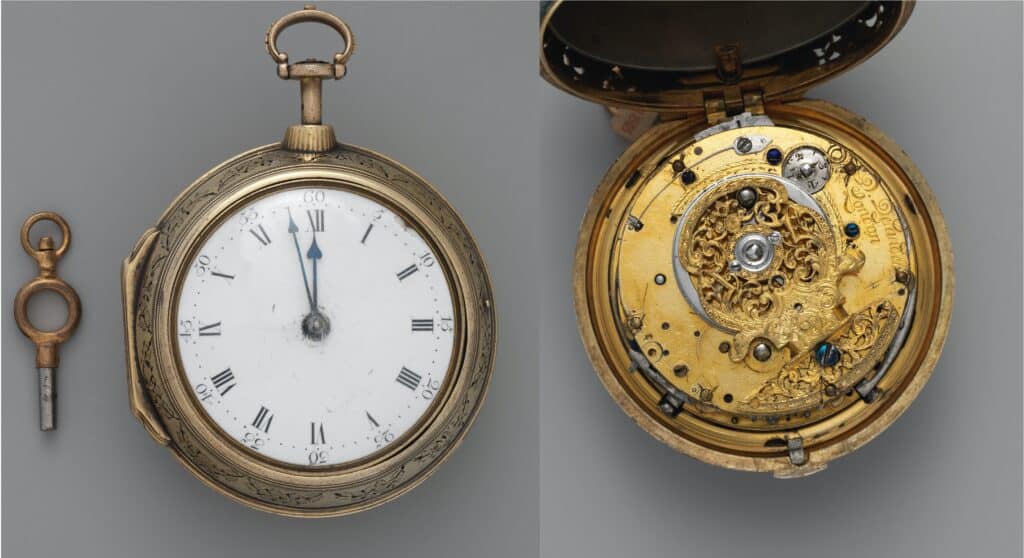
What makes a Delander timepiece immediately recognisable is its remarkable balance between technical sophistication and decorative artistry.
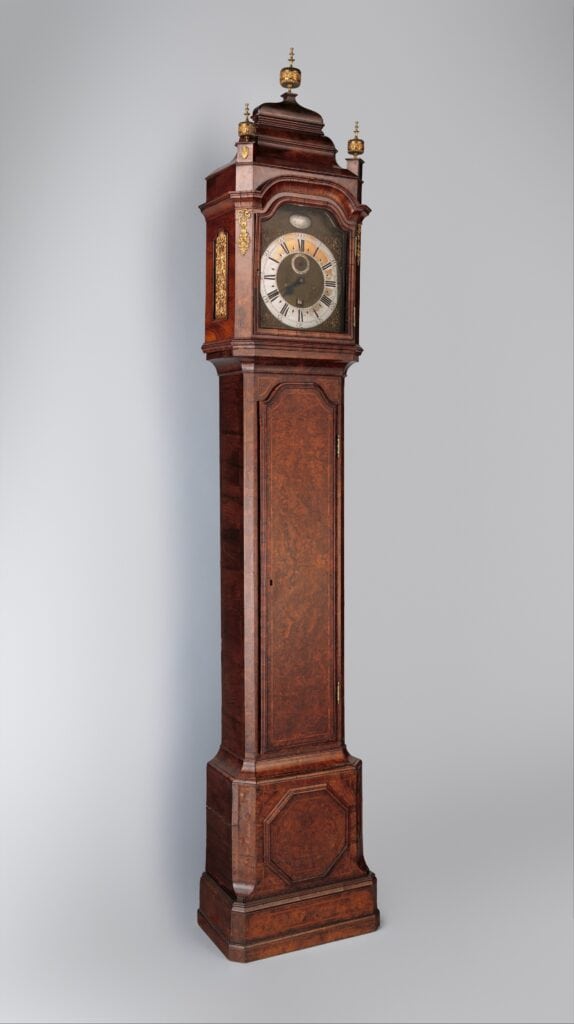
His longcase clocks frequently displayed exquisite marquetry, intricate brass inlay, and beautifully proportioned dials. His watches and table clocks demonstrated not only precision, but an unmistakable sense of theatricality. This was horology as art.
Unlike some English makers whose work prioritised austere scientific precision, Delander embraced ornamentation without sacrificing quality. His cases often reflected Dutch and French decorative influences, while the movements themselves adhered to the robust standards that had made English watchmaking internationally admired. The result was a uniquely Anglo-Huguenot aesthetic.
Collectors today particularly admire the elegance of his brass dial longcase clocks, many of which survive as masterpieces of early 18th century craftsmanship.
London: The Capital of Time
The timing of Delander’s success was no accident. Early Georgian London was becoming the epicentre of horological innovation. Wealth generated through trade and empire created enormous demand for luxury goods, while scientific advancement fuelled interest in precision timekeeping. Clockmakers were no longer simply artisans. They became cultural figures.
The finest workshops supplied royalty, aristocrats, merchants, and scientists alike. Horology sat at the intersection of art, engineering, astronomy, and status.
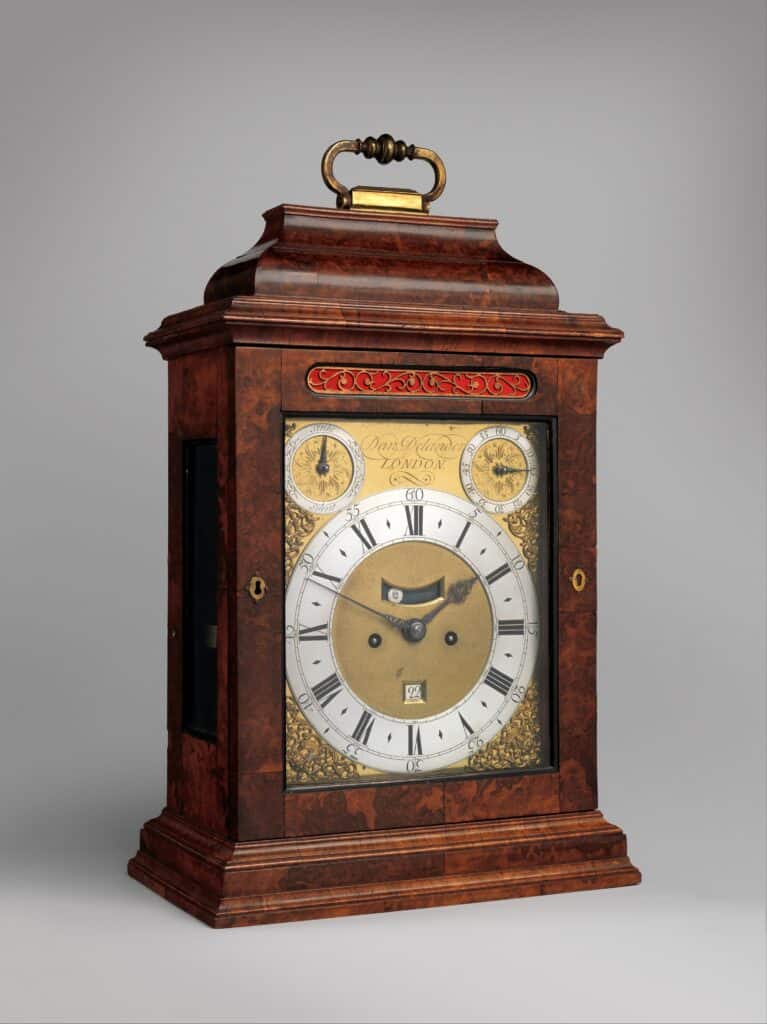
For immigrant craftsmen such as Delander, London offered opportunities unavailable elsewhere in Europe. Skill mattered more than birth. Reputation could elevate a foreign-born maker into the upper ranks of English craftsmanship.
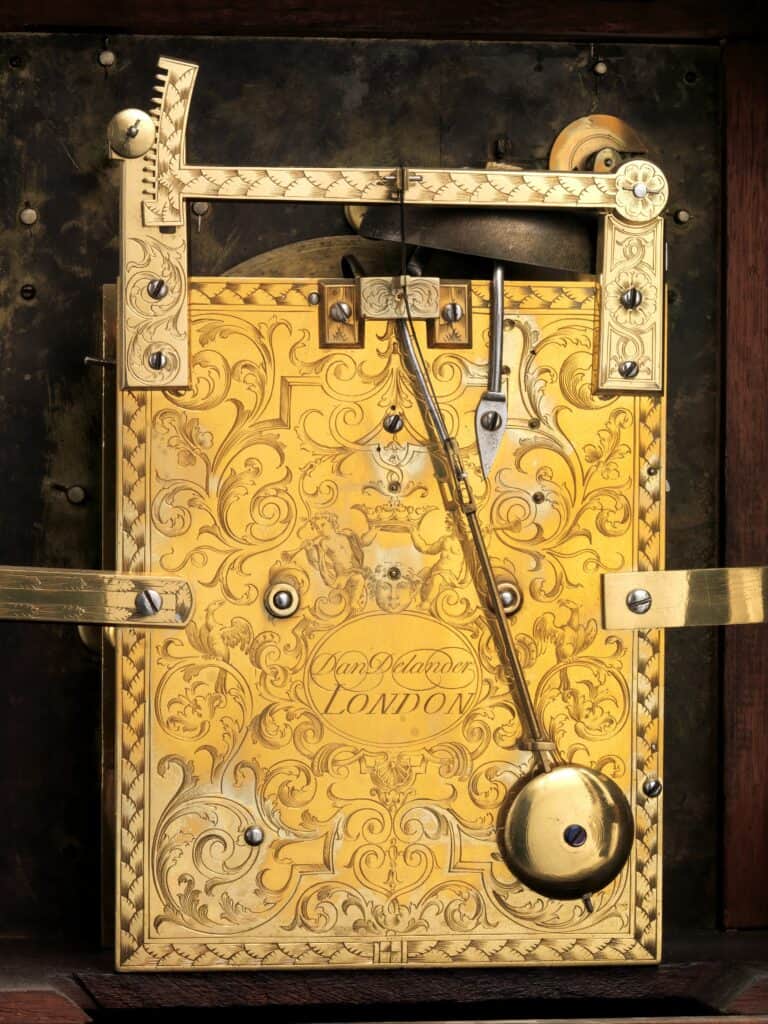
Delander’s clocks were admired not only for their beauty, but for their reliability and refinement, qualities essential in an age increasingly obsessed with accuracy and order.
The Legacy of the Huguenot Masters
It is impossible to understand the rise of English horology without acknowledging the Huguenot contribution. These refugee craftsmen reshaped the visual language of English decorative arts while simultaneously enriching technical expertise across multiple trades. Their influence could be seen everywhere, from silverware and furniture to silk and scientific instruments.
In clockmaking, they brought a distinctly continental sophistication that elevated London workshops to new artistic heights. Delander stands among the finest examples of this transformation.
His work embodied the cosmopolitan nature of early modern London: Dutch roots, French Protestant heritage, and English mechanical ingenuity united in objects of lasting beauty. More than three centuries later, his clocks still command admiration not merely as instruments of timekeeping, but as enduring symbols of resilience, craftsmanship, and cultural exchange.
The Huguenots did not simply assimilate into English horology. They helped define it.
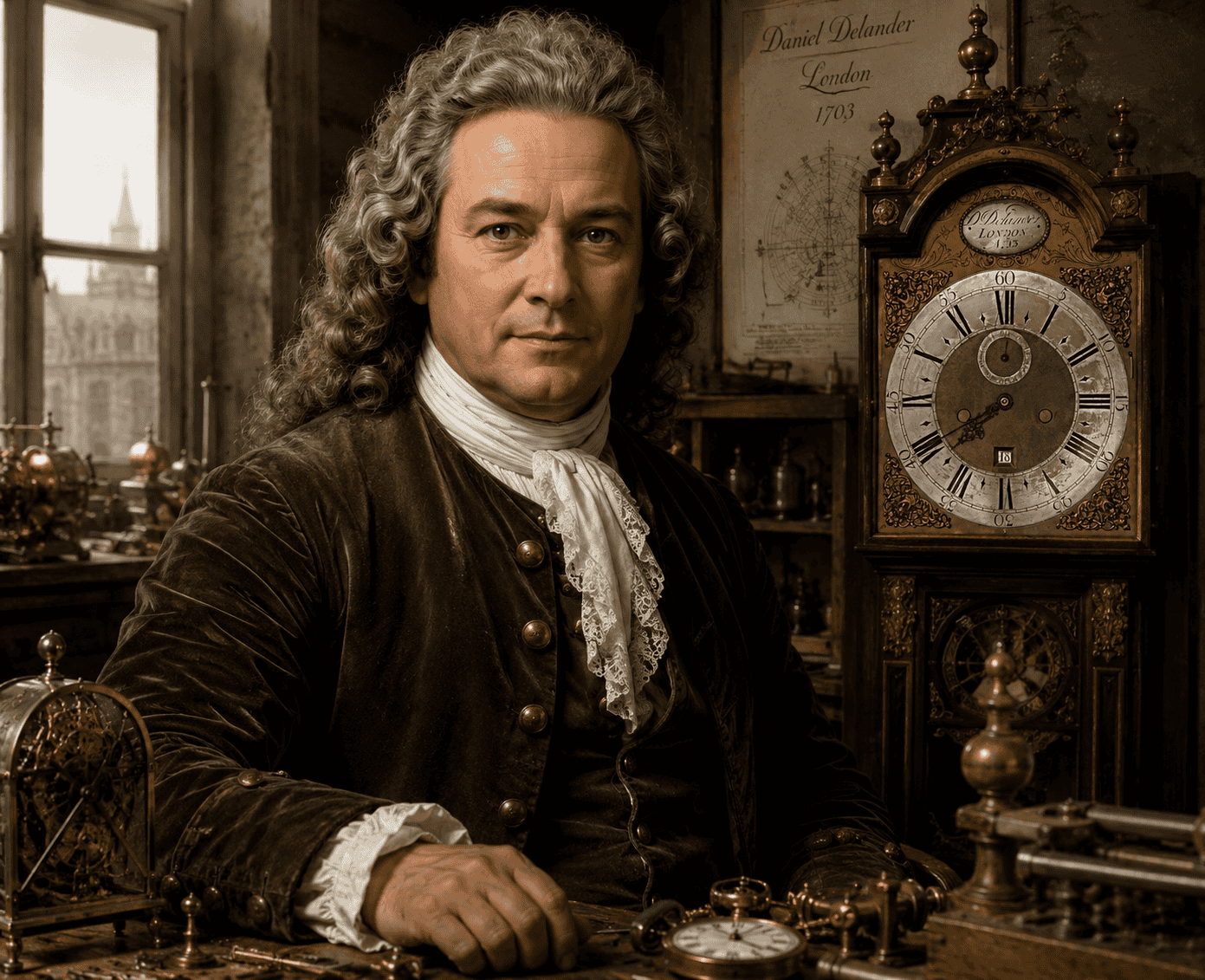
Hero Image: Daniel Delander (1678-1733) Artist Impression © MrWatchMaster