
Form Watches: When Time Took Shape
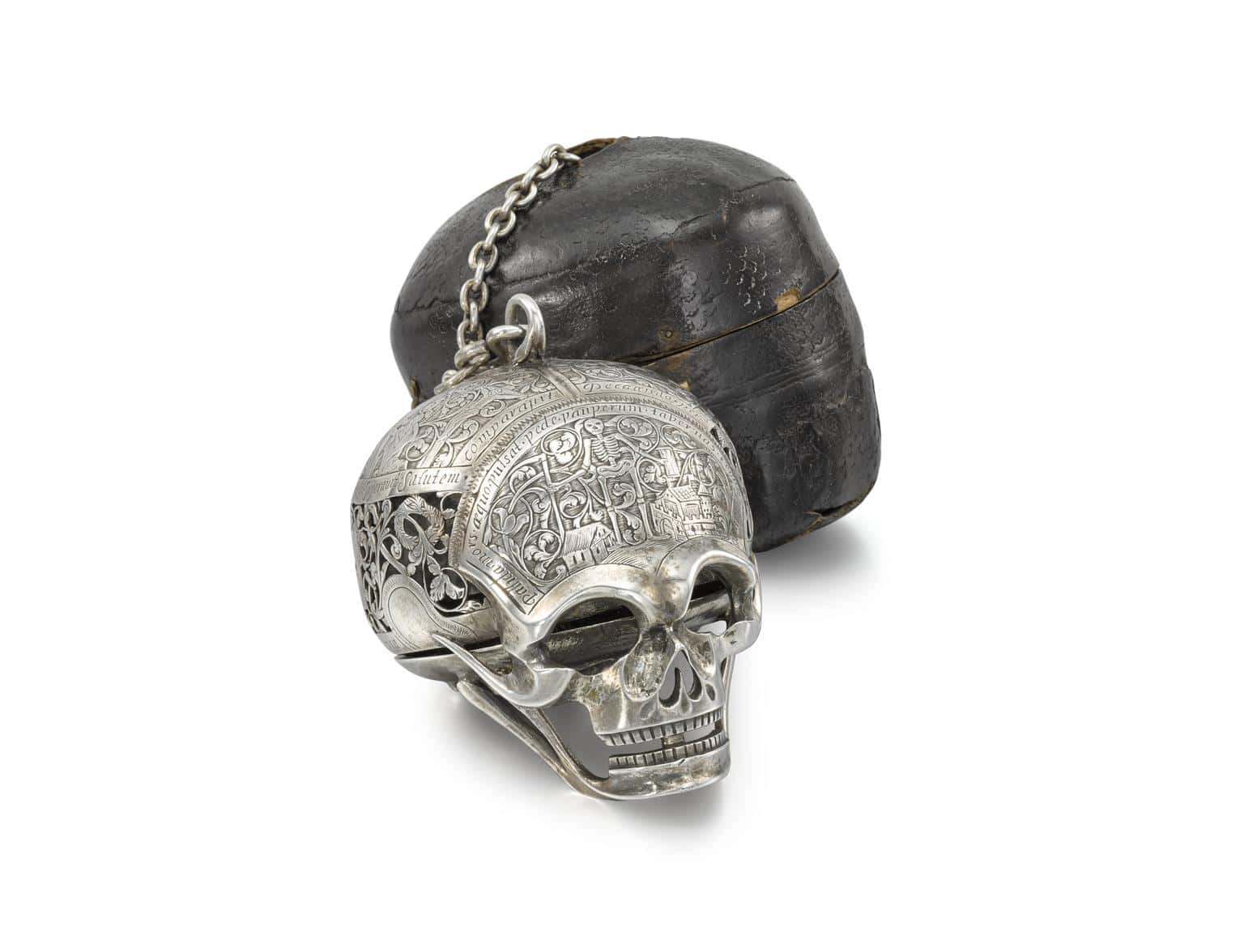
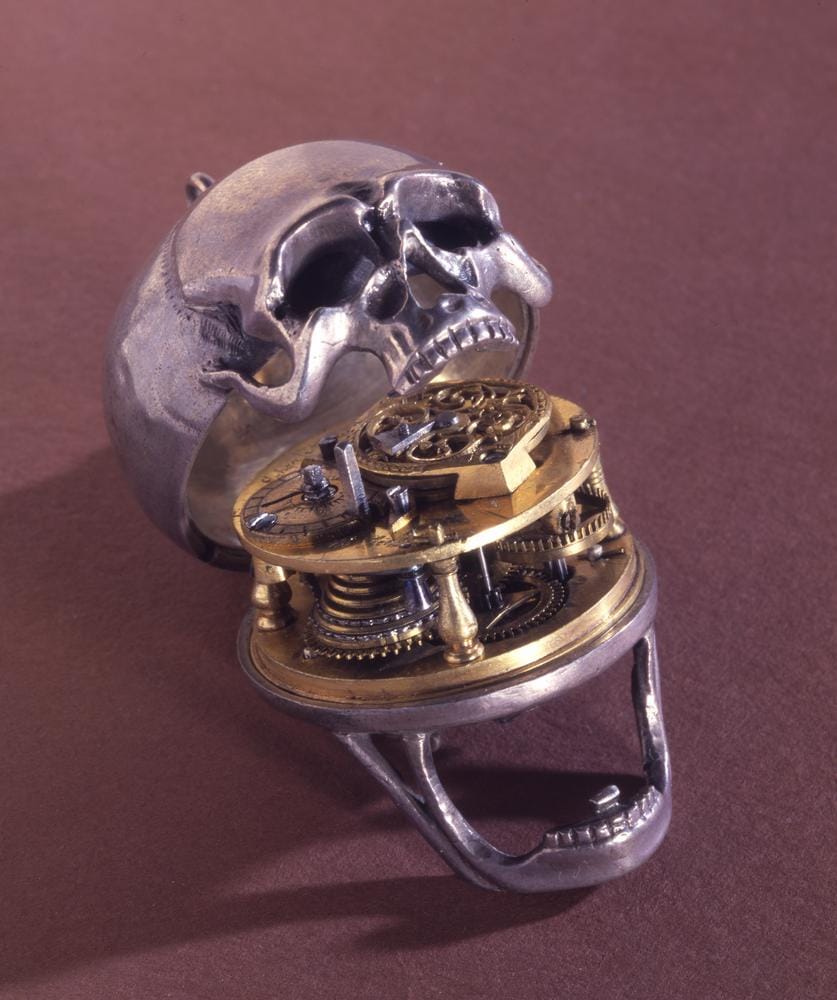
There is a particular watch in the Clockmakers’ Museum that I have come to know rather well. I see it each time I conduct my tours, and despite having explained its history countless times, I still find myself stopping in front of it. It is difficult not to. Unlike almost every other watch in the gallery, it does not immediately announce itself as a watch. It is a skull.
Not a skull engraved on a case, nor a discreet memento mori tucked beneath a lid, but an actual human skull rendered in silver, pierced and engraved, its jaw opening to reveal the mechanism within. Around it are religious and mythological scenes and Latin quotations; inside, the dial carries another unsettling image: Saturn swallowing his children. It is an object in which time, mortality, religion, mythology, craftsmanship and storytelling have been compressed into a single extraordinary form.
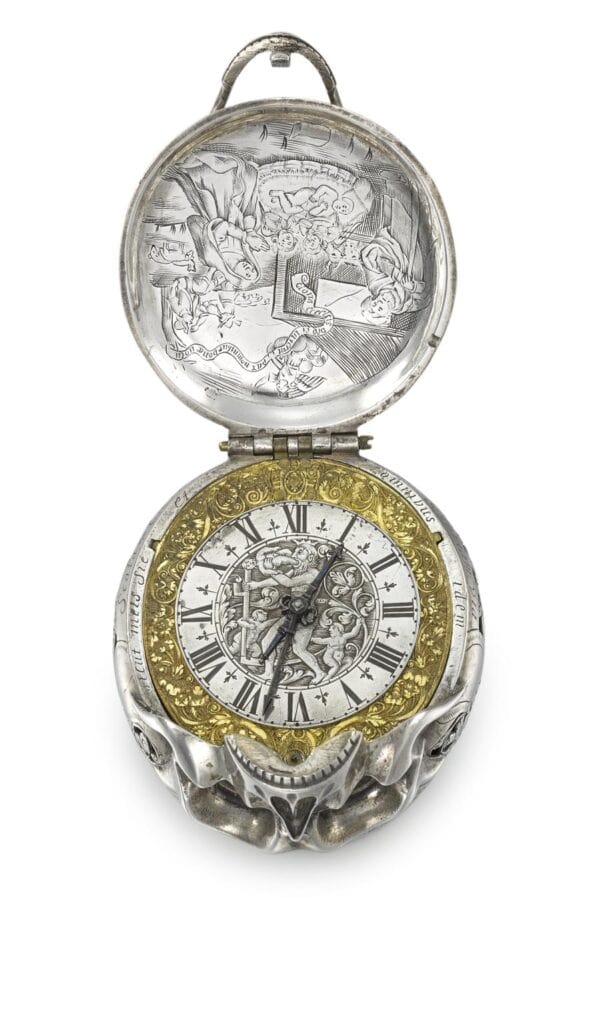
The watch is catalogued by the The Worshipful Company of Clockmakers as a memento mori watch in the form of a skull, made in Blois, south-west of Paris, France between 1780 and 1850. It is signed Moysant, Blois, although the museum notes that the movement is probably nineteenth-century, while the skull case, engraved all over with religious and mythological scenes as well as quotations in Latin from Horace, is late eighteenth, or early nineteenth-century. Most importantly, the famous story attached to it, that Mary, Queen of Scots gave it to Mary Seaton on her way to her execution, cannot be sustained. The museum records that there are actually three watches associated with this story, first recorded in 1822.
That revelation makes the object no less fascinating. Indeed, it makes it even more so, because the skull is not simply an unusual case. It belongs to a much larger and more intriguing story, the story of watches that abandoned the conventional round or oval case and took the form of something else entirely.
Flowers. Shells. Stars. Crosses. Animals. Insects. Fruit. Birds. Religious objects. Skulls.
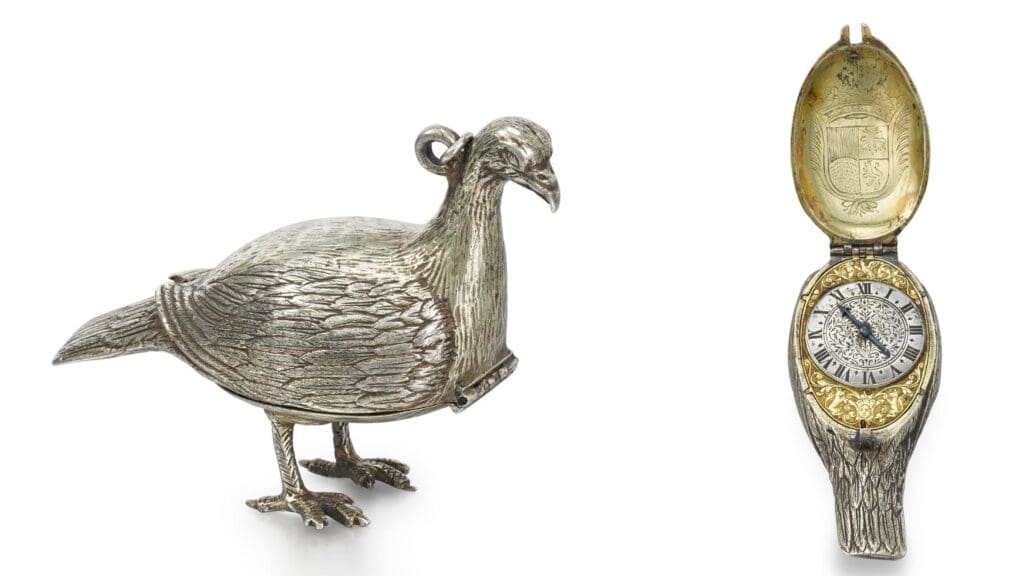
These are known as form watches, sometimes called shaped watches or fantasy-case watches, and they offer an extraordinary window into the world in which the earliest portable watches were made and worn.
Their history is not simply a history of watchmaking. It is a history of ideas.
Before the wrist, when a watch was an object of wonder
The first portable watches appeared in a world very different from our own. A watch was not yet an everyday instrument. It was expensive, technically fascinating and sufficiently novel to occupy a place somewhere between jewellery, scientific instrument and curiosity.
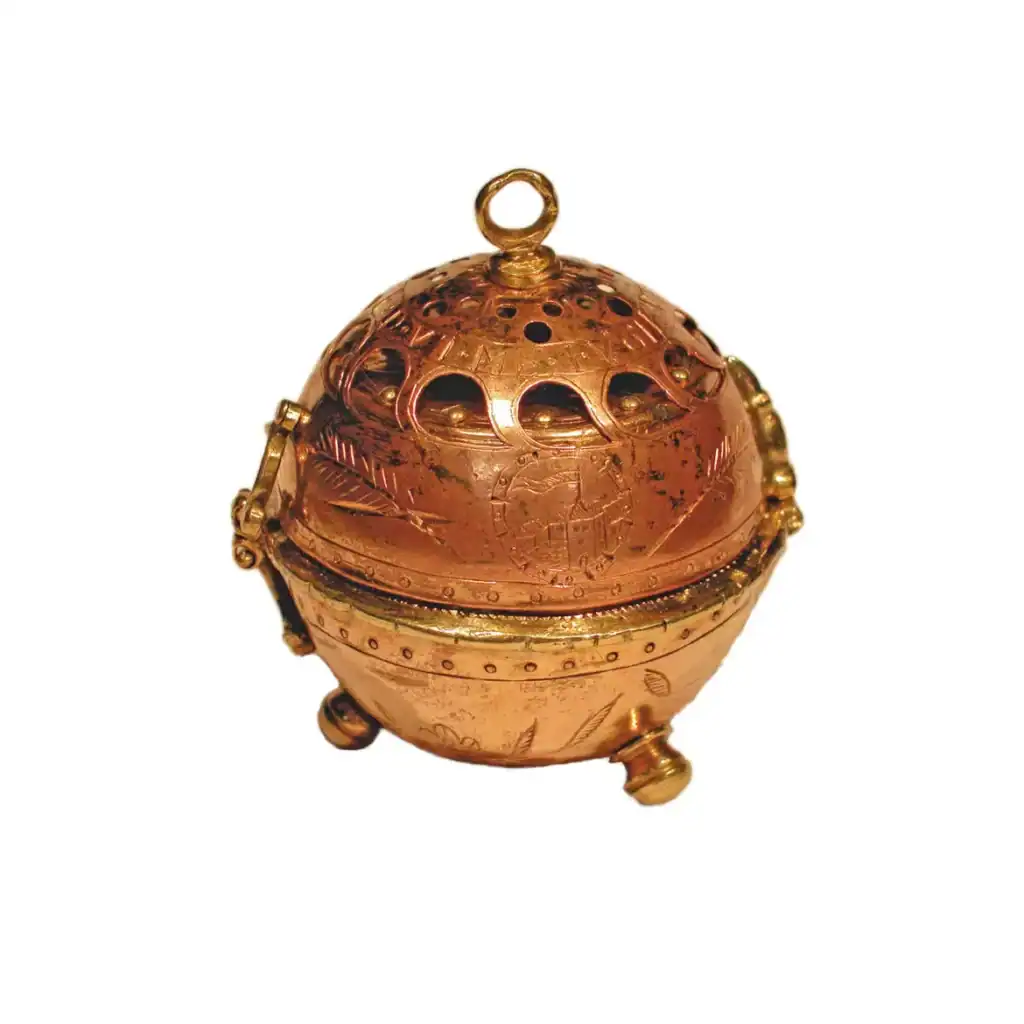
This is important when considering why anyone would make a watch in the shape of a flower or a shell. The obvious answer, because it looked attractive, is only part of the story. The watch below is thought to be the oldest portable watch made in Nuremberg, Germany by clockmaker and locksmith, Peter Henlein.
In the Renaissance and early modern periods, objects were expected to communicate. A jewel, a miniature, a box, a scientific instrument or a watch could carry meaning beyond its immediate function. The boundaries between art, craftsmanship, science and symbolism were considerably less rigid than they are today.
The early watch therefore entered a culture already fascinated by miniature objects, precious materials, symbolism and the collection of curiosities.
The research into form watches is surprisingly scattered. There is no single definitive history devoted to them; instead, their story has to be reconstructed from museum collections, auction catalogues, horological literature and studies of Renaissance jewellery, devotional objects, automata, enamel painting, goldsmithing and memento mori.
The result is almost like assembling a watch itself: the individual components are there, but someone has to put them together.
1580–1620: the age of invention
By the late sixteenth and early seventeenth centuries, watchmakers and goldsmiths were beginning to explore what could happen when the case ceased to be merely a container for the movement.
Southern Germany, particularly Augsburg and Nuremberg, was one of the great centres of this early horological culture. Blois and Paris would become particularly important in France, while Geneva and London developed their own distinctive traditions. These were not isolated centres. Ideas, craftsmen, techniques and designs travelled across Europe. The case was becoming an artistic surface in its own right.
Rock crystal, gold, silver, enamel and engraving transformed the watch into something that could be handled, examined and admired. A watch might have a miniature portrait, an engraved scene or elaborate decoration. And increasingly, the shape itself could become part of the message.
The Clockmakers’ Museum collection provides an extraordinary illustration of this transition. Among its early watches is a silver star-shaped verge watch made by David Ramsay in London around 1625 (below). The case is not merely decorated with stars: it is actually shaped as a six-pointed star. Each point carries a representation of an angel, while the surfaces of the case are engraved with scenes of the Nativity.
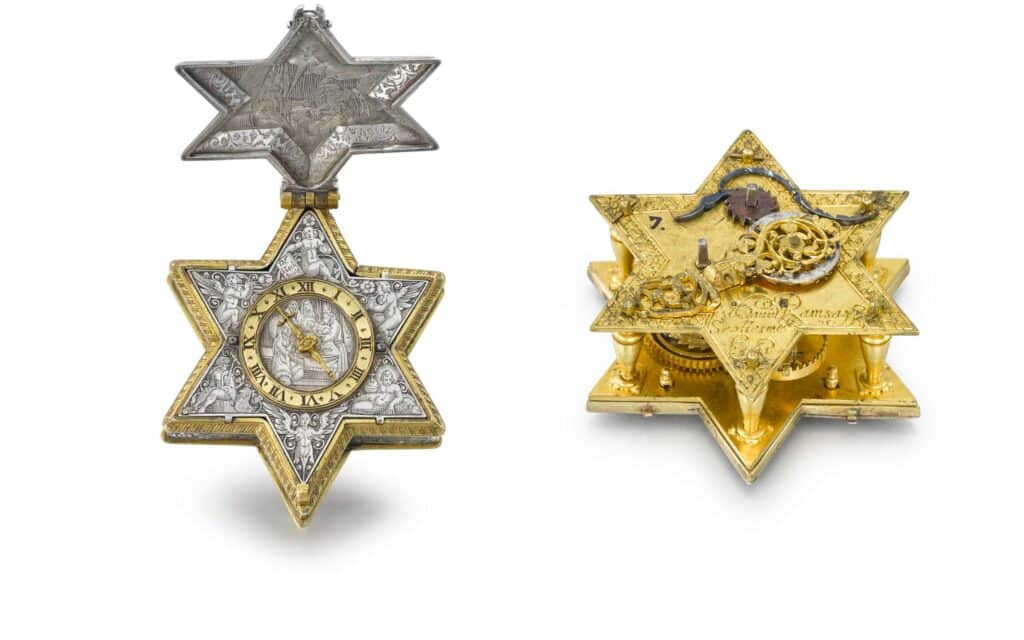
It is difficult to imagine a better demonstration of what a form watch could achieve. The star gives the watch its physical identity. The angels and Nativity give it its narrative. The mechanism gives it its purpose. And the whole object becomes a small, portable statement of faith.
Ramsay himself was no marginal figure. He was named in the Clockmakers’ Charter of 1631 as the first Master of the Clockmakers’ Company and had served James I as Chief Clockmaker. The watch therefore sits at an intriguing intersection between London horology, courtly culture and religious imagery. It also reminds us that form watches were not necessarily frivolous novelties. Sometimes the form was the message.
The religious watch
The seventeenth century was an age of extraordinary religious tension. The Reformation had fractured Western Christianity, and the religious divisions between Catholic and Protestant Europe were deeply embedded in everyday life. Objects reflected those divisions.
The cross, the Crucifixion, angels, saints, biblical scenes and devotional imagery were not simply decorative motifs. They carried enormous emotional and theological weight. A watch could therefore become a devotional object as well as an instrument for measuring time.
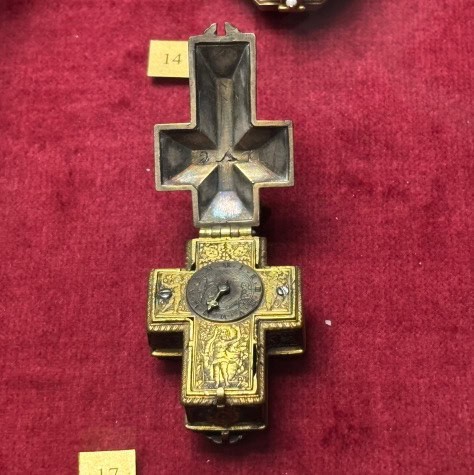
And time itself had profound religious significance. For a Christian, earthly life was temporary. Death was inevitable. Salvation was eternal. The passing of hours could consequently be understood not simply as the movement of a mechanism, but as the relentless movement towards mortality. This relationship between time and mortality becomes particularly significant in Protestant Europe.
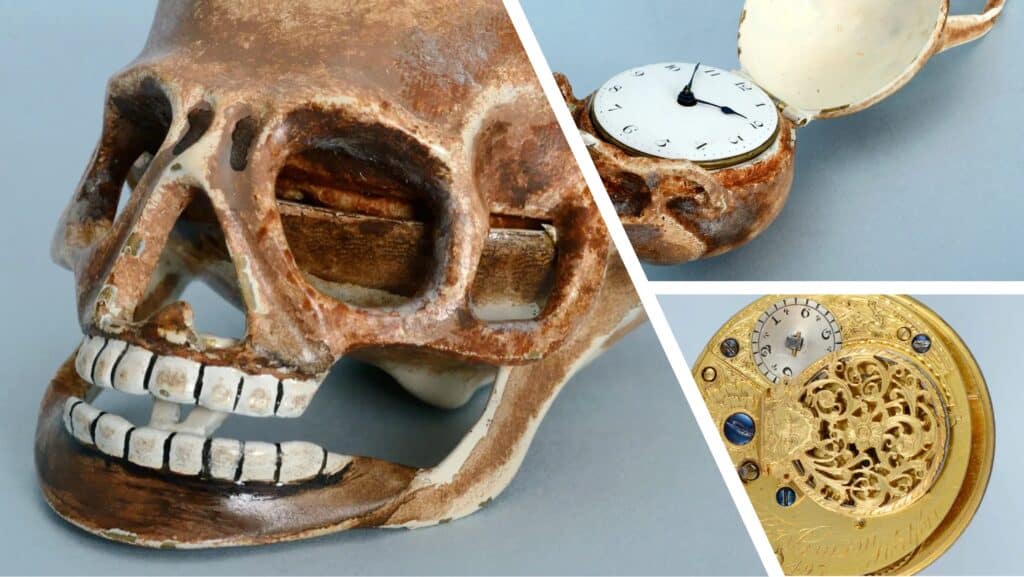
The Metropolitan Museum has noted the connection between skull watches and Calvinist ideas of time, pointing out that watches counted the hours in a culture where time itself had acquired particular religious significance. It identifies Geneva and Blois as especially important centres for skull watches, with the seventeenth-century Genevan tradition developing under Calvinist influence.
This helps explain why the form watch should not be viewed simply as an eccentricity. It was part of a culture in which the measurement of time could carry moral meaning.
The shell, the flower and the natural world (1630)
Walk through the early seventeenth-century form-watch landscape and another theme begins to emerge: nature. The watchmaker and goldsmith were looking at the world around them and translating it into miniature.
In the Clockmakers’ Museum is a silver watch made by Richard Masterson at the Royal Exchange in London around 1630. Its case is cast in the form of a cockle shell, with raised ridges radiating from the case joint. The watch itself is relatively restrained compared with some of its more extravagant contemporaries, but the concept is unmistakable, a precision mechanism has been placed inside the sculptural form of something found in nature.
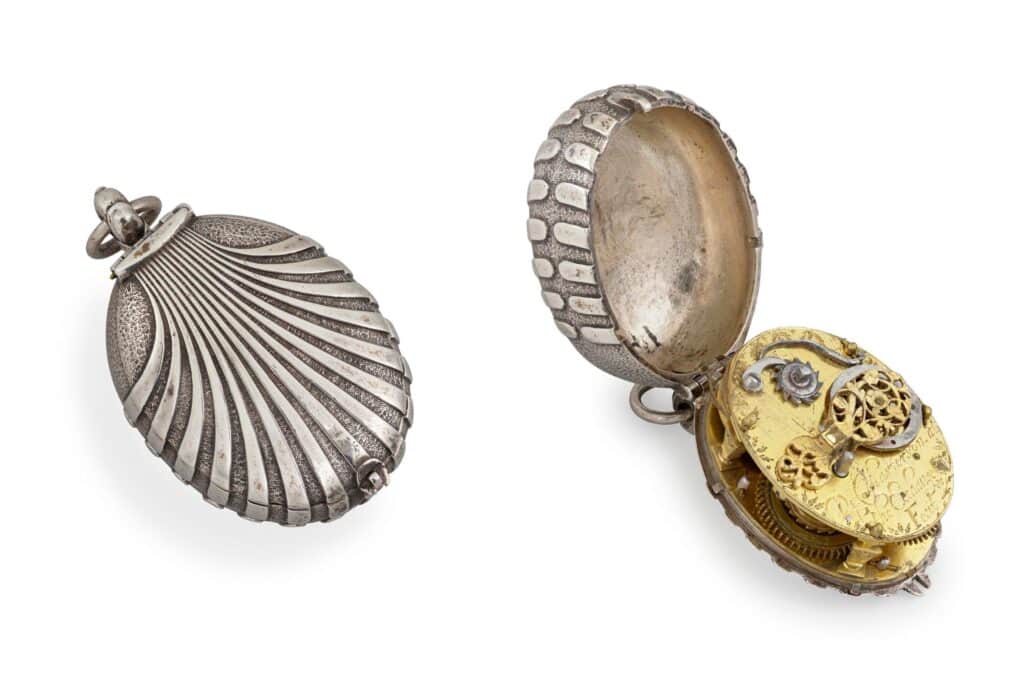
There is a pleasing irony here. The shell is organic, irregular and naturally formed. The movement inside is mechanical, ordered and artificial. The form watch brings the two together.
Masterson’s watch also illustrates the international nature of the craft. He worked at the Royal Exchange and was associated with the emerging London Clockmakers’ Company, becoming Master in 1642. An almost identical watch is preserved in the British Museum. The idea of turning nature into horology would become increasingly elaborate.
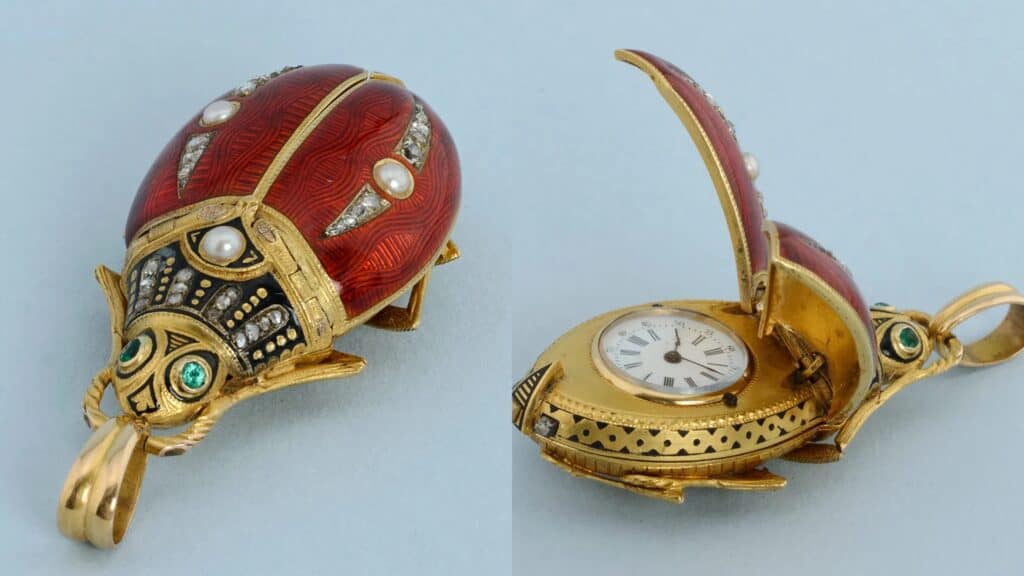
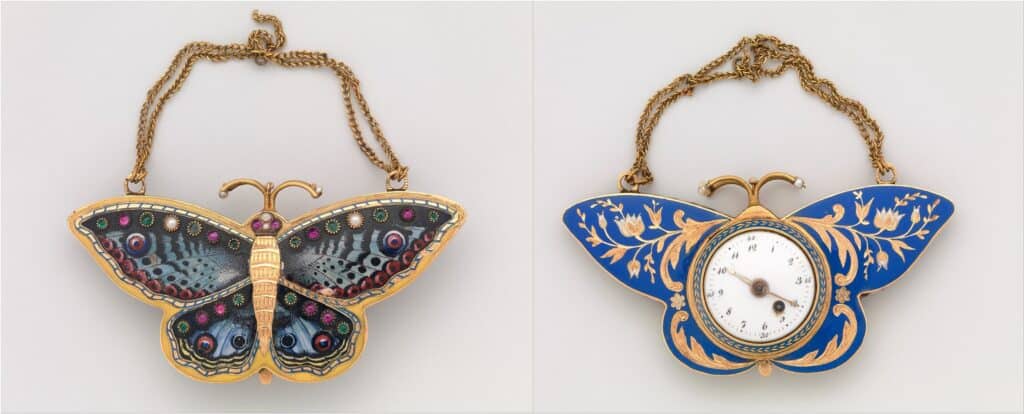
Flowers, fruit, birds and insects offered watchmakers and goldsmiths a vocabulary of shapes that was immediately recognisable to the wearer while offering endless opportunities for miniature craftsmanship.
The Tudor rose (1640)
If the shell represents nature, the Tudor rose represents something more overtly political. In the Clockmakers’ Museum is a silver-gilt watch made by William Clay around 1640, its case cast into the unmistakable pattern of a Tudor rose. The dial itself carries an engraved floral centre. Beneath this decorative exterior sits a verge movement, signed “William Clay London”.
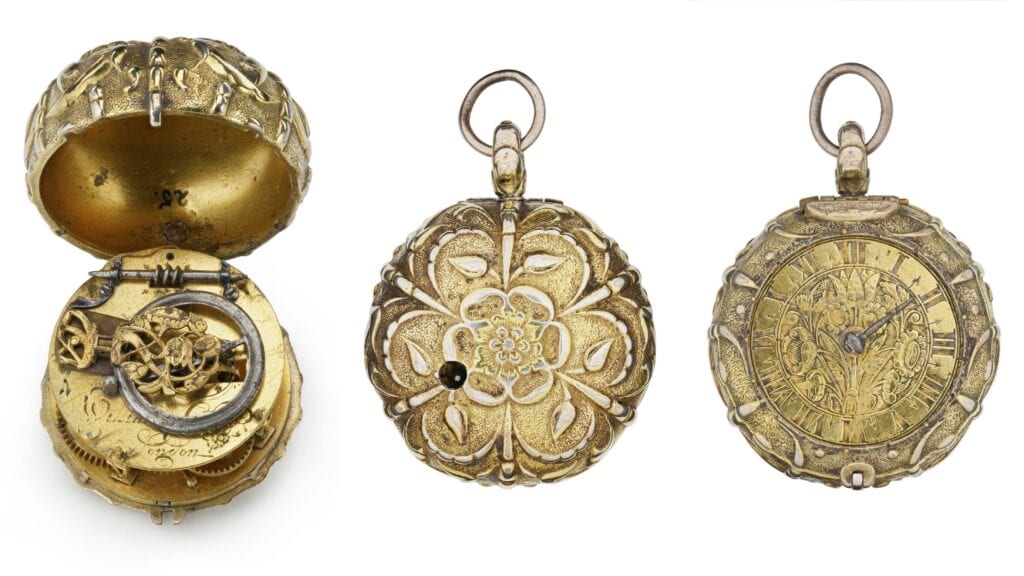
The choice of the Tudor rose is intriguing. The rose was one of the most recognisable symbols of the English monarchy, its association with the Tudor dynasty having become embedded in the visual language of the English state.
A watch in this form therefore does something that a conventional round watch could not. It carries an identity. The owner is not simply carrying a watch. They are carrying a symbol. And this is one of the most interesting things about form watches: their shapes could speak to different audiences.
A flower might suggest beauty. A shell might evoke nature. A star might carry religious meaning. A royal emblem might suggest allegiance. A skull could confront the owner with mortality.
The mechanism remained the same basic proposition, the measurement of time, but the case could determine how that proposition was understood.
Blois, Geneva and the Huguenot connection
As the seventeenth century progressed, France and Switzerland became particularly important to the story. Blois developed a formidable reputation for watchmaking, particularly among Huguenot craftsmen. Geneva, meanwhile, became another important centre of Protestant watchmaking and decorative case production.
This movement of people mattered. Religious conflict, migration and persecution were not abstract historical forces. They shaped the geography of European craftsmanship. Watchmakers moved. Skills moved. Designs moved. And traditions crossed borders.
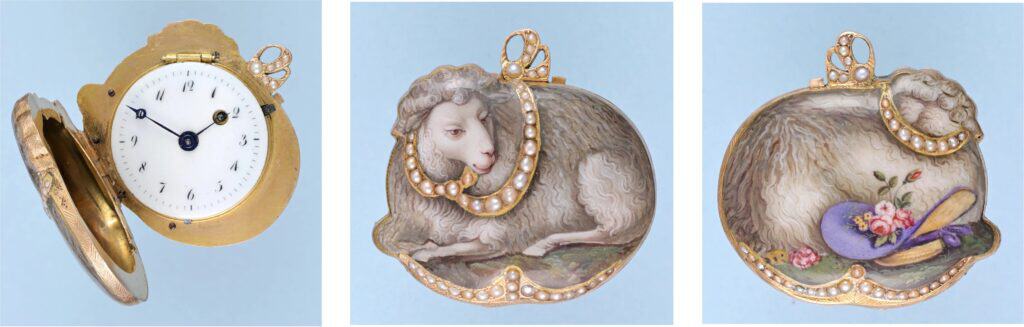
The research paper identifies Blois, Paris and Geneva alongside southern Germany and London as the major centres of form-watch production, with Switzerland becoming increasingly significant later in the eighteenth century. It also identifies the seventeenth century as the period of greatest artistic diversity.
One of the most remarkable aspects of this period is the sheer variety. The form watch becomes almost a catalogue of the imagination.
Flowers in silver and crystal
The Clockmakers’ Museum preserves another particularly beautiful example, a watch in the form of a Tudor rose, while its wider collection records form watches in the shape of a tulip, pomegranate, cockle shell, dove and other natural forms. The tulip is especially revealing.
A rock-crystal and silver watch in the form of a tulip is recorded in the collection as being made by Sermand around 1640. The tulip was not an arbitrary choice.
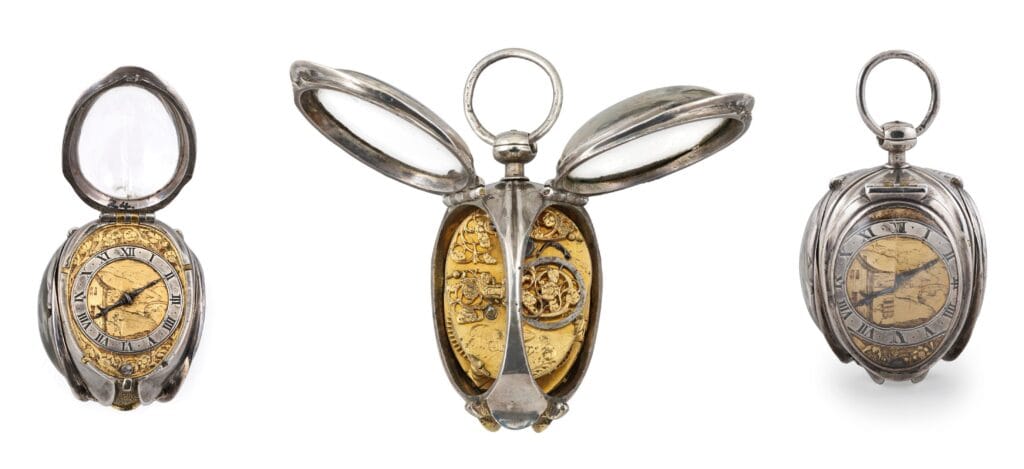
Flowers occupied an important place in the visual culture of early modern Europe, where botanical imagery could convey beauty, wealth, transience and symbolism. The tulip itself had become an object of fascination in seventeenth-century Europe, particularly in the Netherlands. Often referred to as ‘Tulip Mania’ which was a 17th-century event in Holland during the Dutch Golden Age when prices for rare tulip bulbs rose to extreme heights and then crashed suddenly in February 1637. It is widely considered the first recorded speculative economic bubble in history.
The flower therefore offered the perfect form for a watch. It was beautiful and fashionable, and, perhaps most importantly, it was temporary. Flowers bloom and wither, time passes, with the symbolism almost writing itself.
The pomegranate: abundance, fertility and the miniature
Around 1650, Edward East produced a silver watch in London in the form of a stylised pomegranate. At first glance it seems like another piece of ornamental whimsy. But the pomegranate is a symbol with a long and complicated history, appearing in religious, classical and artistic traditions associated with fertility, abundance, life and death.
East’s watch is particularly interesting because the case resembles either a pomegranate or a pumpkin. It contains a silver chapter ring and rotating calendar ring, while the centre of the dial carries an engraved landscape. Again, the watch becomes more than a container.
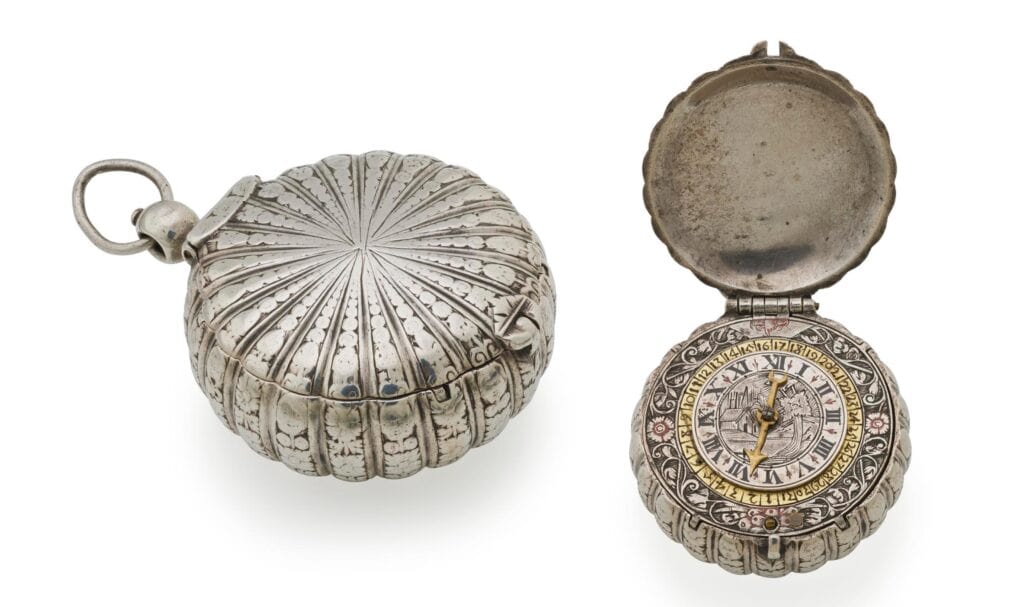
The case establishes the subject. The dial develops the imagery. The calendar introduces another dimension of time. The movement animates the entire object. This is perhaps the essence of the form watch: the case and the mechanism are no longer separate ideas. They become one piece of visual storytelling.
The skull arrives
And then there is the skull. Of all the forms adopted by watchmakers, none is more direct. The skull does not require explanation. It is death made visible.
The concept of memento mori, remember that you must die, was deeply embedded in European visual culture. Skulls, skeletons, hourglasses, extinguished candles and wilting flowers all served as reminders of mortality. The Science Museum itself describes these as recurring symbols of memento mori objects. The skull watch takes the idea to its logical conclusion.
What is a watch? A machine that tells you how much time has passed.
What is a skull? A reminder that your time will pass.
Put the two together and the symbolism becomes almost brutally concise.
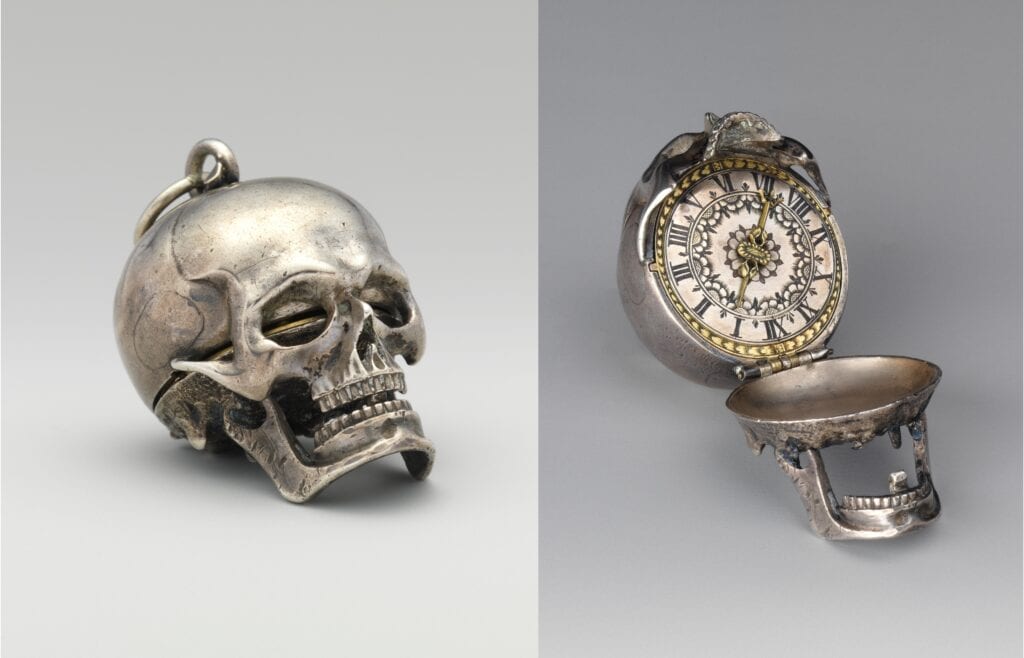
The Metropolitan Museum’s research on a Geneva skull watch (above) makes precisely this connection. It notes that the watch’s sundial motto refers to the shortness of human life and places the skull-watch tradition within the wider culture of seventeenth-century vanitas imagery. It also identifies Geneva and Blois as important centres for these watches.
In other words, the skull was not simply macabre. It was philosophical.
Vanitas was the art of knowing that time runs out
The seventeenth century was the great age of the vanitas. Dutch still-life painters filled their compositions with objects that represented the transience of existence: skulls, watches, hourglasses, extinguished candles, flowers, books, musical instruments and fruit.
Everything beautiful would decay, and everything accumulated would disappear. Everything alive would die. The watch fitted perfectly into this visual language. A watch was effectively a vanitas object with a moving mechanism. The hands and hours never stopped.
And the wearer could hear the movement working away inside the case. The form watch therefore allowed the owner to carry a miniature philosophical painting in their pocket. The skull watch made that philosophy impossible to ignore.
When the case became a theatre
The most ambitious form watches went further still. They could open, reveal, conceal and surprise. This fascination with mechanical revelation was closely related to the wider early modern taste for automata, mechanical curiosities and cabinets of wonder.
A seventeenth-century collector did not necessarily separate art from technology in the way we might today. A mechanical object could be beautiful precisely because it worked. A miniature could be fascinating because it moved. A watch could be both.
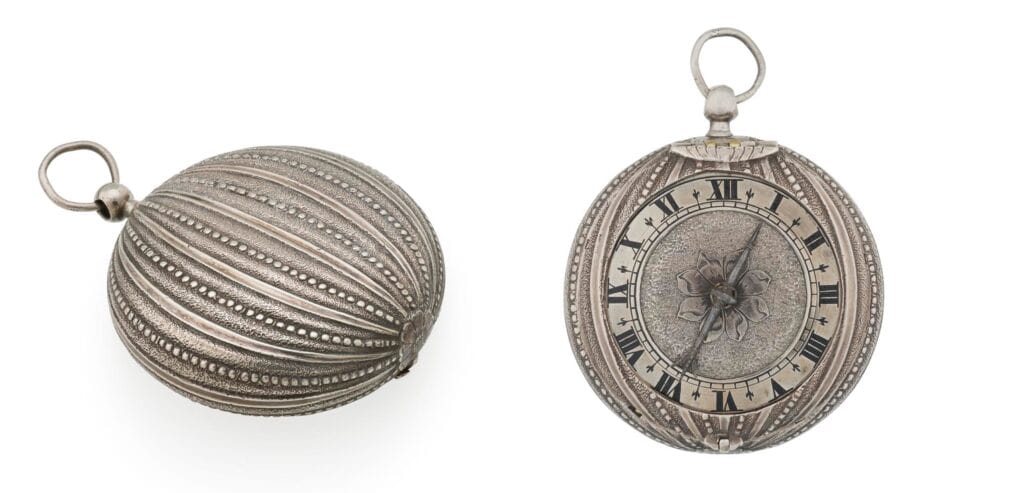
The form watch therefore belongs to the same intellectual world as the Wunderkammer, the cabinet of curiosities in which natural specimens, scientific instruments, artworks, antiquities and mechanical marvels were assembled together. It was a world fascinated by miniature versions of the universe. And the watchmaker could create one of those universes in the palm of a hand.
Where form meets craftsmanship
By the middle of the seventeenth century, London had become an increasingly important centre for watchmaking.
The Clockmakers’ Museum contains numerous examples that illustrate the development of English watchmaking, and its collection is particularly valuable because it allows decorative watches to be placed alongside the technical development of the London industry.
The form watch did not exist separately from the wider development of horology. The same makers were dealing with escapements, mainsprings, balance systems, cases, enamel and engraving. The technical and decorative crafts were intertwined.
This is particularly apparent in watches such as the Tudor rose and pomegranate examples. Their movements are recognisably serious pieces of seventeenth-century horology, while their cases belong to a much more imaginative visual world.
The result is a curious tension. Inside there is precision. Outside there is fantasy. That tension would define the form watch for much of its history.
From symbolism towards spectacle (1700-1750)
By the beginning of the eighteenth century, the great age of form-watch invention was beginning to change. The extraordinary diversity of the seventeenth century gradually gave way to a greater emphasis on refined decoration, enamel, precious stones and increasingly sophisticated movements.
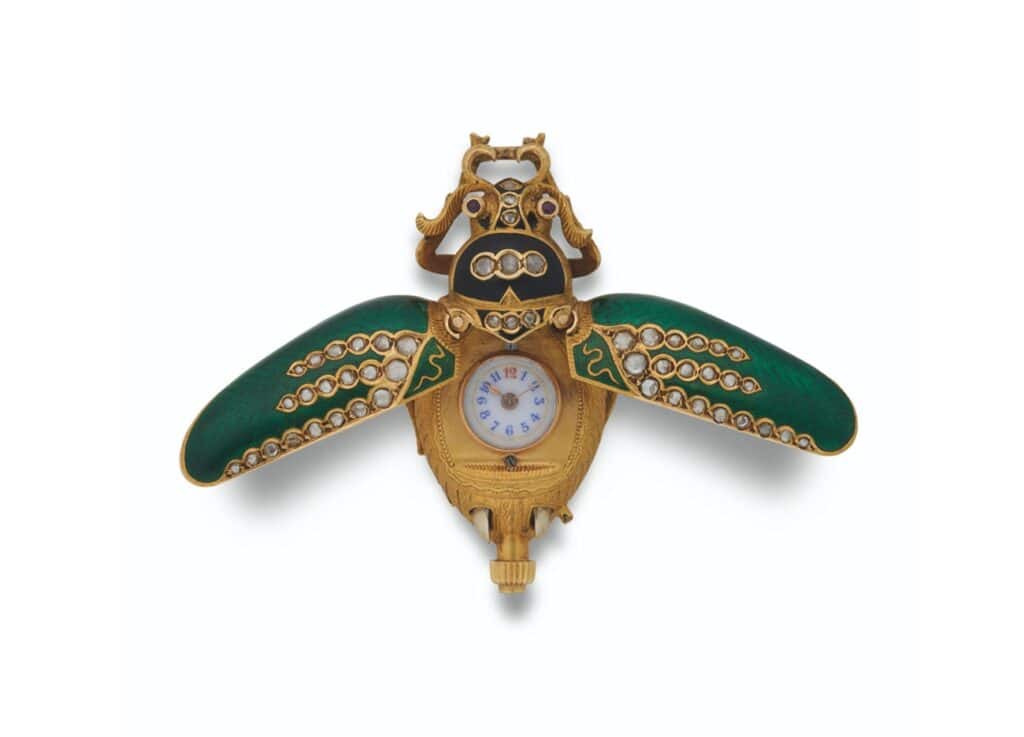
The watch itself was becoming more reliable, more accurate and more useful. As horology progressed, the movement began to demand more attention. The age of the watch as scientific instrument was approaching. Yet form did not disappear, it evolved. The extravagant case could now become a display of wealth and taste as much as a symbolic statement.
Enamel painting became particularly important in France, while Geneva developed an increasingly sophisticated decorative watch industry. The research literature identified in the original study includes scholarship on French enamel painting and the use of literary subjects as decoration on seventeenth-century watches. The watch was becoming a miniature gallery.
The great paradox of form watches
Perhaps the greatest mistake we can make when looking at these watches is to regard them aseccentric. They certainly are eccentric, but they are not random. Their forms emerged from the cultural environment in which they were made.
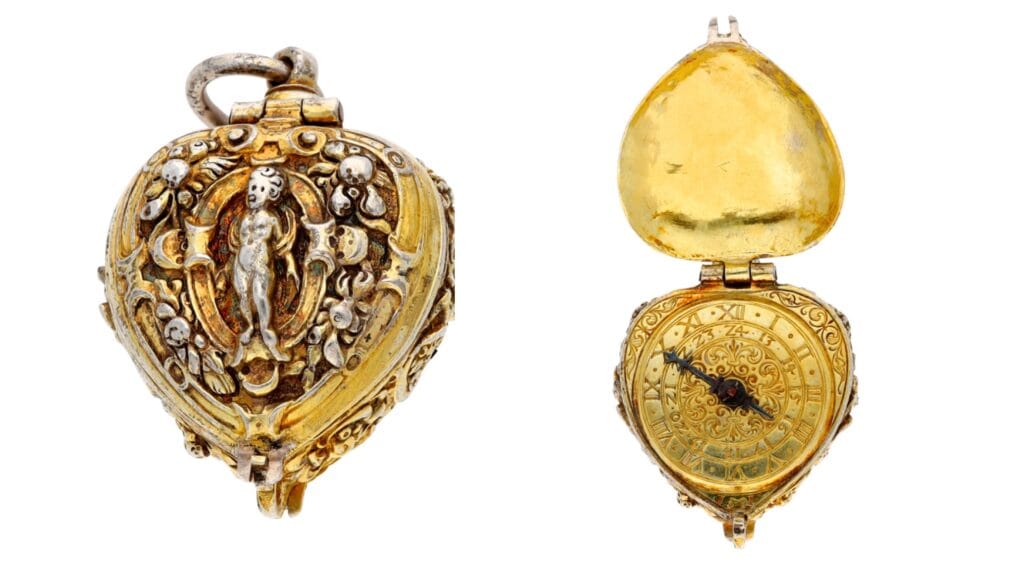
A star could be religious, a Tudor rose could be political, a flower could represent beauty and transience, a pomegranate could evoke abundance, fertility or the natural world, a shell could transform nature into ornament, a dove could carry religious associations, a skull could remind its owner that life is finite.
An elaborately decorated case could demonstrate wealth, education and access to the finest craftsmen. The watch was therefore a remarkably efficient cultural object. t could tell time, display wealth, express belief and demonstrate technical sophistication, all at once.
Why did form watches disappear?
The answer is not simply that fashions changed, horology changed. As watches became more accurate and useful, practicality increasingly mattered. The development of precision watchmaking encouraged forms that were easier to manufacture, protect and carry. The conventional round or oval watch had obvious advantages.
A circular movement naturally sits within a circular case, it is efficient and symmetrical. It is easy to read and comparatively easy to protect. The form watch did the opposite. It asked the watchmaker to fit a mechanical movement into an irregular container. That required additional ingenuity.
And once the watch became primarily an instrument rather than a curiosity, the eccentric case became less necessary, yet it never entirely disappeared.
The form watch today
The modern mechanical-watch world is, in some respects, experiencing a return to the same idea. Contemporary watchmakers once again understand that a watch can be more than a round case with a dial. The resurgence of sculptural cases, watches inspired by animals, architecture, mythology, jewellery and popular culture demonstrates that the desire to give time a physical identity has never completely vanished.
What has changed is the context. The seventeenth-century owner might have carried a skull because mortality was a daily religious and philosophical concern. Today, the wearer may choose an unusual watch because it expresses personality, humour, cultural knowledge or an appreciation of craftsmanship.
But the underlying idea remains surprisingly similar, a watch does not have to be invisible. It can say something.
A museum case becomes a window into a world
This is perhaps why I find myself returning to the skull watch whenever I conduct a tour at the Clockmakers’ Museum. At first glance, it is the obvious showstopper. People see the skull, they lean in to get a closer look. They smile, recoil or laugh, then they discover that it is a watch. Then they hear the story about Mary, Queen of Scots, and then, inevitably, comes the question:
Why would anyone make such a thing?
The answer takes us far beyond horology.
It takes us into Renaissance Europe and the seventeenth century; into religious conflict and Protestantism; into royal symbolism and court culture; into the world of the Huguenots; into cabinets of curiosity and the fascination with miniature objects; into the visual language of vanitas; into the history of goldsmithing, enamel and engraving; and ultimately into our enduring fascination with death and the passage of time.
The skull is simply the beginning. Once you start looking, the entire history of early watches begins to change shape.
A star becomes a Nativity scene, a flower becomes a meditation on transience, a rose becomes a statement of identity, a heart is an expression of love, a shell becomes a piece of nature carried in the pocket, a pomegranate becomes a miniature sculpture, a cross becomes a portable expression of faith, and a skull becomes time itself made visible.
Form follows meaning
The history of watches is often told as a story of technical progress. From verge to cylinder, from balance spring to improved regulation, from repeating mechanisms to precision chronometry, from pocket to wrist.
It is a perfectly valid story, but form watches offer another way of looking at the subject. They remind us that watches were once cultural objects before they became ubiquitous personal instruments. They tell us what their owners feared, admired, believed in and wanted to display.
They show us how closely the crafts of the watchmaker, goldsmith, engraver, enameller and sculptor were once intertwined, and they reveal something else that is easy to forget.
Time has never been merely technical. It is emotional, political, religious, philosophical and personal. The makers of these extraordinary watches understood that instinctively. They did not simply make machines to measure time, they gave time a face.
Sometimes it was a flower, a star. a royal rose, and sometimes, somewhat inevitably, it was a skull.
The watch in the Clockmakers’ Museum may not have belonged to Mary, Queen of Scots, and it may have been made centuries after her death, but perhaps that only makes its message more powerful. That’s because the object has survived precisely as a reminder of how we have always tried to make sense of time.
We measure it, decorate it, carry it, worship it, fear it, and eventually, it carries us to the same place as everyone who wore a watch before us.
Time passes. The form changes. The message remains.
Hero Image: ‘Memento mori’ watch in the form of a skull, known as the ‘Mary Queen of Scots’ watch. The Worshipful Company of Clockmakers/Clarissa Bruce © The Clockmakers’ Charity