
Vacheron Constantin Latest Series Shows The Art Of The Animal Kingdom In Miniature
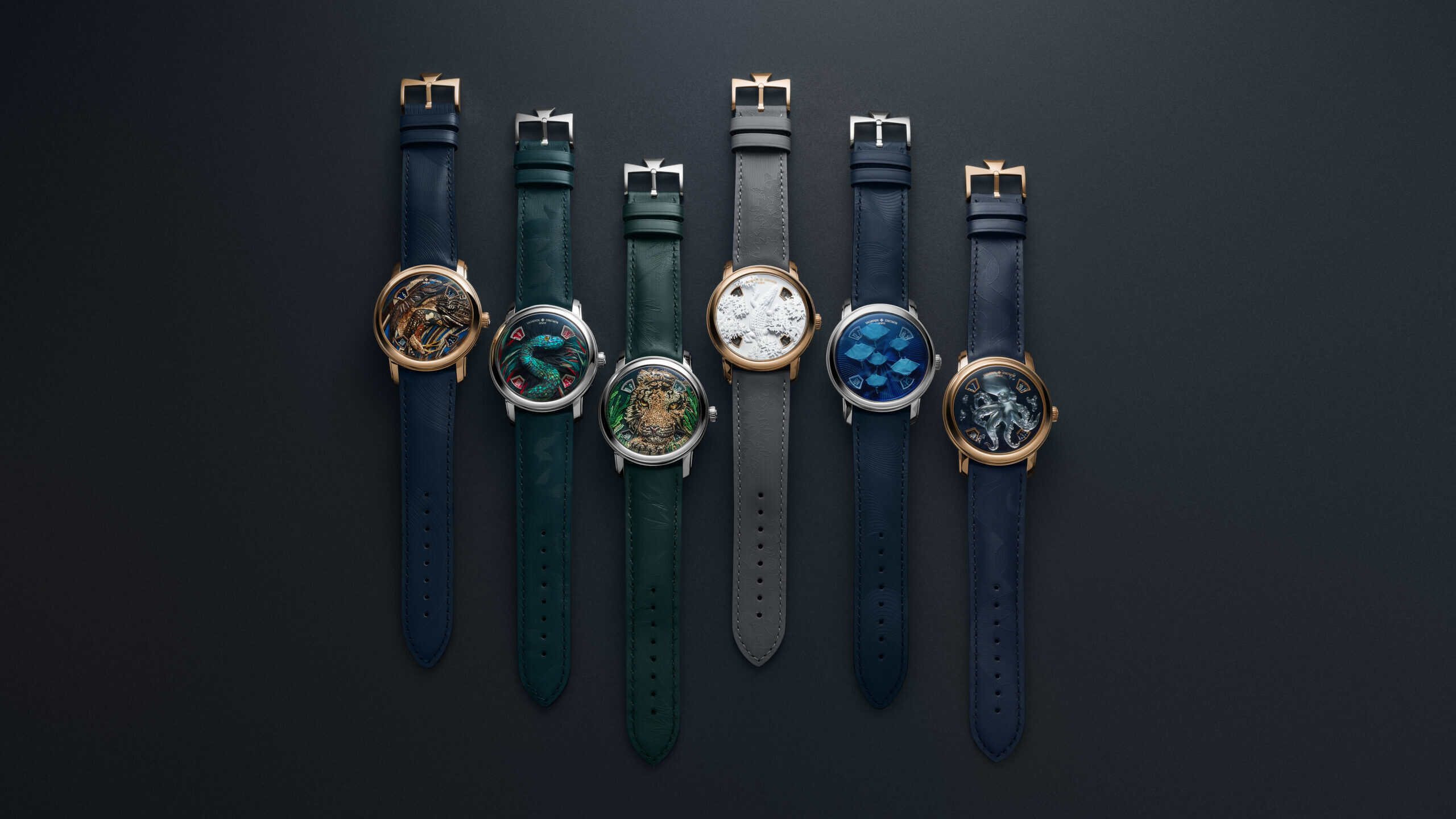
Vacheron Constantin has long understood that a watch can be far more than an instrument for measuring time. With its latest Métiers d’Art creation, they turn the dial into a miniature stage for six extraordinary artistic disciplines, bringing together featherwork, glass sculpture, micro-origami, gold embroidery, paper sculpture and wood marquetry.
The result is Métiers d’Art Tribute to the Animal Kingdom, a series of six concept watches developed through Vacheron Constantin’s One of Not Many Crafts Programme. Each timepiece presents an interpretation of the natural world, but the real story lies beneath the surface: six independent artisans have been challenged to translate their highly specialised crafts into the extraordinarily confined world of haute horlogerie.
It is a project about nature, certainly, but also about experimentation, collaboration and the seemingly impossible art of making something exceptional smaller.
A New Vocabulary For Métiers d’Art
Since its foundation in 1755, Vacheron Constantin has placed craftsmanship at the heart of its identity. The Maison has preserved and developed traditional decorative disciplines including engraving, guillochage, enamelling and gem-setting, while continually searching for new ways to express them.
The One of Not Many Crafts Programme takes that philosophy a step further. Rather than revisiting established watchmaking métiers, Vacheron Constantin invited six artists whose disciplines exist outside the traditional vocabulary of horology to consider an entirely different question: what happens when their crafts are reduced to the scale of a watch dial? The answer required each artist to rethink the fundamentals of their practice.
“By inviting practices rarely associated with horology onto the watch dial, the ‘One of Not Many Crafts Programme’ expands the creative vocabulary of Métiers d’Art within watchmaking. This approach has encouraged thinking beyond established categories, a form of creative incubation that opens new possibilities for artistic expression within the constraints of watchmaking.” Christian Selmoni, Maison Legacy and Style Director, Vacheron Constantin
The collaboration became a two-way exchange. The artisans brought their individual savoir-faire to Vacheron Constantin, while the Maison’s watchmakers and Métiers d’Art specialists contributed their expertise in miniaturisation, precision and the technical architecture of a functioning timepiece. New tools were created. Existing techniques were reconsidered. Materials were pushed beyond their normal limits.
And all of this had to happen within a 42mm case, with no more than approximately four millimetres separating the dial from the sapphire crystal.
Six Crafts. Six Animals. Six Worlds.
At the heart of the collection is the Manufacture Calibre 2460 G4, a movement whose distinctive peripheral display leaves the centre of the dial almost completely free.
Rather than conventional hands, the hours, minutes, day of the week and date are displayed through four apertures positioned around the dial. The result is an almost theatrical expanse in which the artistic composition becomes the protagonist.
It is an ideal canvas for the six interpretations of the animal kingdom. The series comprises a featherwork serpent, a transparent glass octopus, a group of micro-origami manta rays, a gold-embroidered tiger, a paper crocodile and a sculpted wooden falcon. Each one is effectively a miniature work of art.
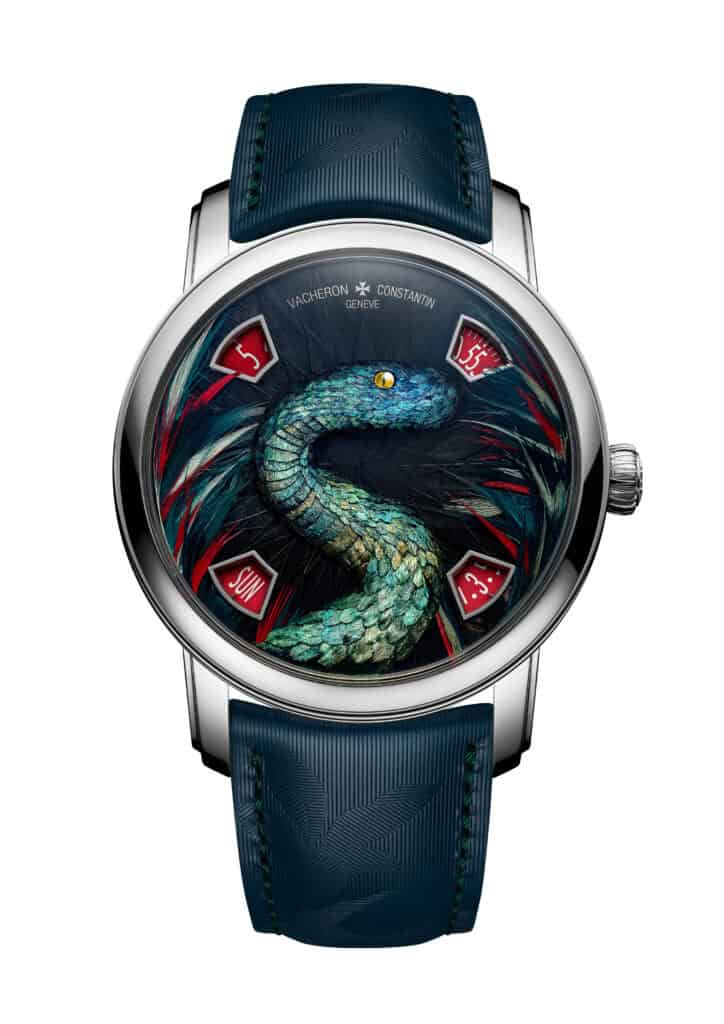
Feather Snake
The featherwork interpretation by Julien Vermeulen is perhaps one of the most unexpected.
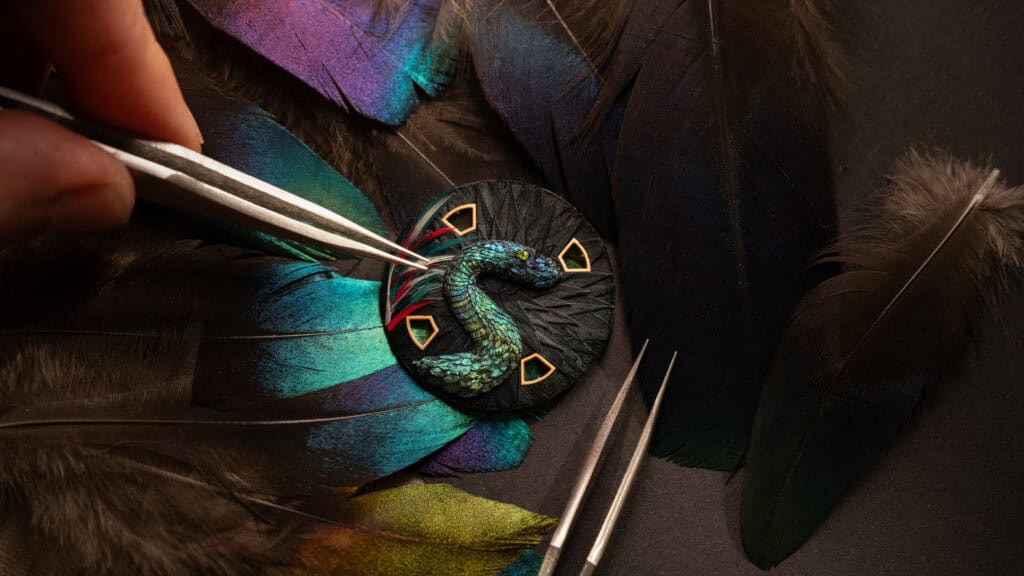
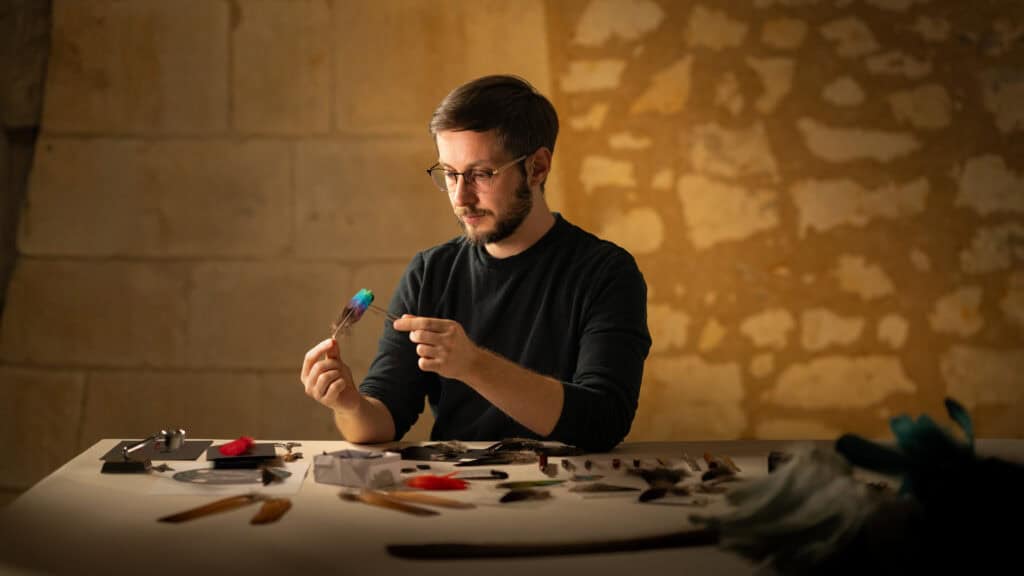
A fantastical serpent coils across the dial, its body shimmering in blue-green tones created from more than 200 tiny pieces of seven rare Lophophore feathers. The surrounding foliage is formed from goose feathers, creating an entire miniature landscape. The serpent rises only around three millimetres from the dial.
To achieve this, Vermeulen first removed the central quill from the feathers while preserving their delicate barbs. The feathers were mounted onto silk paper, allowing them to be cut with extraordinary precision before being applied to a specially developed metal structure.
The scale was so extreme that conventional tools were of little use. A micro-scalpel was created from a reshaped needle, while a modified sewing needle became an instrument for applying microscopic dots of adhesive. The work took approximately 250 hours, including research and prototyping.
Vermeulen recalls that the scale required him to reconsider not only his tools but his entire physical approach to the work. The smallest components measured only a few tenths of a millimetre, meaning that even breathing could disturb them.
The serpent’s eye provides a final point of focus. Crafted from 18-karat gold and enamel, it introduces a minute flash of definition into the otherwise organic composition. The green calfskin strap continues the vegetal theme with embossed foliage.
Glass Octopus
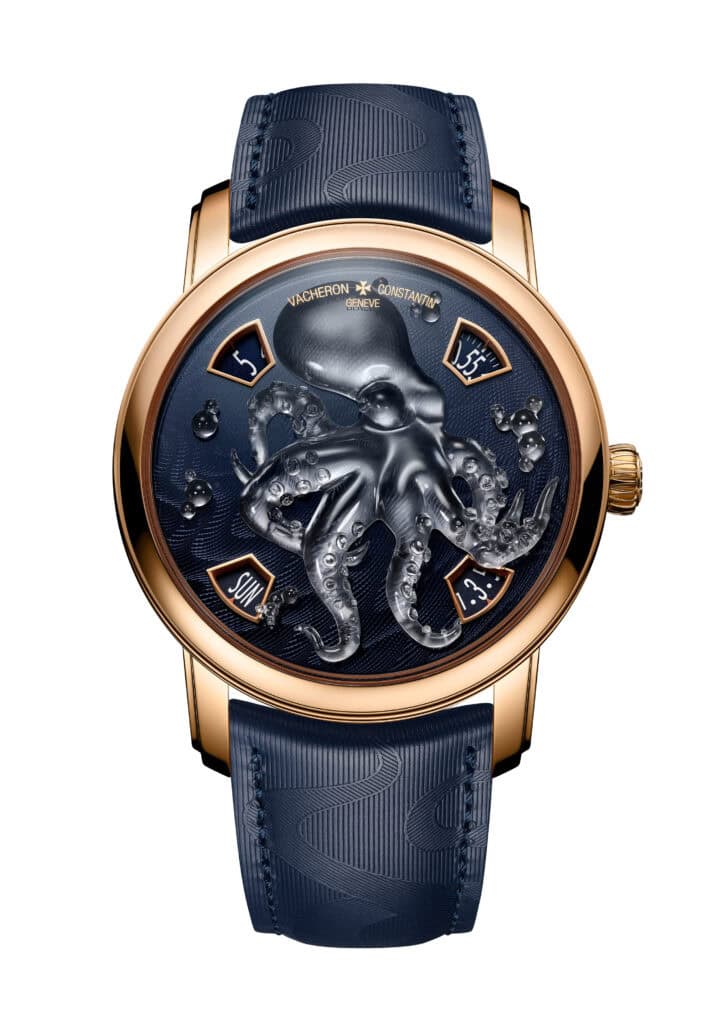
Simone Crestani’s glass octopus appears almost weightless, suspended above a dark blue, hand-guilloché gold dial like a creature drifting through deep water. Entirely sculpted from transparent glass, the octopus rises just 3.5 millimetres above the dial.
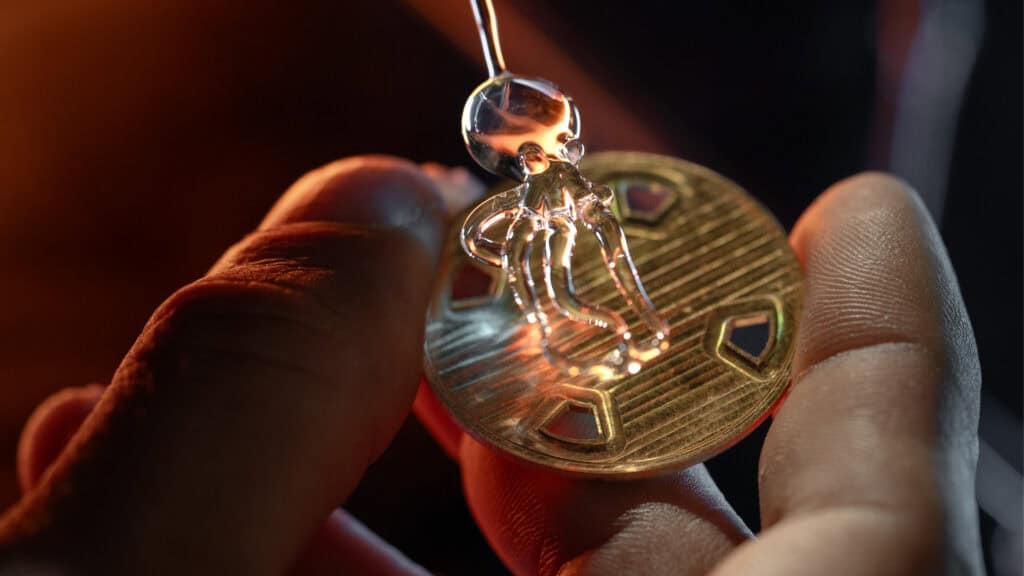
For a glass artist accustomed to working in centimetres and larger volumes, this was a radical departure. Crestani had to develop a new technique capable of creating a three-dimensional form within an extraordinarily shallow space.
Tiny glass rods were melted and shaped piece by piece using tungsten tools. Each tentacle and sucker was constructed progressively, almost like an extremely manual form of three-dimensional printing.
The transparency of the material introduced another challenge. Glass magnifies and distorts whatever lies beneath it, meaning that every thickness, overlap and refraction had to be considered. The result is an intricate exercise in optical illusion as much as sculpture.
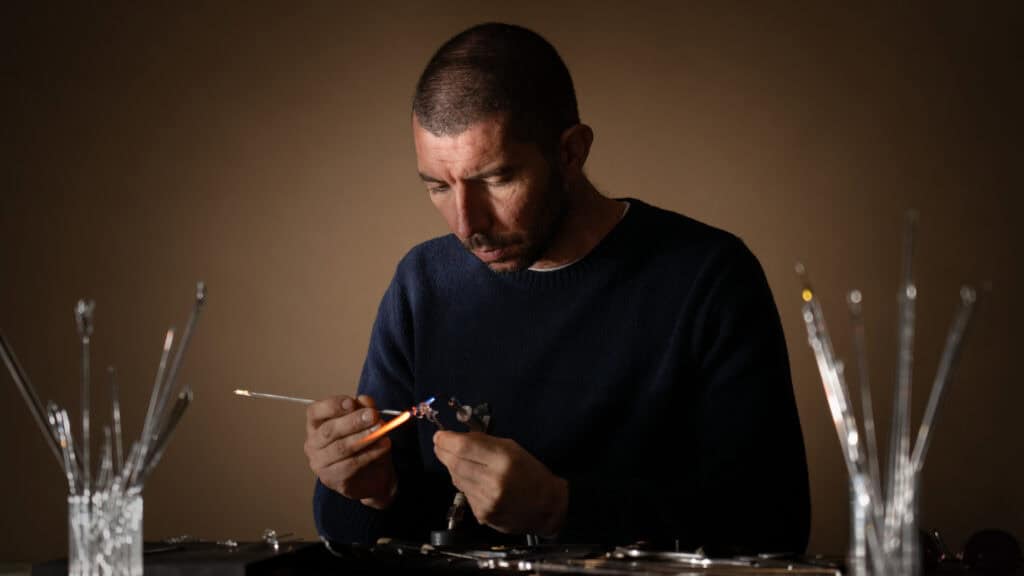
The development process lasted more than a year, beginning with the first prototypes in spring 2025. Four slightly different octopuses were eventually produced before the final version was selected. For Crestani, the project represented a turning point after 25 years of working with glass. The blue calfskin strap is embossed with a tentacle motif, extending the underwater world beyond the dial.
Oraygami
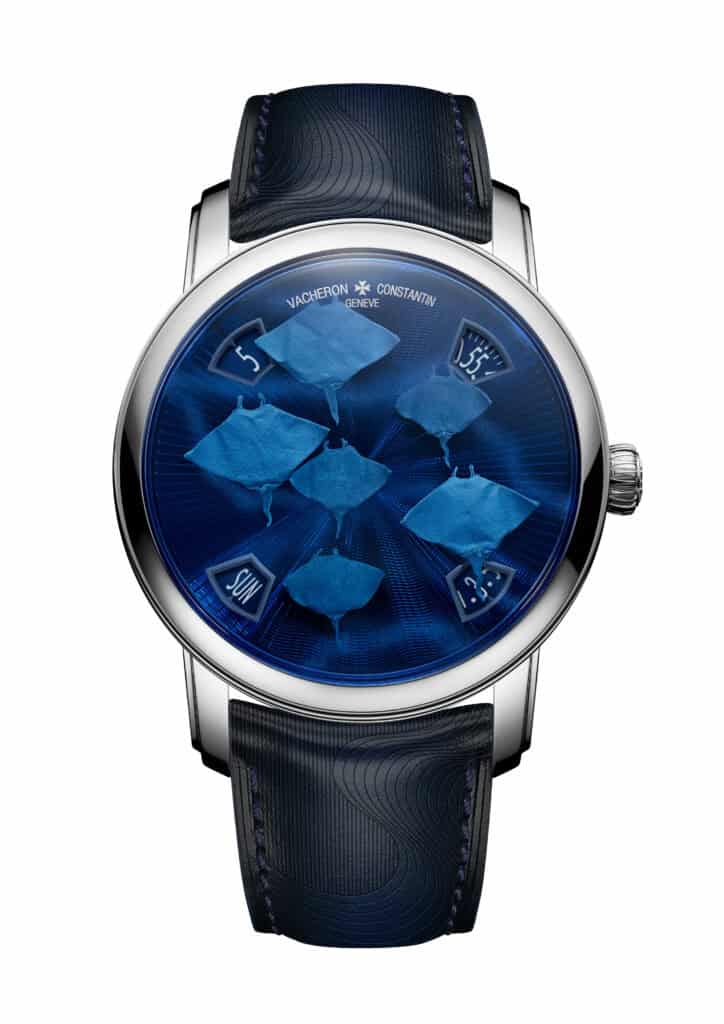
If the glass octopus seems to float, the manta rays of Anja Midori’s Oraygami appear to swim.
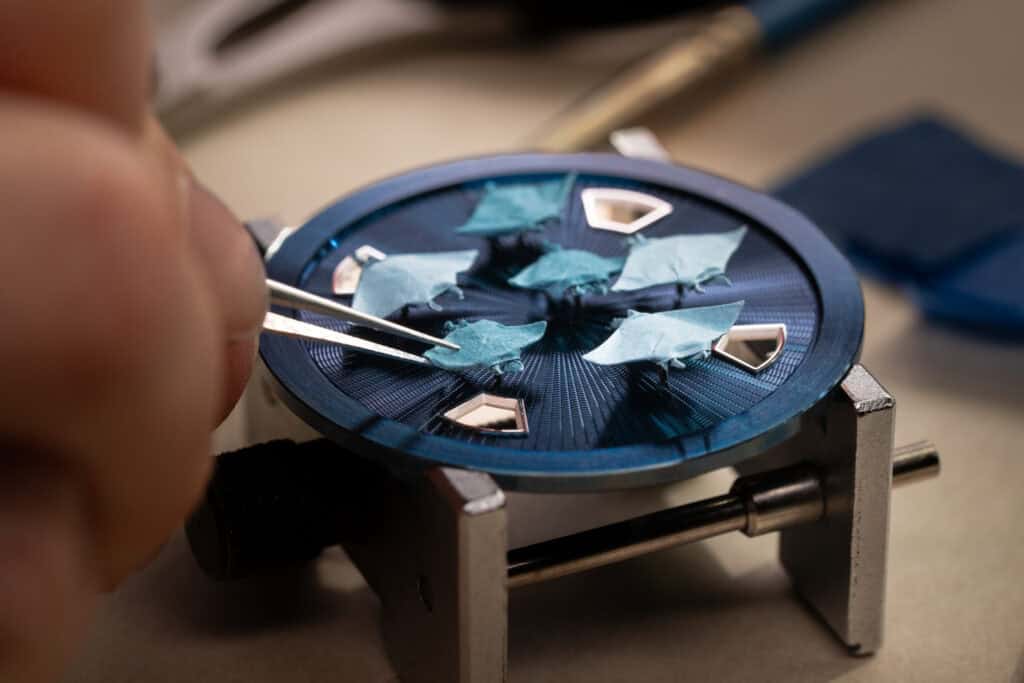
Six miniature manta rays move across a deep-blue hand-guilloché dial, each one folded from specially dyed Japanese paper and mounted on fine brass stems at different heights. The creatures measure between approximately five and ten millimetres.
But their apparent simplicity conceals an extraordinary amount of research. Midori could not rely on an existing origami sequence. She had to develop an entirely new folding system specifically for the manta ray, studying photographs and films to understand its proportions, tail and movement through water.
The paper presented a challenge of its own. Weighing just 20 grams, it is approximately one quarter the thickness of standard copier paper. Midori eventually developed her own colouring process using water, natural cellulose and acrylic pigment to achieve the required blue.
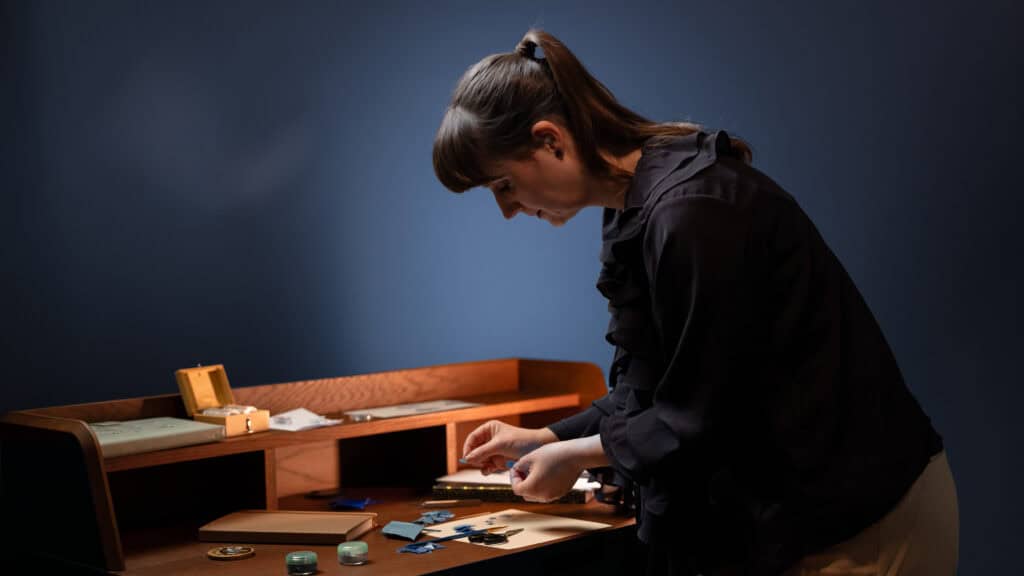
Every change in the mixture altered the paper’s behaviour. The finished manta rays were folded using only fingers, fingernails and the tip of a toothpick. No magnifying glass was used.
Early examples could take as long as six hours to fold. A moiré effect on the sapphire crystal reinforces the aquatic illusion, creating the impression of shifting light beneath the surface of the ocean. The blue calfskin strap continues the theme with an embossed wave pattern. For Midori, the project was the most significant of her career to date. It was also an exercise in persistence.
Tiger Broidery
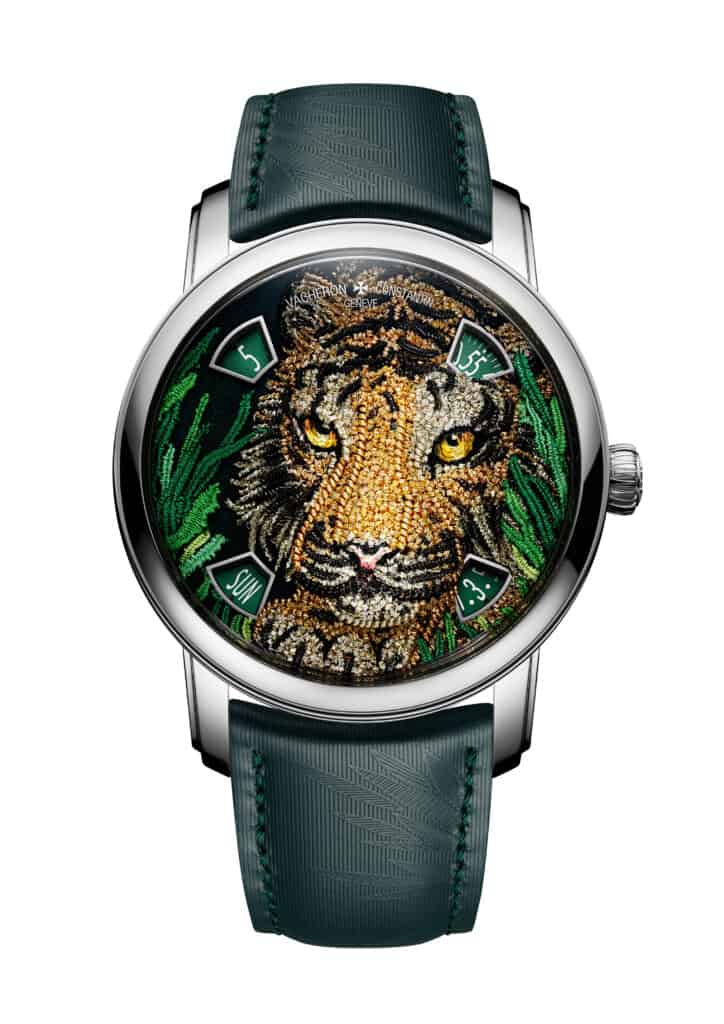
The tiger created by British embroiderer Laura Baverstock brings another unexpected discipline to the collection, gold embroidery.
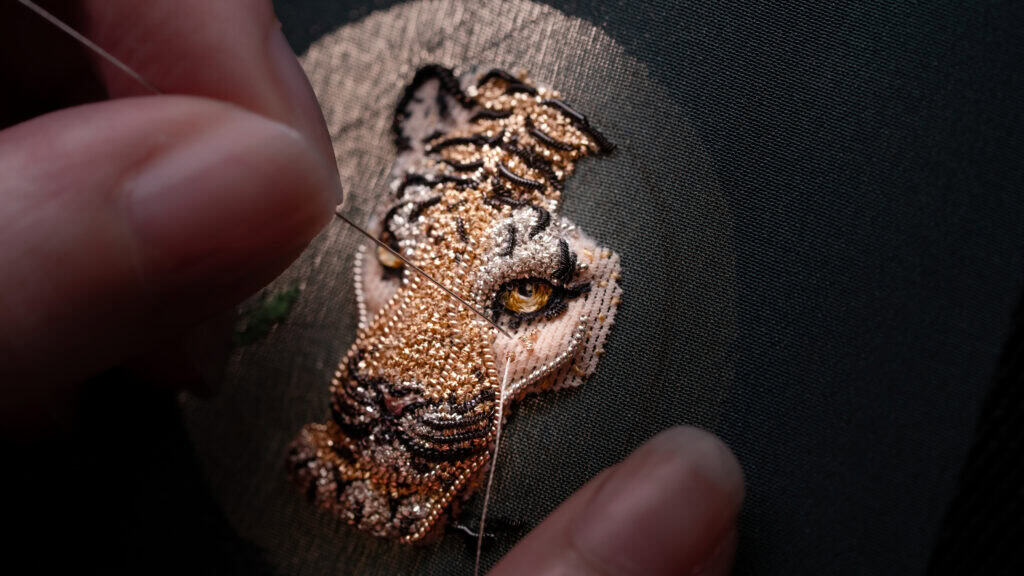
A tiger prowls through an imagined jungle, rendered in shimmering honey, orange and white tones. Its body is embroidered using 9-karat yellow and white gold wires, while ceramic-coated black wires create its characteristic stripes.
The surrounding vegetation is embroidered onto green silk, specially dyed for the project, with Japanese silk threads used to create the grasses and foliage. Working at this scale required a complete reconsideration of traditional goldwork embroidery.
The gold wires themselves had to be specially developed. Higher gold content changes the flexibility and behaviour of the material, meaning that new miniature tools were required to twist and manipulate the wires into workable forms. The individual pieces forming the tiger’s body measure less than a millimetre. Even the eyes required ten different shades of silk to achieve the necessary expression and depth.

A bespoke perforated titanium dial plate was developed to allow the embroidery to be attached directly to the watch structure without compromising the movement. The silk itself had to remain under perfect tension throughout the process, while the entire composition had to remain within the tight clearance beneath the curved sapphire crystal.
The finished dial required approximately 175 hours of work. For Baverstock, the collaboration pushed embroidery into territory she had not previously explored. The green calfskin strap, embossed with foliage, completes the jungle landscape.
Paper Croc
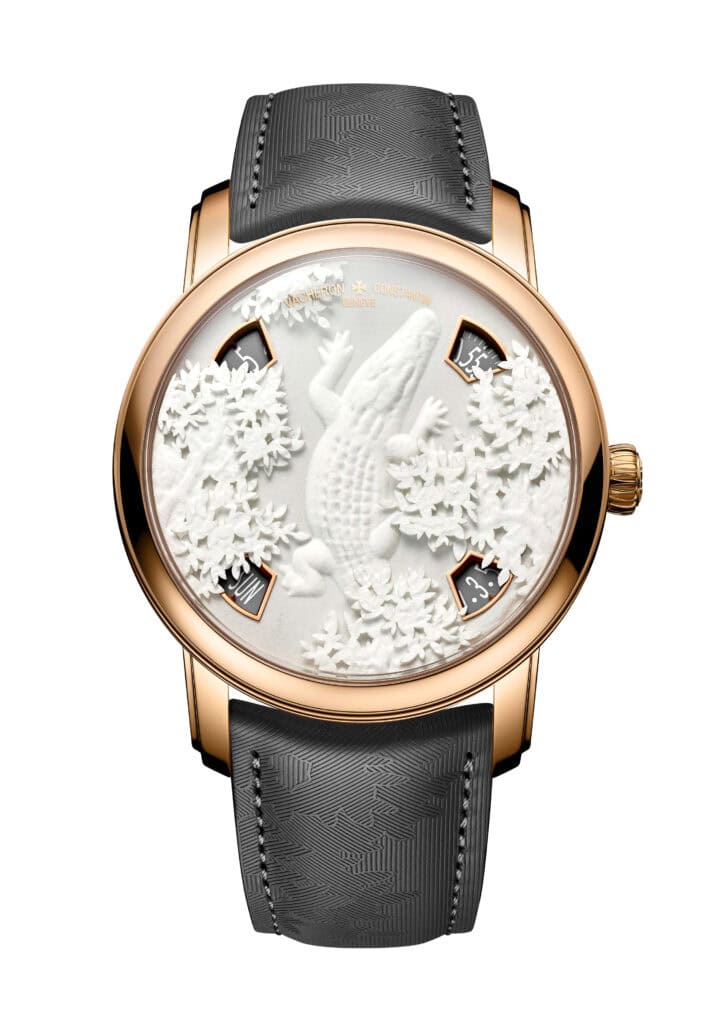
Marianne Guély takes one of the world’s most modest materials, paper, and transforms it into something unexpectedly sculptural.
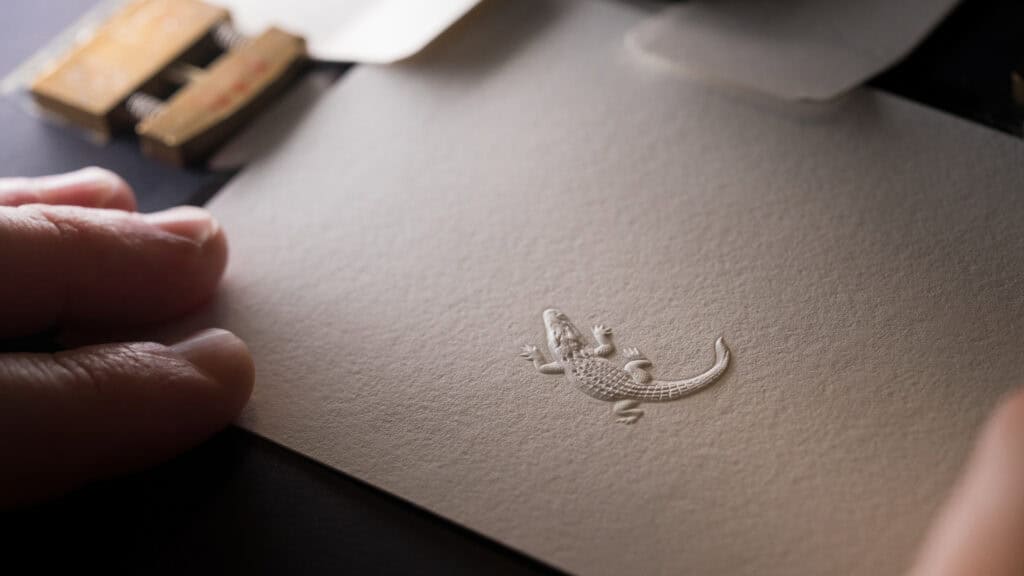
A white crocodile emerges from a landscape of seemingly snow-covered vegetation. The entire scene is created from white cotton paper, combining embossing, laser cutting and painstaking hand assembly. The composition rises only three millimetres from the dial.
Brass matrices engraved with the crocodile’s scales and surrounding foliage were heated to between 60 and 70°C before being pressed into the paper under intense pressure. The process creates the relief and volume necessary to make the crocodile appear almost alive.
The choice of paper was critical. After extensive experimentation, an acid-free white cotton paper was selected for its grain, weight and velvety texture, allowing it to withstand the embossing process without tearing or warping.
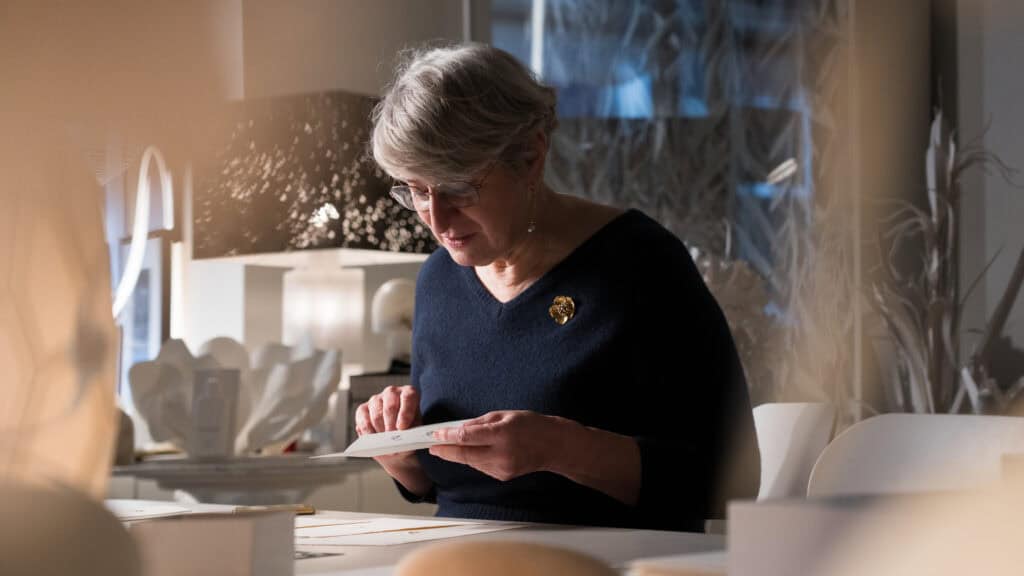
Multiple layers create subtle variations in depth and shadow, while the four apertures of the Calibre 2460 G4 become part of the composition itself. The crocodile appears to nestle naturally between them.
For Guély, whose work ranges from monumental installations to minute paper sculptures, the project fulfilled a long-held ambition to bring paper into the world of watchmaking. The grey calfskin strap carries an embossed foliage motif.
Wooden Wings
The final creation turns to one of the oldest decorative crafts, wood marquetry.
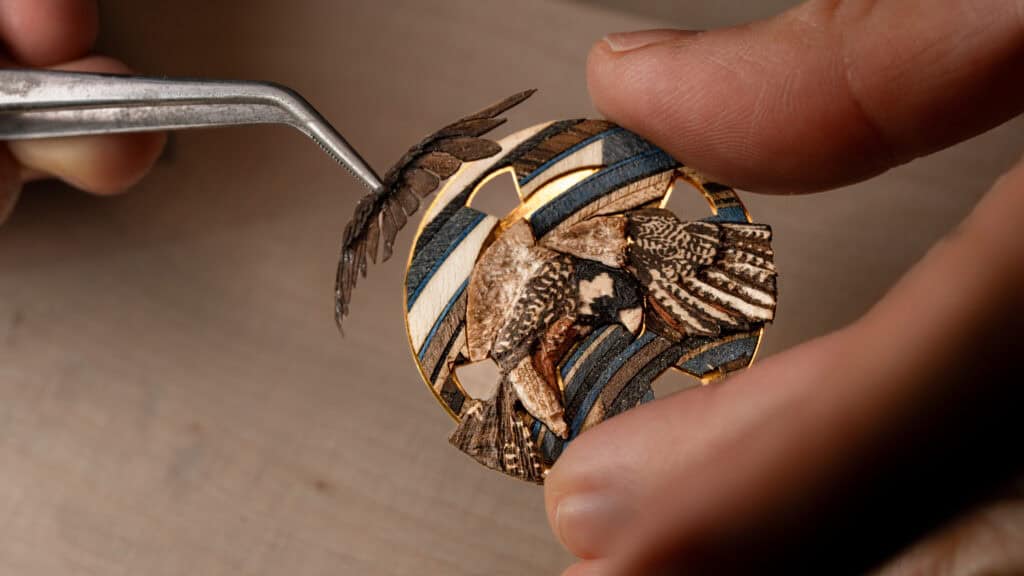
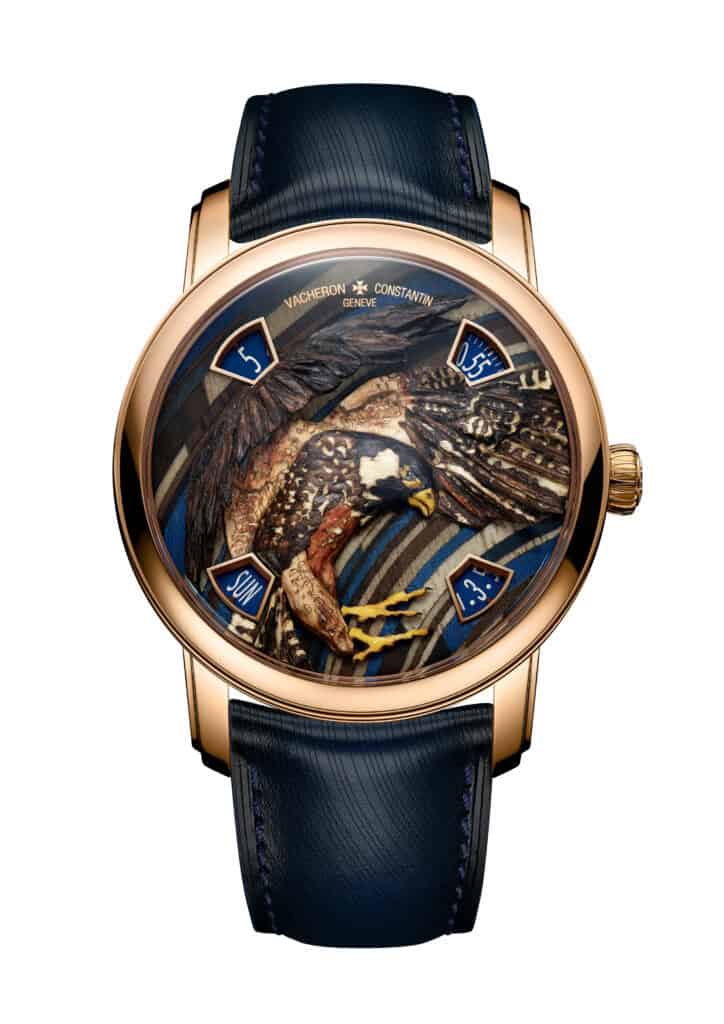
Anna Le Corno’s falcon appears ready to take flight, its wings extending dramatically over a background of concentric circular motifs.
Fifteen different wood species are used in the composition, each selected not only for its colour and grain but for its behaviour at microscopic scale. Smoked eucalyptus, dark blue-dyed birch and other varieties create an extraordinary range of textures and tones.
Three marquetry techniques are combined. The background uses circular marquetry adapted from furniture-making. The body of the falcon employs sculpted layered marquetry, in which multiple veneers are assembled before being carved into three-dimensional form. The wing introduces an entirely new approach: a feather-by-feather construction developed specifically for the project.
Traditional woodworking tools were simply too large. Scalpels similar to surgical instruments, microscopic carbide bits and bespoke sanding tools were introduced, with much of the work undertaken under binocular magnification. The wing itself is cantilevered above the dial, with the tips of the feathers positioned extremely close to the sapphire crystal.
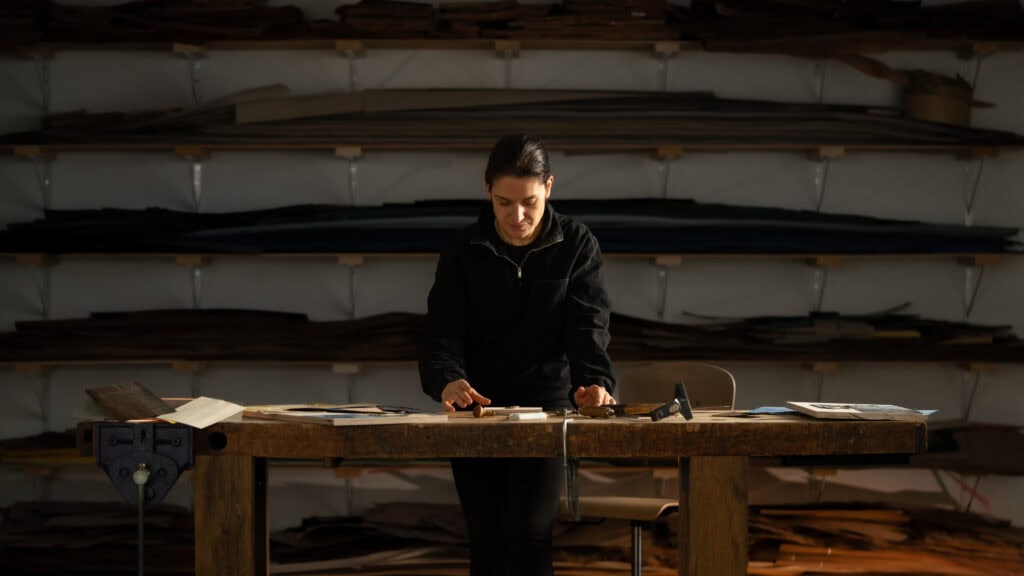
At just three millimetres in height, the composition demanded not only artistic precision but a detailed understanding of the structural characteristics of each individual species of wood. For Le Corno, the process became an extended conversation with the material itself. A blue calfskin strap with embossed striped decoration completes the composition.
Nature As A Constant Source Of Inspiration
The animal kingdom is not a new subject for Vacheron Constantin. Throughout its history, the Maison has repeatedly returned to fauna as a means of exploring new techniques and decorative possibilities.
An 1826 pocket watch, Reference 10200, features a relief-decorated serpent in enamel and stones. In 1910, Reference 10556 transformed a scarab into a jewelled pendant watch, its wings opening to reveal the dial.
A 1923 pocket watch, Reference 10222, uses Chinese lacquer to depict a bird, while a 1996 timepiece, Reference 11022, features an enamelled snowy egret inspired by John James Audubon’s Birds of America.
The Métiers d’Art Univers Infinis collection of 2011 combined engraving, guillochage, enamelling and gem-setting to create a contemporary interpretation of birds and tessellation.
More recently, the 2022 Les Cabinotiers Tourbillon Joaillerie, Hippocampe combined guilloché, engraving, cloisonné enamelling and gem-setting to depict a seahorse.
The new Tribute to the Animal Kingdom therefore represents another chapter in a long-running fascination, but this time the Maison has deliberately stepped outside its established repertoire.
The Art Of Making The Impossible Possible
What makes Métiers d’Art Tribute to the Animal Kingdom particularly compelling is not simply the visual impact of the six watches. It is the process behind them.
Every dial represents a dialogue between an independent artist and Vacheron Constantin’s own specialists. Each artist arrived with a highly developed understanding of their material, yet almost none had previously been required to work at such a microscopic scale.
The watchmakers, meanwhile, had to understand unfamiliar materials and techniques. Together they created new tools, new processes and, in some cases, entirely new ways of working.
The result is an unusual interpretation of Métiers d’Art. Rather than simply demonstrating what Vacheron Constantin already knows how to do, the programme deliberately creates circumstances in which the Maison has to learn something new.
The six watches are united by another detail, a 22K gold oscillating weight, hand-engraved with motifs inspired by the tools of artisans, turning the movement itself into a tribute to craftsmanship. Each is also fitted with a dedicated strap carrying an embossed motif drawn from its dial. Yet the most important element remains the work itself.
Feather, glass, paper, wood, silk, gold and Japanese paper are materials rarely associated with conventional watchmaking. Here, each has been transformed into a miniature world protected beneath sapphire crystal. And that may be the most fitting expression of Vacheron Constantin’s philosophy.
After more than two and a half centuries, the Maison continues to demonstrate that tradition is not simply about preserving what has already been achieved. It is also about giving skilled hands the freedom to discover what comes next.
Technical Specifications
Métiers d’Art Tribute to the Animal Kingdom – Feather Snake
Reference: 7630A/000G-H206
Calibre: 2460 G4, mechanical self-winding
Dimensions: 31mm diameter, 6.05mm thick
Power reserve: Approximately 40 hours
Frequency: 4Hz
Components: 237
Jewels: 27
Indications: Hours, minutes, day of the week and date through four apertures
Case: 18K white gold, 42mm diameter, 12.9mm thick, transparent sapphire crystal caseback, water-resistant to 3 bar
Dial: Featherwork composition using seven rare Lophophore feathers and goose feathers mounted onto silk paper and applied to a brass base-coated structure; snake’s eye in 18K gold and enamel
Strap: Green calf leather with embossed vegetal decoration
Buckle: 18K white gold
Métiers d’Art Tribute to the Animal Kingdom – Glass Octopus
Reference: 7630A/000R-H205
Calibre: 2460 G4, mechanical self-winding
Dimensions: 31mm diameter, 6.05mm thick
Power reserve: Approximately 40 hours
Frequency: 4Hz
Components: 237
Jewels: 27
Indications: Hours, minutes, day of the week and date through four apertures
Case: 18K 5N pink gold, 42mm diameter, 12.9mm thick, transparent sapphire crystal caseback, water-resistant to 3 bar
Dial: Hand-guilloché 3N gold dial base with hand-sculpted transparent glass octopus
Strap: Blue calf leather with embossed octopus tentacle decoration
Buckle: 18K pink gold
Métiers d’Art Tribute to the Animal Kingdom – Oraygami
Reference: 7630A/000G-H204
Calibre: 2460 G4, mechanical self-winding
Dimensions: 31mm diameter, 6.05mm thick
Power reserve: Approximately 40 hours
Frequency: 4Hz
Components: 237
Jewels: 27
Indications: Hours, minutes, day of the week and date through four apertures
Case: 18K white gold, 42mm diameter, 12.9mm thick, transparent sapphire crystal caseback, water-resistant to 3 bar
Dial: 18K gold hand-guilloché dial base with six micro-origami manta rays mounted on brass stems at different heights; crystal with moiré effect
Strap: Blue calf leather with embossed wave decoration
Buckle: 18K white gold
Métiers d’Art Tribute to the Animal Kingdom – Tiger Broidery
Reference: 7630A/000G-H207
Calibre: 2460 G4, mechanical self-winding
Dimensions: 31mm diameter, 6.05mm thick
Power reserve: Approximately 40 hours
Frequency: 4Hz
Components: 237
Jewels: 27
Indications: Hours, minutes, day of the week and date through four apertures
Case: 18K white gold, 42mm diameter, 12.9mm thick, transparent sapphire crystal caseback, water-resistant to 3 bar
Dial: Green silk and cotton base embroidered with Japanese silk threads; tiger embroidered using 9-karat yellow and white gold threads; black stripes executed using ceramic-coated copper wires; eyes embroidered in silk threads; brass base-coated structure
Strap: Green calfskin with embossed foliage decoration
Buckle: 18K white gold
Métiers d’Art Tribute to the Animal Kingdom – Paper Croc
Reference: 7630A/000R-H202
Calibre: 2460 G4, mechanical self-winding
Dimensions: 31mm diameter, 6.05mm thick
Power reserve: Approximately 40 hours
Frequency: 4Hz
Components: 237
Jewels: 27
Indications: Hours, minutes, day of the week and date through four apertures
Case: 18K 5N pink gold, 42mm diameter, 12.9mm thick, transparent sapphire crystal caseback, water-resistant to 3 bar
Dial: White cotton paper background; crocodile motif crafted from embossed white cotton paper; foliage motifs in embossed and cut white cotton paper; brass base-coated structure
Strap: Grey calf leather with embossed foliage decoration
Buckle: 18K pink gold
Métiers d’Art Tribute to the Animal Kingdom – Wooden Wings
Reference: 7630A/000R-H203
Calibre: 2460 G4, mechanical self-winding
Dimensions: 31mm diameter, 6.05mm thick
Power reserve: Approximately 40 hours
Frequency: 4Hz
Components: 237
Jewels: 27
Indications: Hours, minutes, day of the week and date through four apertures
Case: 18K 5N pink gold, 42mm diameter, 12.9mm thick, transparent sapphire crystal caseback, water-resistant to 3 bar
Dial: Wood marquetry using multiple wood species including figured birch, spalted horse chestnut, lacewood sycamore, ziricote, yellow pearwood, tulipwood, ash, birch, madrone burl, smoked eucalyptus, smoked oak and plane tree, with hand-sculpted details
Strap: Blue calf leather with embossed striped decoration
Buckle: 18K pink gold
Pricing upon application
For more information please visit Vacheron Constantin