
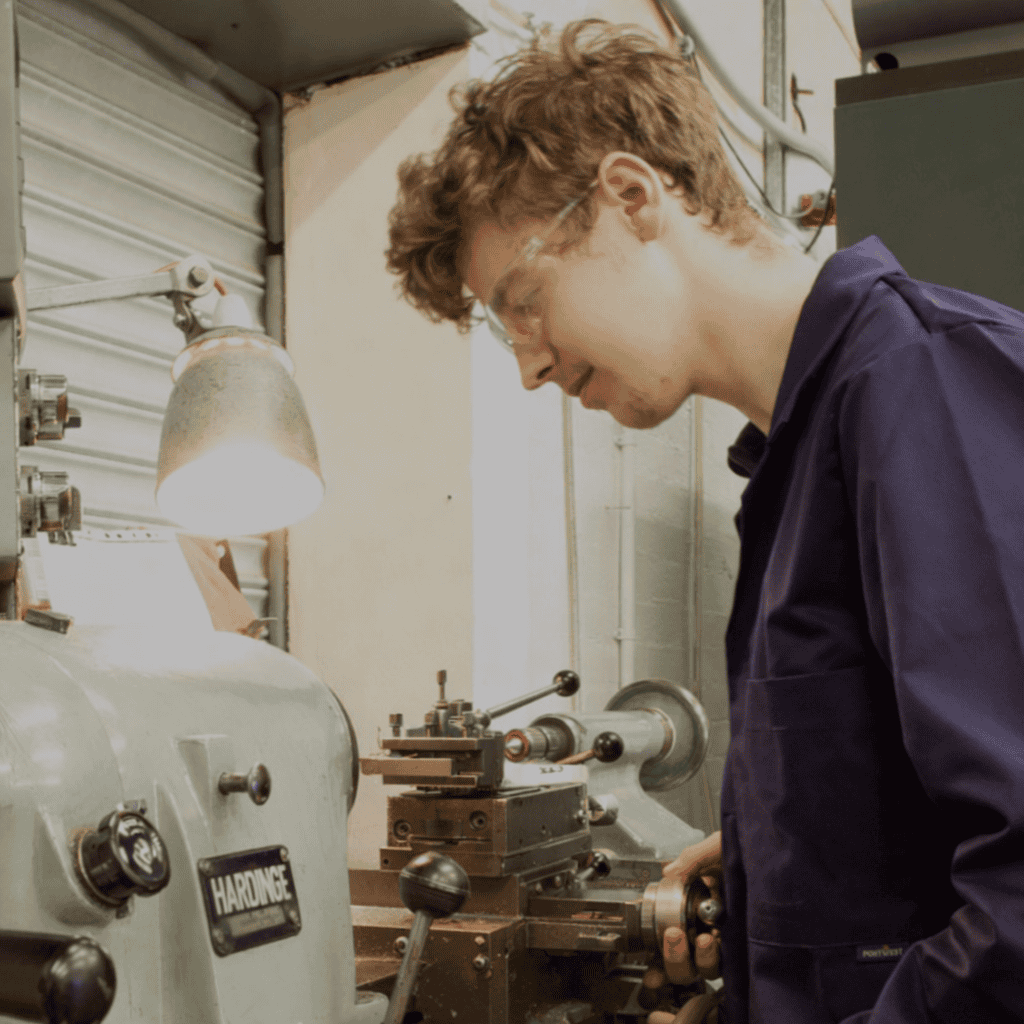
A Day In The Life…Oliver Barrass, Apprentice Engineer, Sinclair Harding
Oliver Barrass is an apprentice engineer at British clockmaking company Sinclair Harding who combine traditional English horological skills with modern technology to create handcrafted, high-precision mechanical clocks.
Oliver is a watch enthusiast and joined the team at Sinclair Harding in August 2025. He is learning every aspect of the workshop while gaining his Engineering Level 2. We asked Oliver to share with us what a typical day involves and where his passion for watches comes from, so please read on for his fascinating answers.
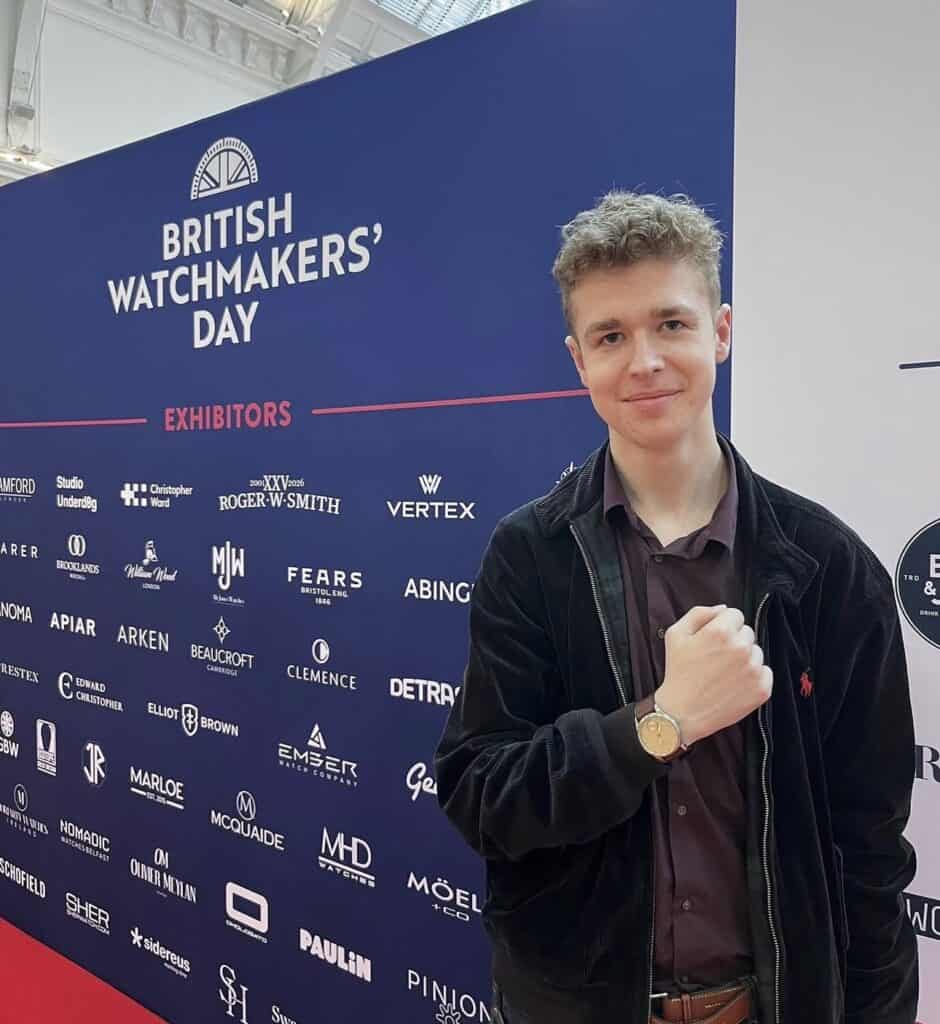
MWM: What first sparked your interest in horology and led you to pursue an apprenticeship with Sinclair Harding?
OB: The thing that initially sparked my interest in horology was my grandfather’s wall clocks. They’ve been on the wall as long as I can remember and I had always been fascinated by them. But what initially gained my interest from a technical point of view was back in 2016 when my dad bought a Bremont chronograph which had a display caseback. This intrigued me as it was interesting to see so many small moving parts working together. It was from there that I started disassembling watches and clocks to gain a better understanding of how they worked and this ultimately led me to seek an apprenticeship with Sinclair Harding as it combined my passion for clocks and watches with engineering.
MWM: What does a typical day in the workshop look like for you from start to finish?
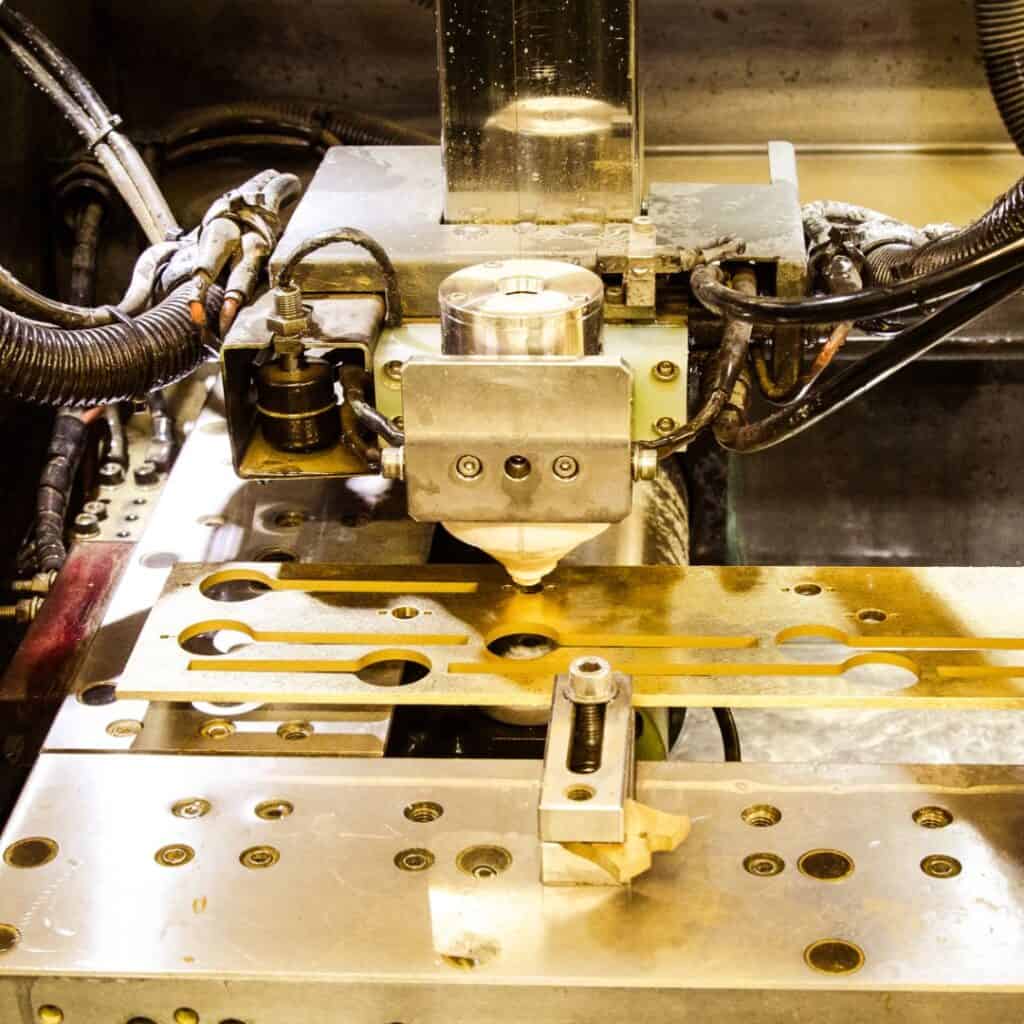
OB: I usually start my day in the workshop by making a round of Coffee’s. This is then followed by checking the clock times and ensuring that all of the clocks are wound. Then I’ll head into the workshop and start working with either Stuart or Jack on the machines making components. As an apprentice, no day in the workshop is the same as I am always being shown new skills or techniques but recently I have been focusing on turning. This involves a wide range of different machines depending on the specific job as some parts like pinions have to be very precise and repeatable so it involves a lot of setting up on the CNC machines whereas manual turning on the HLV may be more beneficial to smaller jobs that may only require one part.
MWM: What kinds of tasks or skills are you currently learning as part of your apprenticeship?
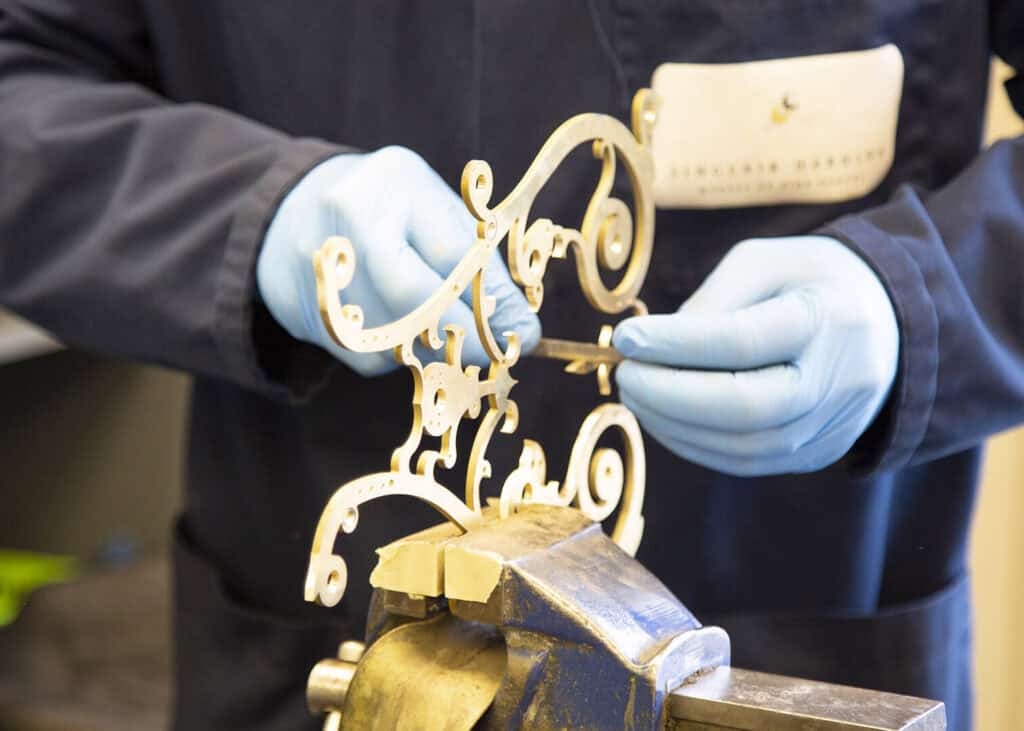
OB: As part of my apprenticeship I have been learning skills on manual and CNC manufacturing along with traditional hand finishing techniques. I have been mainly focusing on turning and milling and learning how to turn drawings into physical components. I have also been working in polishing where I’ve learned how to prepare and polish components ready for plating. Its a really enjoyable process as it’s very satisfying creating a mirror polished surface.
MWM: Is there a particular tool, technique, or part of a clock or watch movement that fascinates you most?
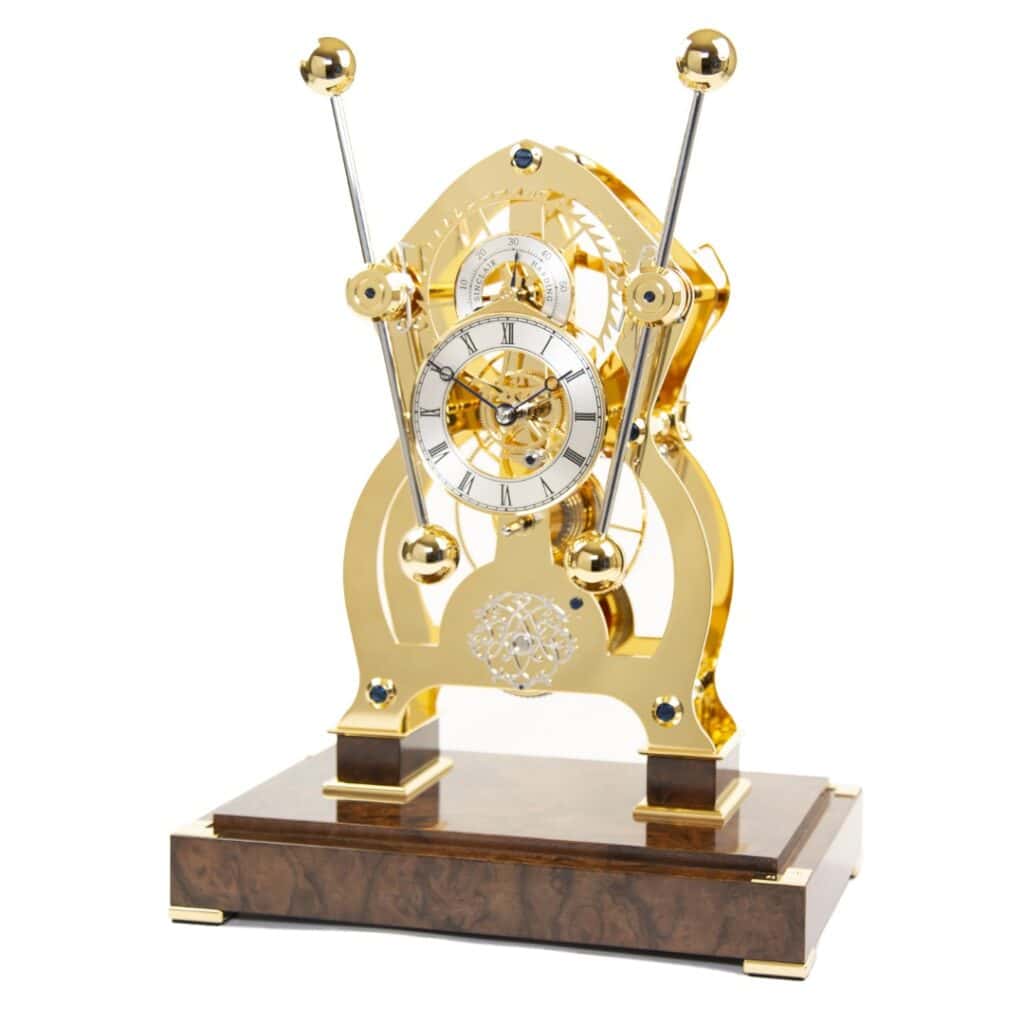
OB: One process that fascinates me the most is the finishing process for the clock dials. I quite enjoy wax filling and silvering the dials as its a very rewarding process scraping the wax into the recesses for the numerals and then rubbing it until it turns from brass into a bright silver. The end product looks amazing and it is one of the main parts of the clock that is looked at. One part of a clock movement that I find most interesting is the grasshopper escapement on the Sea Clocks (below). Watching the pallets pull and spring away from the escape wheel is by far the most mesmerising part of the clock due to its slow movement.
MWM: What has been the most challenging part of learning the craft so far?
OB: The most challenging part of learning the craft so far has been making sure every part is perfect. Areas that would only ever be seen by a repairer still need to be perfectly finished and learning how to polish large parts to not have any blemishes or scratches over a big surface area has by far been the most difficult part.
MWM: What have you learned from working alongside experienced clockmakers?
OB: One thing that I have learned from working aside experienced clockmakers is how much care needs to be taken when servicing or assembling a clock. Due to the majority of the clock movement being plated in precious metals it is very easy to scratch with tools when carrying out repairs. This means that every component must be handled carefully to avoid causing damage which could result in the part having to be refinished or replaced.
MWM: What are your hopes for the future as you continue your journey in horology?
OB: My hopes for the future would be to continue working on watches and clocks as it is something that I am really passionate about. My end goal would be to one day make my own watch from start to finish as I believe that this would really test my skills and would create a huge sense of achievement once completed.
MWM: What advice would you give someone who wanted to pursue a career in clock or watchmaking?
OB: My advice to anybody that wants to pursue a career in watch or clockmaking is to just get out there and go for it. The best thing you can do is to try and gain as much experience as you can whether that be from other companies or just learning things on your own. Apprenticeships are a great way to get into the industry as it involves a lot of hands on real world experience working which you would not otherwise get from being in a classroom.
Oliver Barrass is a Friend of MrWatchMaster