
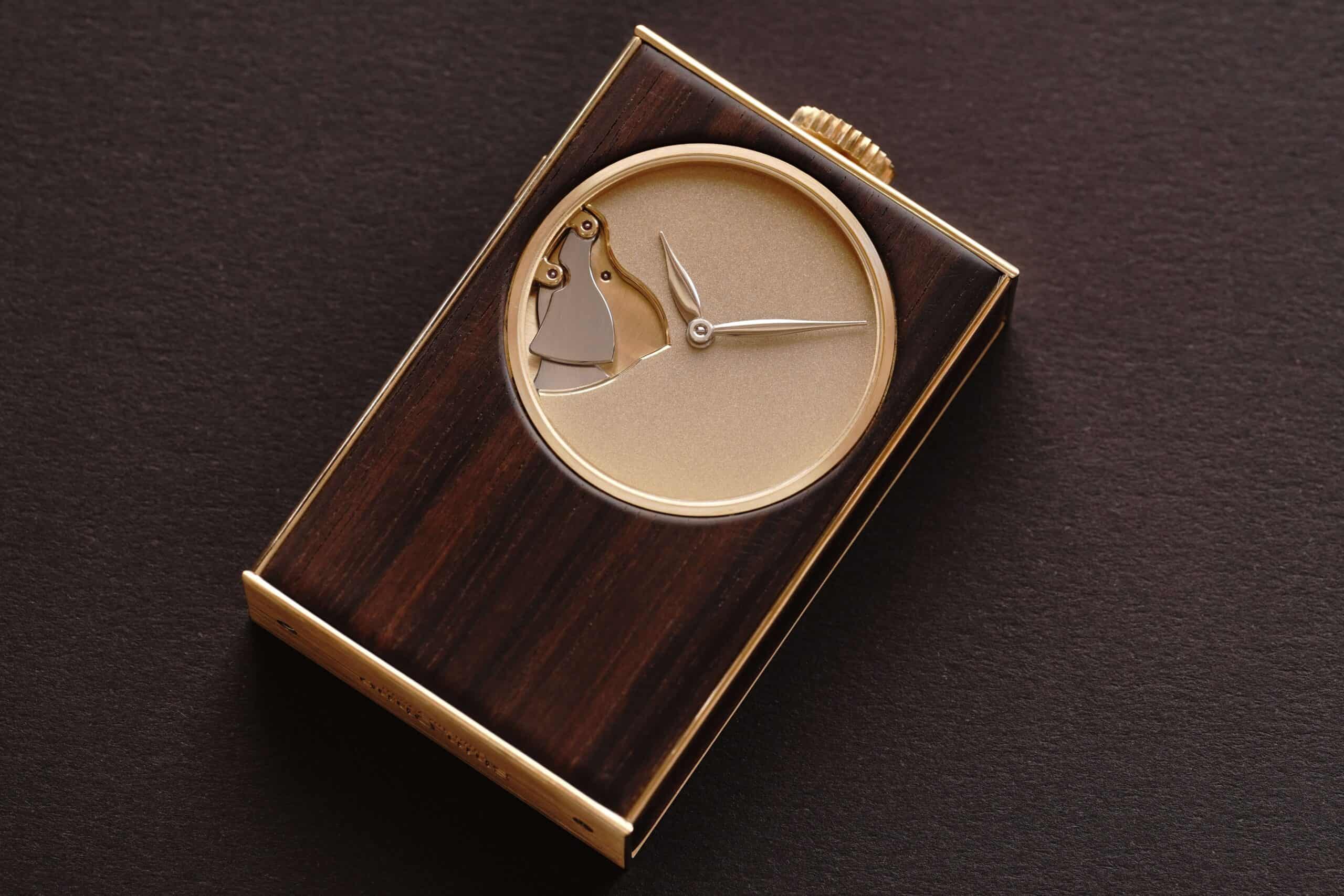
F.P. Journe Young Talent Competition Winner Announced
Since its inception in 2015, the F.P. Journe Young Talent Competition has established itself as one of haute horlogerie’s most compelling platforms for emerging independent watchmakers.
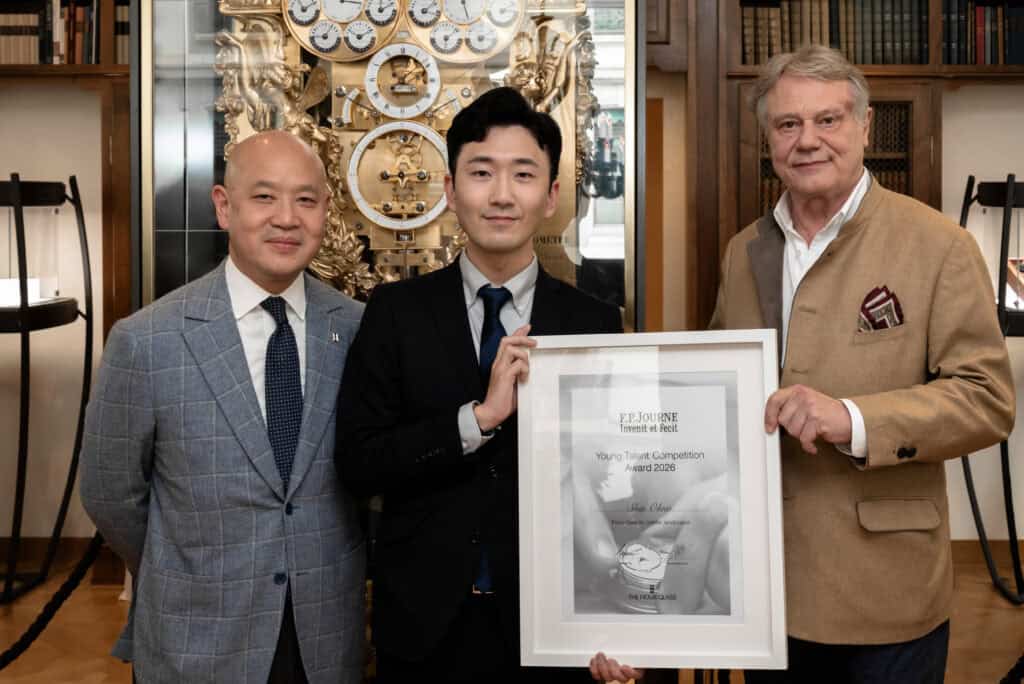
Conceived by F.P. Journe and supported by The Hour Glass, the initiative is dedicated to uncovering the next generation of horological visionaries, those capable not only of technical mastery, but of expressing a deeply personal watchmaking language.
More than a competition, it is a gateway to independence. By spotlighting exceptional craftsmanship and originality, both Maisons reaffirm their shared commitment to preserving the traditions of fine watchmaking while nurturing its future. Candidates are assessed on the sophistication of their constructions, the pursuit of complexity, the finesse of execution, and an innate sense of design. Crucially, each entrant must present a fully independent creation, an authentic reflection of their own ingenuity.
For 2026, the prize remains as meaningful as it is transformative namely, a diploma accompanied by a CHF 50,000 grant, jointly awarded by F.P. Journe and The Hour Glass, intended to support the winner’s next chapter, be it the acquisition of tools or the realisation of an ambitious horological project.
The jury reads like a roll call of contemporary watchmaking excellence, bringing together leading figures such as Andreas Strehler, Giulio Papi, Marc Jenni, Michael Tay, Elizabeth Doerr, and François-Paul Journe.
A poetic complication: Shin Ohno’s Fuyu-Geshiki
At just 27, Shin Ohno, hailing from Matsumoto in Nagano, Japan, embodies the spirit of the competition.

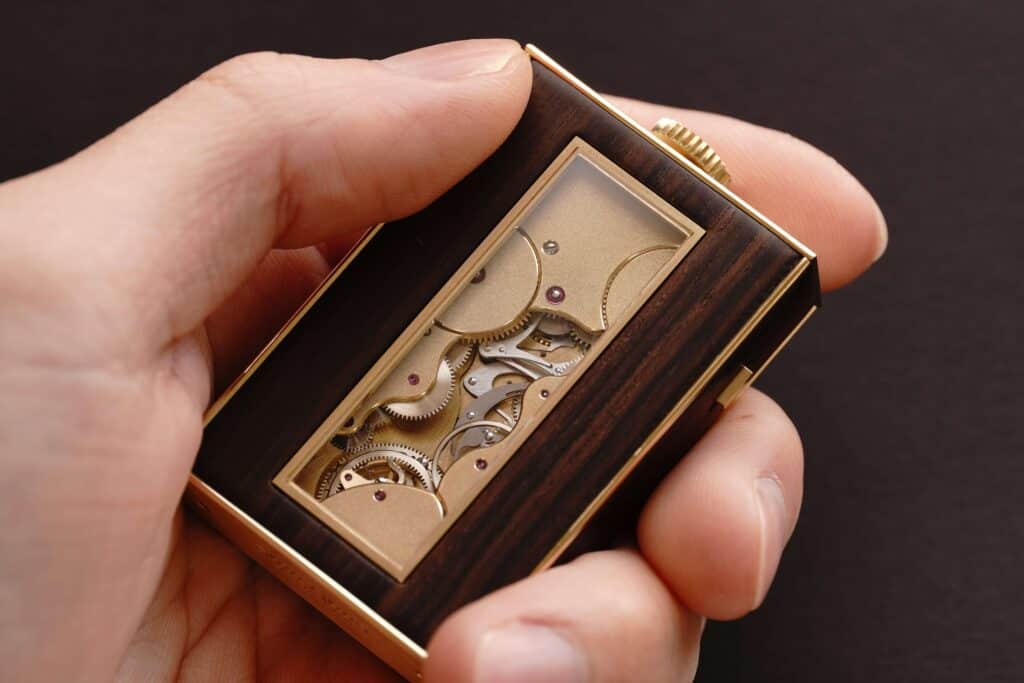
A graduate of the National Institute of Technology, Toyota College (March 2020), his winning piece, Fuyu-Geshiki(“Winter Landscape”), is as much a mechanical achievement as it is a study in atmosphere.
Ohno’s intent is immediately evocative: to recreate the quiet contemplation of a winter scene viewed from indoors. The ebony and brass case becomes a window frame, intensifying the contrast between interior stillness and the living landscape beyond. Across the dial and movement, three themes unfold, the softness of snow, the fluidity of water, and the subtle dynamism of nature.
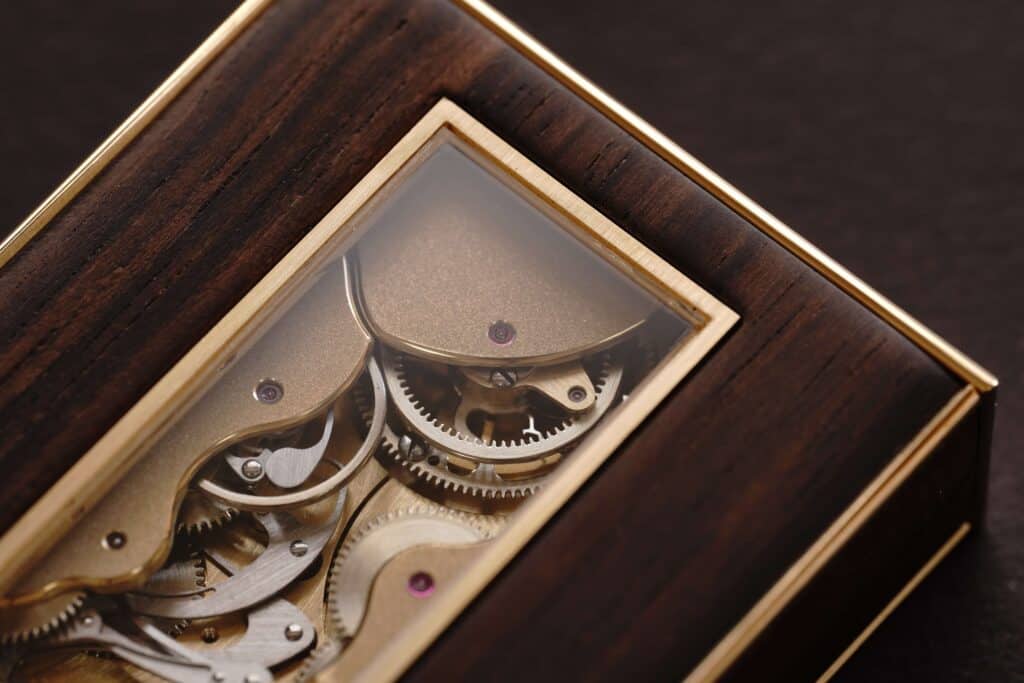
A frosted finish, achieved through emery blasting, lends the dial and bridges a delicate, light-diffusing texture reminiscent of freshly fallen snow. In contrast, satin-finished wheels and plates suggest the steady flow of a stream. In a particularly poetic detail, each wheel tooth is hand-polished to a mirror finish, capturing the fleeting shimmer of sunlight on water. Even the motion of the hammers is choreographed, evoking branches gently parting snow, an interplay of textures and layers that creates remarkable visual depth.
Architecture in service of expression
Technically, Ohno’s piece is anchored by its striking mechanism, conceived not as a hidden complication but as the narrative centre of the watch. Unusually positioned on the movement side rather than beneath the dial, it enhances both depth and transparency, allowing the mechanism to become an integral part of the landscape.
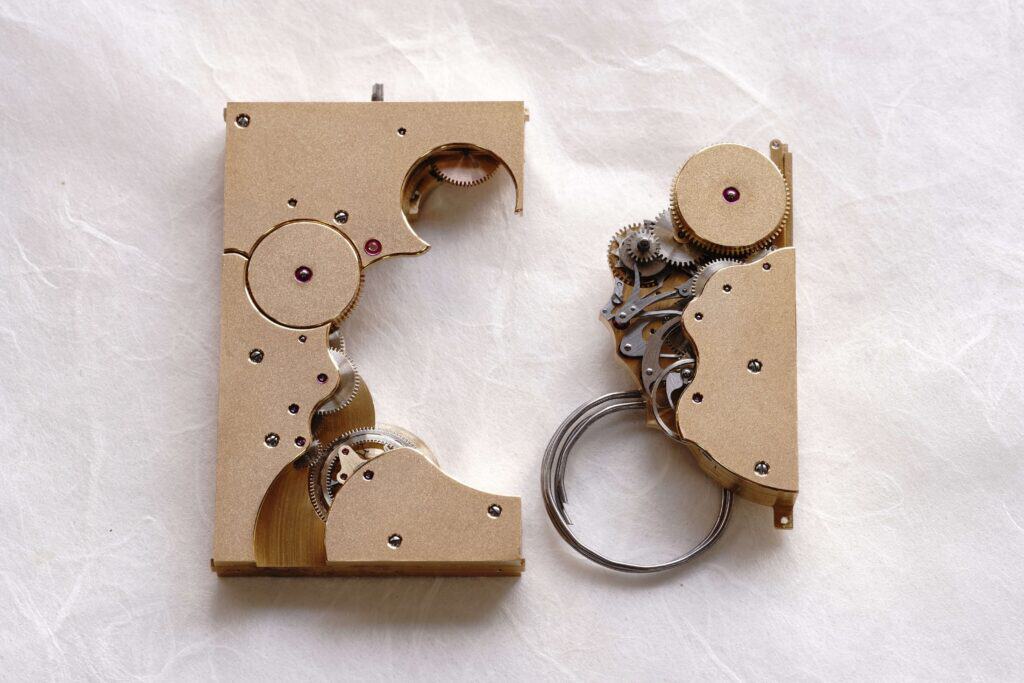
The gongs, fashioned from piano wire, produce a deliberately soft, almost meditative tone. Meanwhile, a modular construction separates timekeeping from the striking system, ensuring precision in adjustment and ease of servicing, hallmarks of thoughtful independent watchmaking.
Functionality is no afterthought. The quarter repeater is activated directly via the crown, eliminating the need for a separate pusher and preserving the purity of the case. Practical considerations extend further, a safety mechanism disengages the striking system when power reserves are low, while a locking device prevents accidental activation once engaged. This system, driven by planetary gears and cams, reflects a rigorous approach to reliability.
The independent spirit
Ohno’s working method is as intimate as his creation. Operating from a workshop set up in the main room of his flat, mindful of neighbours below, he relies on a desktop CNC machine and a watchmaker’s lathe. Every stage, from initial design to final adjustment, is executed by his own hand.
This philosophy lies at the heart of the Young Talent Competition: not replication, but authorship. In Fuyu-Geshiki, Shin Ohno has not only demonstrated technical capability, but articulated a distinct voice, one that quietly, yet confidently, signals the future of independent watchmaking.
For more information please visit F.P.Journe and The Hour Glass