
World Watch Day 2026: Celebrating the People, Passion and Craftsmanship Behind Horology
From Geneva to Tokyo, London to Riyadh, the second edition of World Watch Day brought together the international watch community in a global celebration of watchmaking as a living heritage.
There is something rather special about a mechanical watch. Beyond its ability to measure the passing hours, it represents centuries of human ingenuity, precision engineering and artistic expression. Every movement tells a story, every complication reflects the imagination of its creator, and every watchmaker contributes to a tradition that continues to evolve.
It is this enduring fascination with horology that lies at the heart of World Watch Day, which returned on 10 October 2026 for its second international celebration.
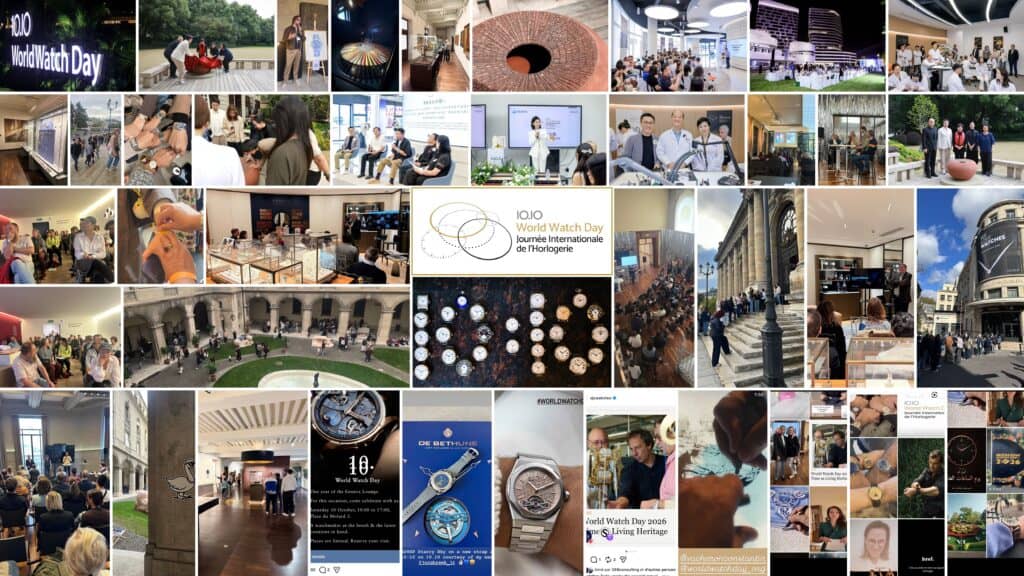
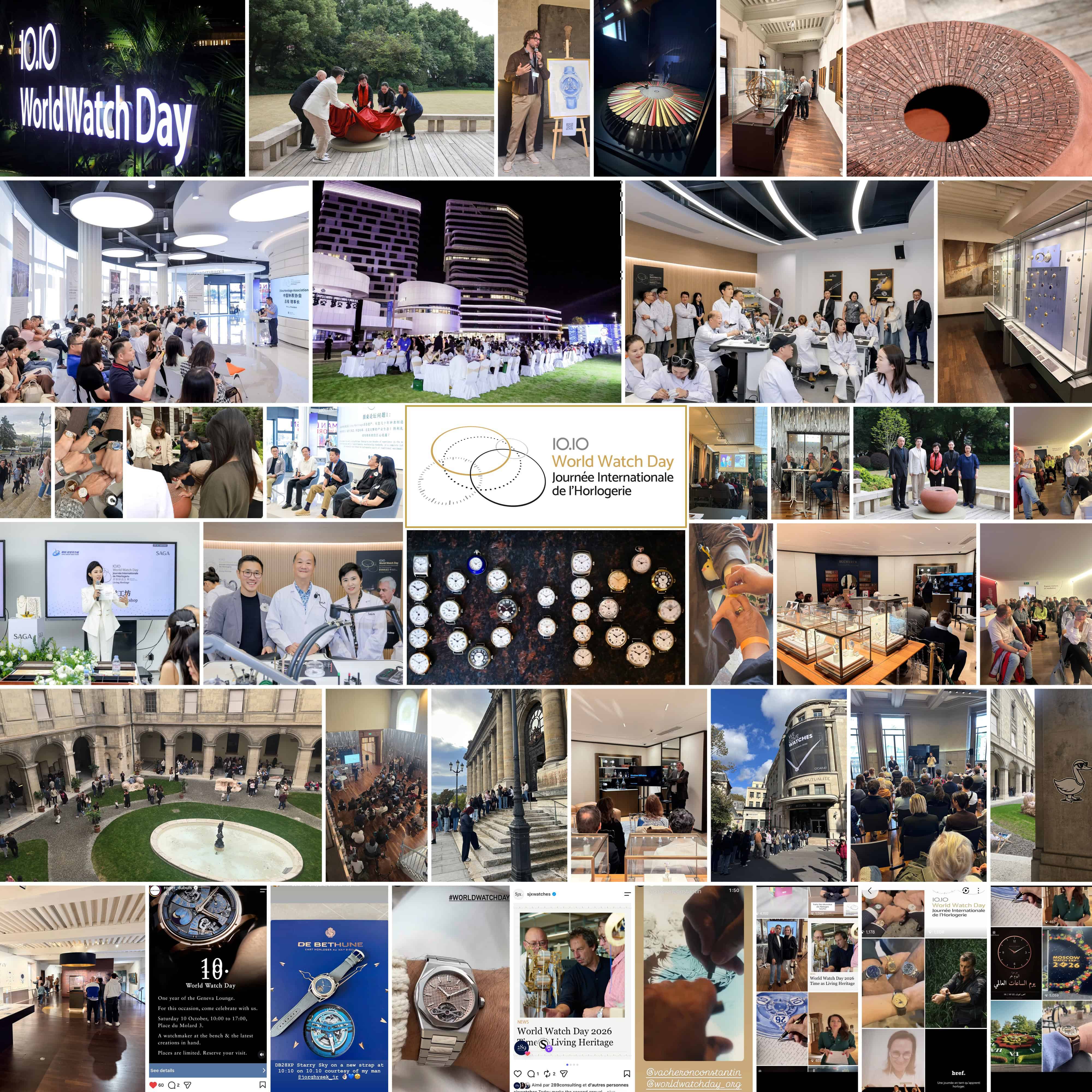
Under the theme Time as Living Heritage, the initiative brought together some 50 events across 18 countries and four continents, involving museums, watchmaking schools, independent artisans, collectors, established brands and enthusiasts. The celebration also extended into the digital world, with more than 700 online posts sharing personal stories, watchmaking experiences and a collective appreciation of the craft.
Importantly, World Watch Day is not centred around one particular venue or organisation. Instead, it is a celebration shaped by the international horological community itself. Whether opening the doors of an atelier, organising an exhibition, hosting a discussion or simply sharing a favourite timepiece, everyone has an opportunity to contribute.
The choice of 10 October is also rather appropriate. The familiar 10:10 position of watch hands provides a visual connection to the date, with enthusiasts invited to share a wrist shot using the hashtag #WorldWatchDay.
A World of Watchmaking
The geographical reach of this year’s celebration demonstrated just how diverse and interconnected the world of horology has become.
In Geneva, the Musée d’Art et d’Histoire explored how younger generations interpret and transmit watchmaking culture, while MuMAPS and Association Mec-Art in Sainte-Croix turned their attention towards the future of mechanical arts. In Paris, We Love Watches hosted discussions at the Maison de la Mutualité, examining the relationship between heritage and contemporary creativity.
Further east, Istanbul Watch Festival marked the occasion with two days of exhibitions, talks and workshops, accompanied by a dedicated World Watch Day party.
In Riyadh, Timeology Nights at the Four Seasons Hotel brought collectors, exhibitors and industry professionals together through an event organised in collaboration with the Collectors Watch Club.
Japan also played an important role. Tokyo Watch Week welcomed the international watch community to Aoyama from 9–12 October. Its theme, ‘Bridge’, reflected the ambition to connect different generations of watchmaking and strengthen relationships between Japan and the wider world. In Osaka, an exhibition explored the fascinating connections between mechanical watchmaking, astronomy and physics.
China’s contribution brought together craftsmanship, innovation and artistic expression. At Sino Swiss Inno Park in Dongguan, a full day was dedicated to World Watch Day, featuring discussions on craftsmanship, knowledge transfer and innovation, alongside immersive watchmaking workshops. In Shanghai, Hantang Culture presented ‘Sundial’, an artwork inspired by one of humanity’s earliest methods of measuring time.
Bringing Horology Closer to New Audiences
Some of the most compelling aspects of World Watch Day were the opportunities for people to experience watchmaking first-hand.
In New York, the Horological Society of New York opened its library and classroom to the public, offering a chance to discover the educational and historical resources behind one of the world’s leading horological institutions.
In London, The Watch Collectors’ Club hosted a practical watch photography workshop, while in Besançon, visitors were welcomed for museum tours and demonstrations of traditional horological skills.
These initiatives underline an important point. The future of watchmaking depends not only on the watches being produced today, but also on the knowledge, skills and enthusiasm passed on to tomorrow’s watchmakers, collectors and enthusiasts.
Museums preserve the past, schools develop future talent, independent watchmakers keep traditional skills alive, and collectors provide a continuing connection between generations. Each has a valuable role to play.
A Growing International Community
The reach of this year’s celebration was reflected in its media coverage, which extended across 14 markets. Publications including Vanity Fair, Le Figaro, Le Nouvel Obs, Hodinkee, NetEase News and Southern Metropolis Daily helped bring the story to a wider audience, with monitored coverage representing a potential reach of more than 100 million people.
However, perhaps the most significant achievement was the willingness of so many different organisations and individuals to participate.
In an industry often associated with exclusivity, craftsmanship and exceptional objects, World Watch Day offers an opportunity to focus on something more fundamental: a shared passion for the art and science of timekeeping.
It is also a reminder that horological heritage is not simply something to be admired behind museum glass. It remains alive in workshops, classrooms, collections and conversations around the world.
Looking Ahead to 2027
The next edition of World Watch Day will take place on 10 October 2027, with programme submissions opening in spring 2027. Organisations, watchmakers, collectors and enthusiasts are already welcome to make contact with the team to discuss their plans.
As the initiative continues to develop, its underlying message remains refreshingly simple. Watchmaking is much more than the creation of beautiful and technically sophisticated timepieces. It is a human story, shaped by generations of skill, curiosity, innovation and dedication.
And perhaps that is the real significance of World Watch Day: celebrating not just the watches that measure our time, but the people who make that timekeeping possible.
For more information please visit World Watch Day