
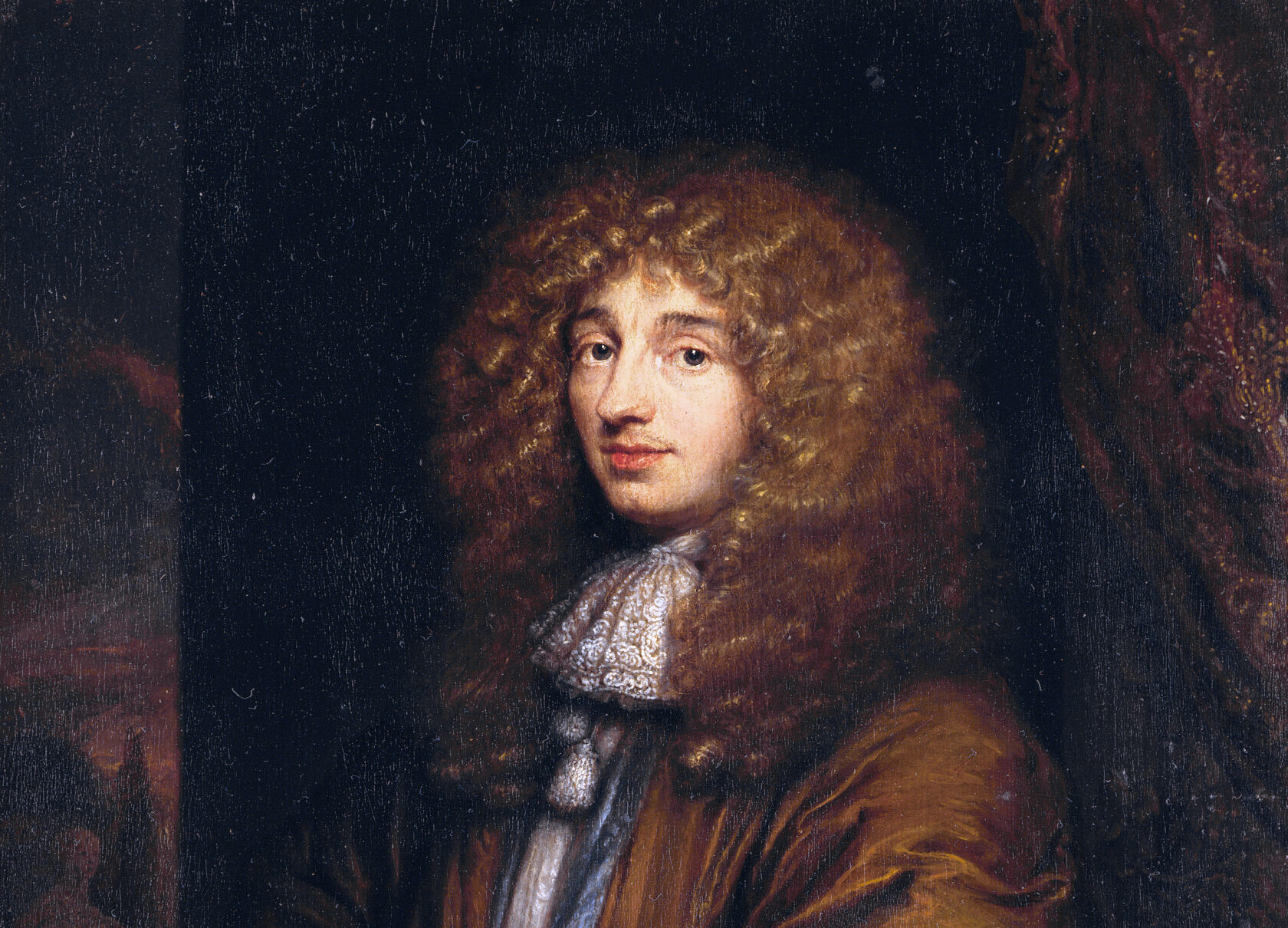
The Greatest Horologists of Their Time: Christiaan Huygens (1629–1695)
In this occasional series, we will explore the life and achievements of the greatest and most respected horologists of their time. This feature focuses on Christiaan Huygens, the Dutch mathematician, astronomer and physicist that transformed the science of horology through inventions that remain at the very heart of the majority of mechanical clocks and watches.
Few individuals have had a more profound impact on the history of timekeeping than Christiaan Huygens. Without Huygens there would be no accurate pendulum clocks, no practical balance spring watches and, arguably, no modern mechanical watchmaking.
A Golden Age Genius
Born in The Hague in 1629 during the Dutch Golden Age, Huygens displayed remarkable intellectual ability from an early age. Educated in mathematics, astronomy and physics, he quickly became one of Europe’s leading scientists, later becoming a Fellow of the Royal Society in London and a member of the French Academy of Sciences (below). In the portrait below, Christiaan Huygens is standing in front of the spring driven pendulum clock.
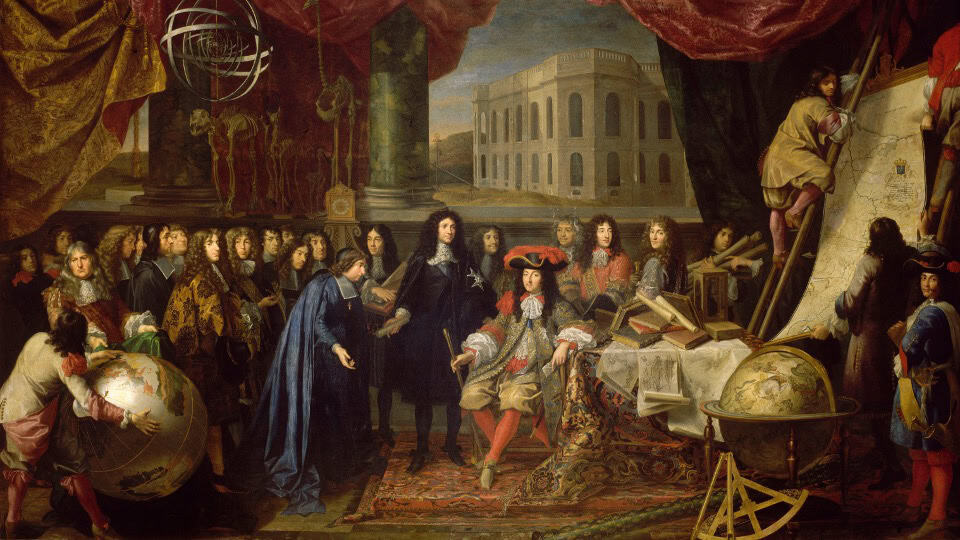
While history remembers him for discovering Saturn’s moon Titan, explaining the planet’s rings and developing the wave theory of light, horologists celebrate him for something far more personal, the relentless pursuit of accurate time.
Revolutionising the Pendulum Clock
Before Huygens, clocks were notoriously inaccurate, often losing or gaining many minutes every day.
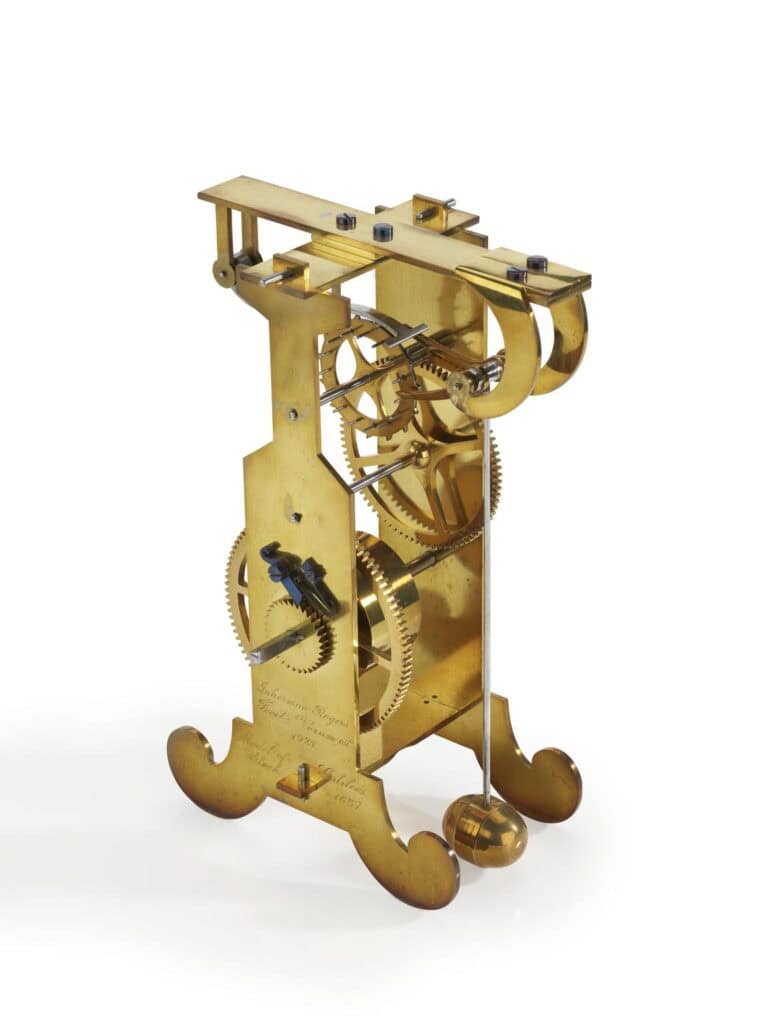
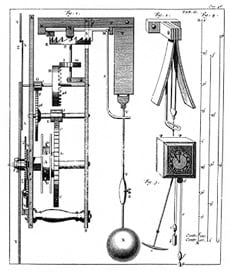
Inspired by Galileo’s earlier observations of pendulum motion (above), Huygens realised the pendulum could regulate a clock with unprecedented precision. In 1657 he designed the world’s first practical pendulum clock, built by Dutch clockmaker Salomon Coster (below).
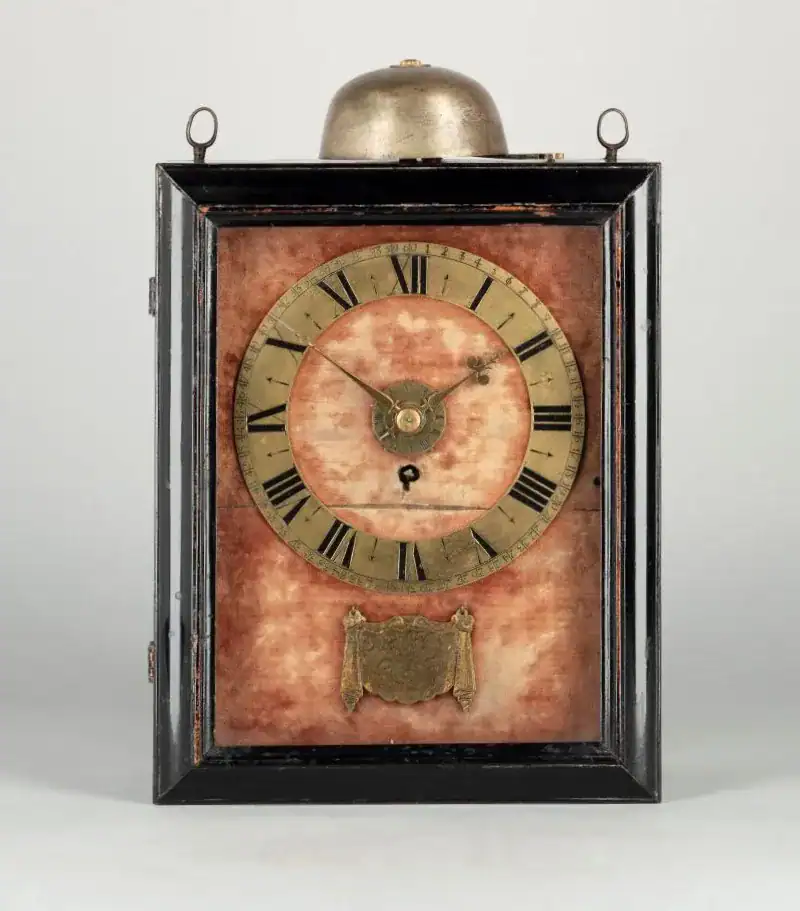
Accuracy immediately improved from around fifteen minutes per day to less than a minute, an extraordinary achievement for the seventeenth century. Prior to the invention of the pendulum, clocks would only have one hand for the hours, post-invention, the minute hand was introduced.
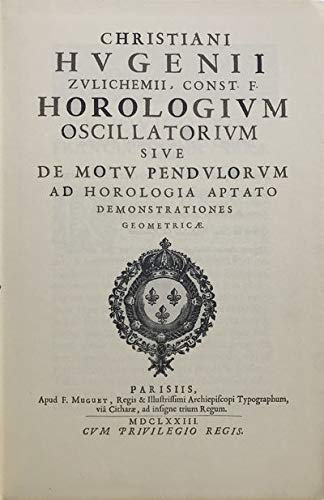
Never satisfied, Huygens continued refining his invention, developing the cycloidal pendulum, which maintained a more consistent period regardless of the swing’s amplitude. His landmark publication Horologium Oscillatorium (1673) remains one of the most important scientific works ever written on pendulum mechanics.
The Balance Spring That Changed Everything
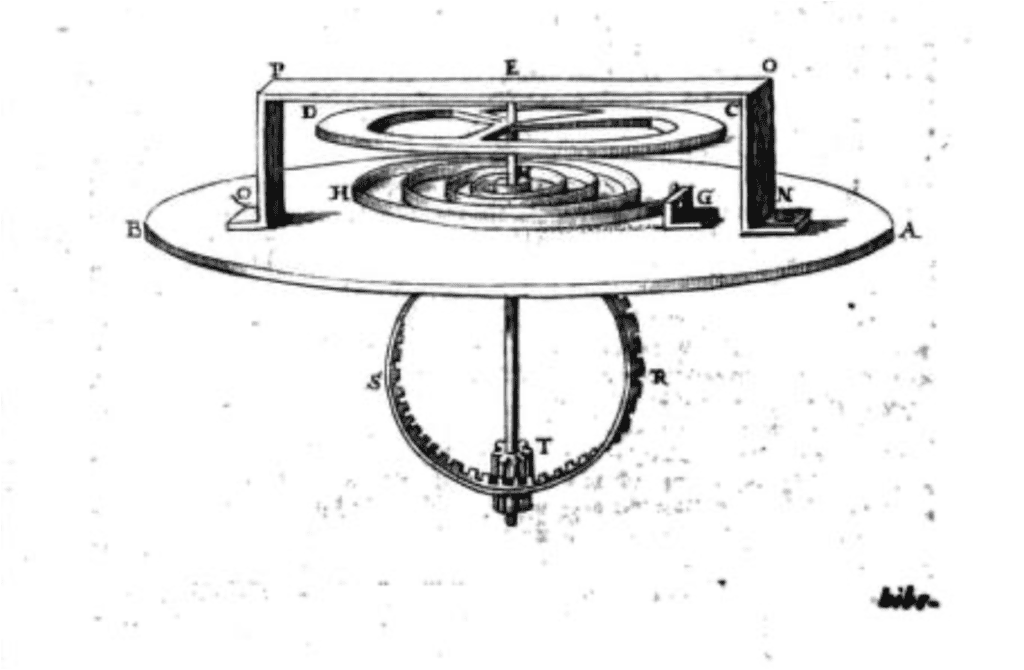
If the pendulum transformed clocks, Huygens’ next invention transformed watches. Portable timepieces had long suffered from poor accuracy because the balance wheel lacked an effective regulating mechanism. In January 1675, Huygens conceived the idea of attaching a spiral spring to the balance wheel, dramatically improving its regularity of oscillation.
Working with Parisian clockmaker Isaac Thuret, he produced the first successful watch using this revolutionary design. The invention increased watch accuracy from errors measured in hours to around ten minutes per day, making portable timekeepers genuinely practical.
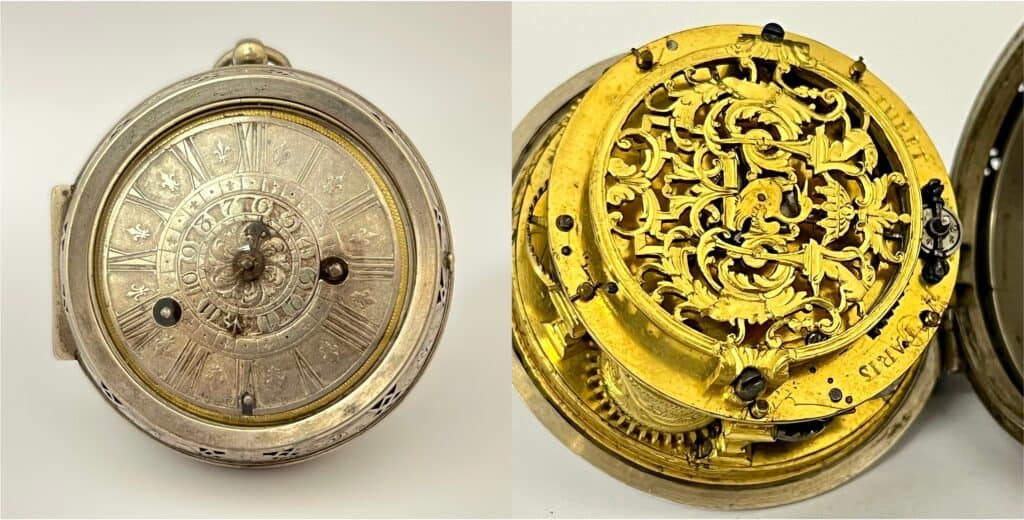
Today, almost every traditional mechanical watch still relies upon this same fundamental principle.
The Great Balance Spring Debate
Like many revolutionary inventions, the balance spring was not without controversy. English scientist Robert Hooke fiercely argued that he had conceived the idea years earlier and accused Huygens of appropriating his work. Hooke even commissioned Thomas Tompion to construct watches demonstrating his own design.
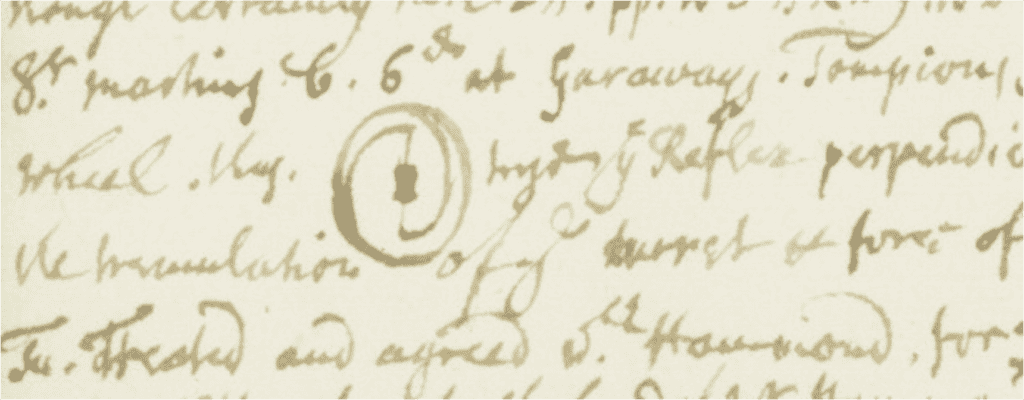
To prove his prior claim to the invention of the balance spring, Hooke immediately commissioned Thomas Tompion to make a watch containing the device, which was signed ‘R. Hooke invenit an. 1658. T. Tompion fecit 1675’. In his diary Hooke drew the sketch shown above, noting ‘Tompions, I shew’d my way of fixing Double springs to the inside of the Balance wheel thus’.
Modern historians generally accept that Hooke almost certainly developed the concept independently, and perhaps even earlier, but Huygens was the first to publish, patent and successfully implement a practical balance spring watch. Consequently, history has largely credited Huygens with the invention, while acknowledging Hooke’s significant contribution.
Beyond Horology
Huygens’ influence extends far beyond clocks and watches. He was among the first to study the phenomenon of synchronisation after observing two pendulum clocks hanging from the same beam eventually swinging in perfect opposition, a discovery still known today as ‘Huygens’ Synchronisation’. Modern physicists continue to study this remarkable phenomenon over 350 years later.
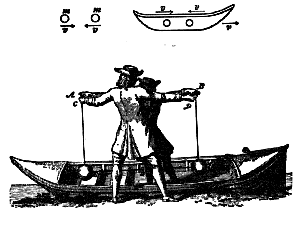
His understanding of oscillation, harmonic motion and mechanics laid foundations that continue to influence engineering, physics and precision timekeeping.
A Legacy That Never Stops Ticking
It is remarkable that someone who never established a watchmaking workshop should become one of history’s greatest horological pioneers.
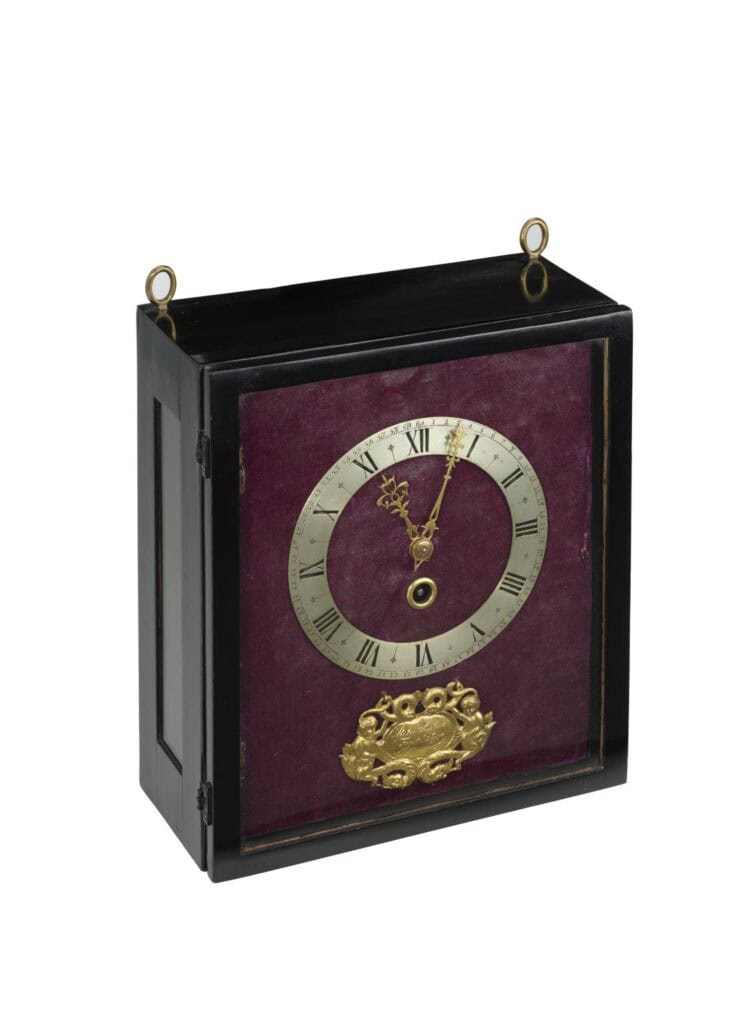
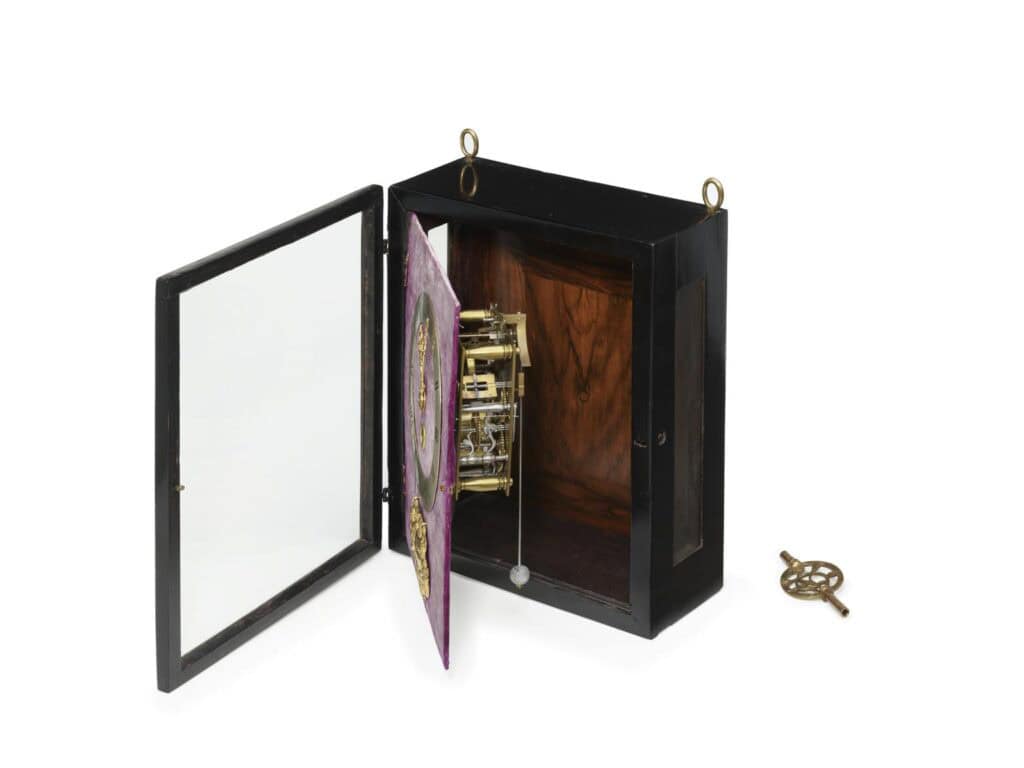
This early pendulum clock above by Pieter Visbach, was made in 1660 in the Netherlands. It contains many of the attributes of Christiaan Huygens’s original design for a pendulum clock. It is signed ‘Pieter Visbach Fecit Hagae met priuilege’, or ‘Peter Visbach of the Hague by permission’ – that is to say made within the terms of Huygens’ patent. (Image courtesy of Science Museum Group/The Clockmakers’ Museum © The Board of Trustees of the Science Museum)
Every time a pendulum swings in a mechanical clock and a balance wheel oscillates against a hairspring inside a mechanical watch, it pays a tribute to Christiaan Huygens. His inventions provided the precision that enabled navigation, scientific discovery and the evolution of portable timekeeping.
His inventions gave mechanical timekeeping the accuracy it had previously lacked and established principles that remain fundamental to modern horology. Few individuals can truly claim to have changed the course of clock and watchmaking forever.
More than three centuries after his death in 1695, Huygens’ ideas continue to regulate the heartbeat of mechanical clock and watchmaking. Christiaan Huygens undoubtedly deserves his place among the greatest horologists of all time.
Hero Image: Portrait of Christiaan Huygens by Caspar Netscher, 1671. Public Domain