
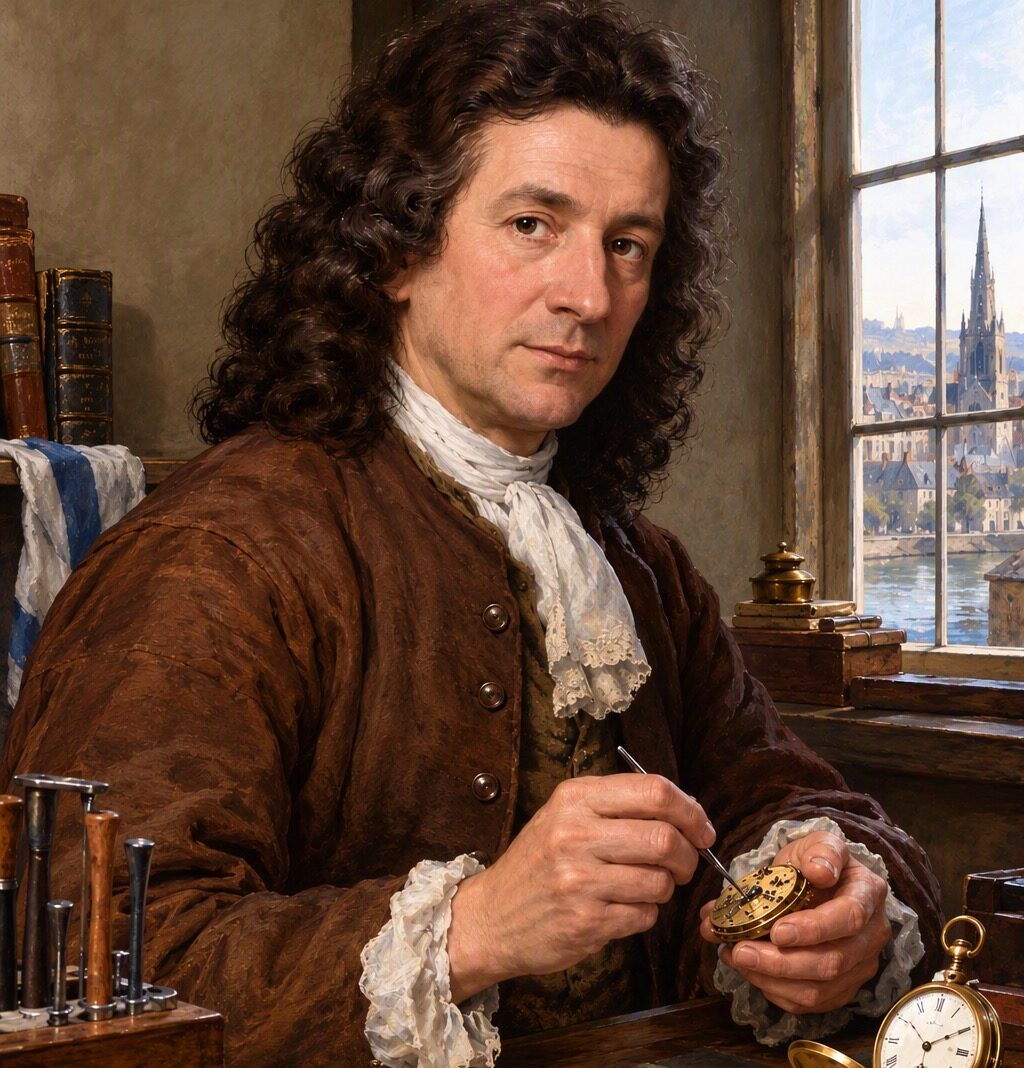
Huguenot Masters Of Their Time: Charles Cabrier I (1670–1736)
This occasional series explores the enduring legacy of Huguenot craftsmanship, and innovation, celebrating the artisans, who first came to London in the 17th century, and whose influence helped shape the art of fine watchmaking and precision engineering. From intricate techniques passed down through generations to bold contributions that transformed craftsmanship, this series shines a light on a remarkable community of makers whose work still resonates today.
Among the Huguenot craftsmen who established themselves in London following the religious persecution of French Protestants, Charles Cabrier occupies a particularly important place. A skilled watchmaker and businessman, he was not only responsible for creating watches that survive in major collections today, but also founded a remarkable horological dynasty that continued for three generations.
His story is one of migration, enterprise and craftsmanship, tracing a remarkable journey from France through the Huguenot refuge of Amsterdam to the City of London.
From Lyon to London
Charles Cabrier was born in Lyon in 1670 into a family already associated with skilled manufacture. His father, Jean Cabrier, was a manufacturer of glazed silk taffeta, an expensive and technically demanding fabric that was produced in Lyon during the second half of the 17th century.
The family’s fortunes changed dramatically following the Revocation of the Edict of Nantes in 1685, when Louis XIV effectively withdrew the religious freedoms previously granted to French Protestants. Like thousands of other Huguenots, the Cabriers were forced to leave France.
They found refuge in Amsterdam, where the city’s authorities actively encouraged skilled Huguenot craftsmen to settle. Jean Cabrier was invited to establish a silk taffeta manufactory and was provided with equipment, 500 florins in start-up funds and an annual pension of 250 florins. In return, he was required to train local Dutch workers.
For the young Charles, Amsterdam provided an important first encounter with a cosmopolitan commercial environment in which French craftsmanship, Dutch enterprise and international trade came together. At some point during the 1690s, Cabrier left Amsterdam for London. By the end of the decade he had established himself as a watchmaker in the City and, in 1697–98, was admitted to the Worshipful Company of Clockmakers by redemption.
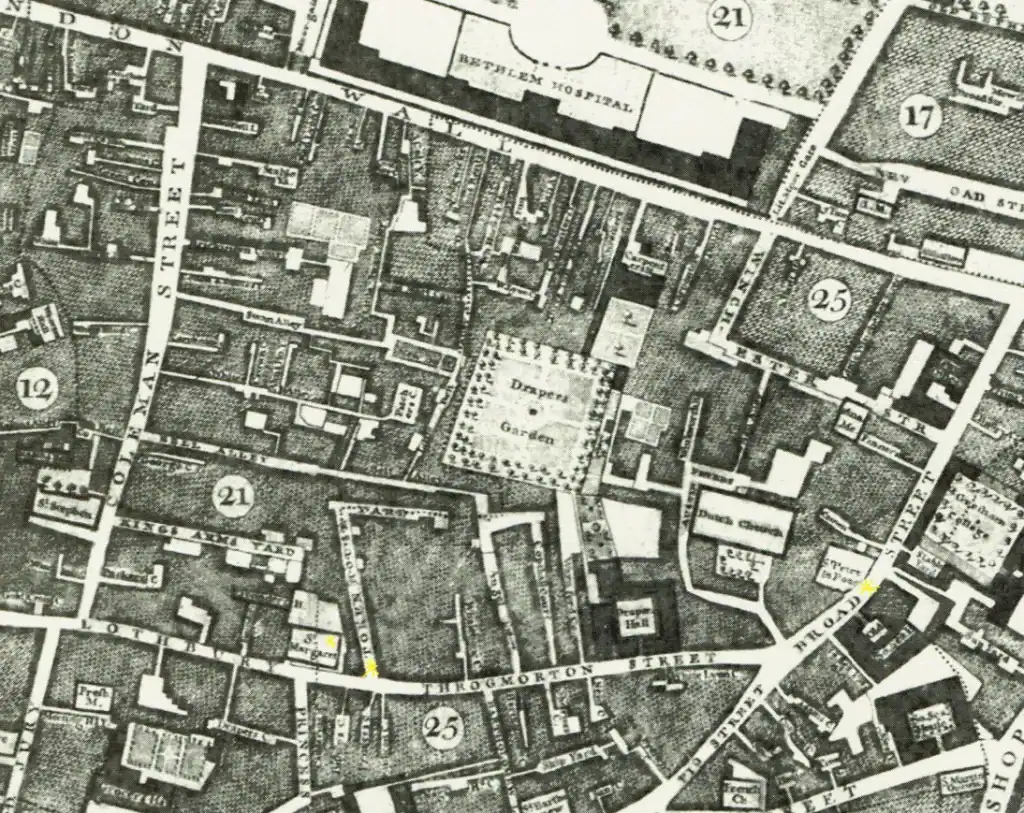
His first recorded London address was in Lombard Street, at the heart of the City’s commercial district. He subsequently established his business at the Sign of the Dial in Tokenhouse Yard, close to St Margaret Lothbury.
The location was significant. This was the world of the City of London, where merchants, financiers, craftsmen and scientific instrument makers operated within an increasingly sophisticated commercial network. Cabrier had arrived in a city in which demand for portable watches and domestic clocks was growing rapidly.
A watchmaker in the City
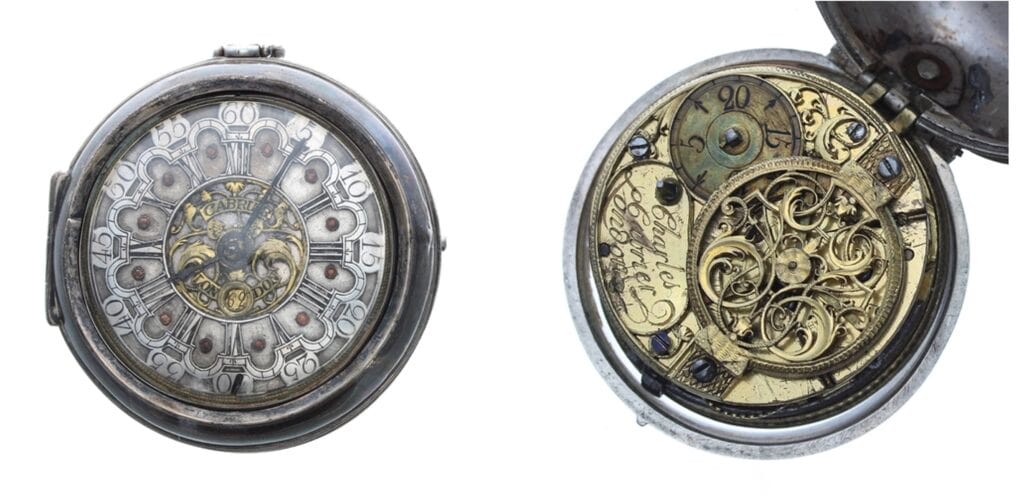
Cabrier’s surviving work demonstrates that he was producing sophisticated watches for a discerning clientele. A particularly revealing glimpse of his business appears in an advertisement published in the Daily Courant in November 1708. A silver watch with a tortoiseshell case, decorated with studs and made by Charles Cabrier, had been lost somewhere between Great St Helen’s in Bishopsgate and Covent Garden.
The reward offered for its return was thirty shillings, while anyone attempting to pawn or sell it was asked to stop it. Such an advertisement is a small but evocative piece of evidence, placing Cabrier’s watches within the everyday life of early 18th-century London.
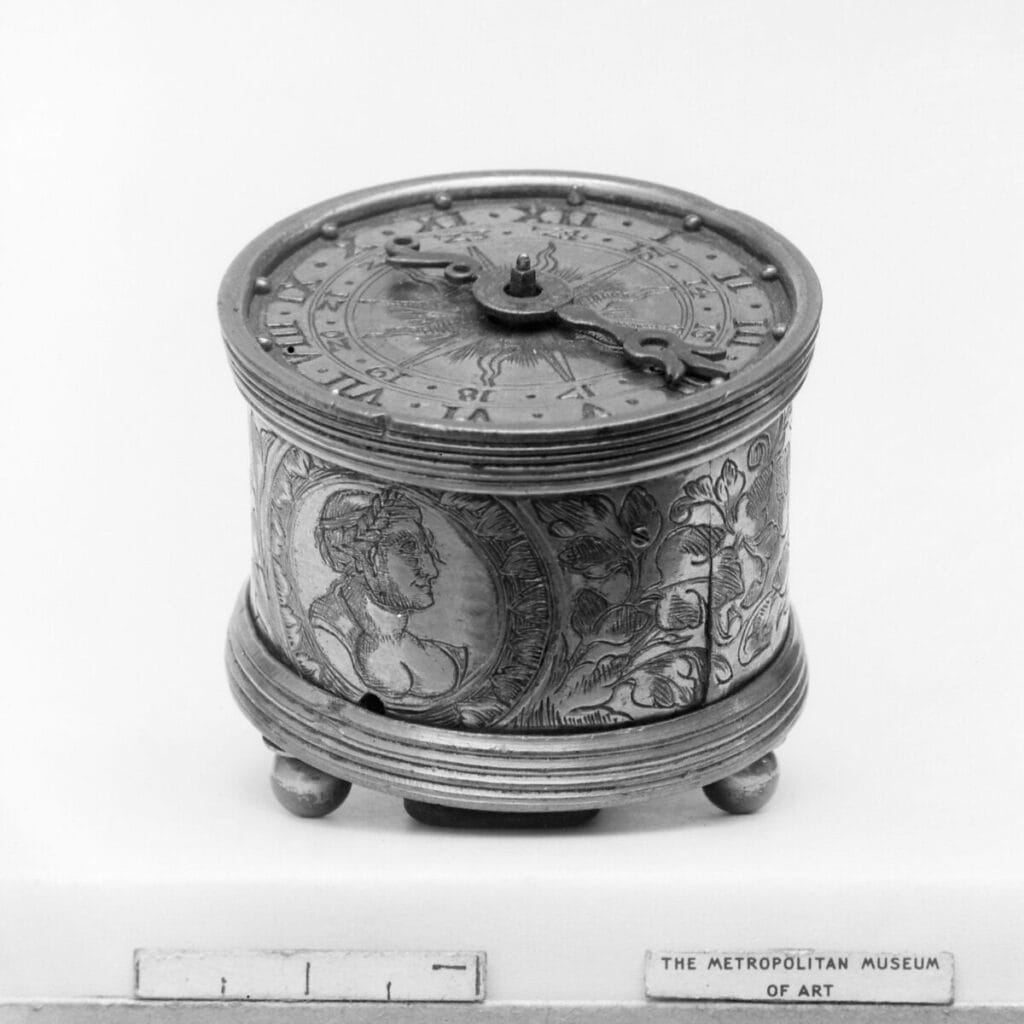
The surviving examples attributed to him confirm the reputation suggested by that advertisement. The Metropolitan Museum of Art, for example, preserves a clock-watch attributed to Charles Cabrier I, dating from the period in which he was active in London. The gilt copper case and compact construction reflect the increasingly sophisticated nature of portable timekeeping at the beginning of the 18th century.
Other surviving Cabrier watches demonstrate the breadth of his production, including examples incorporating repeating mechanisms and highly elaborate cases.
One particularly interesting example, dated to around 1730, is a gold half-quarter repeating watch attributed to Charles Cabrier. Its movement combines a repeating mechanism with an elaborate case incorporating enamel and gem-set decoration. Such watches were not merely instruments for measuring time. They were objects of wealth, fashion and technical sophistication.
Building a dynasty
Perhaps Cabrier’s greatest legacy, however, was not a particular invention or individual watch. It was the workshop and family tradition that he established. In 1719, Cabrier took his son Charles as an apprentice. The younger Charles would eventually become one of the most accomplished London watchmakers of his generation and, in 1757, Master of the Clockmakers’ Company.
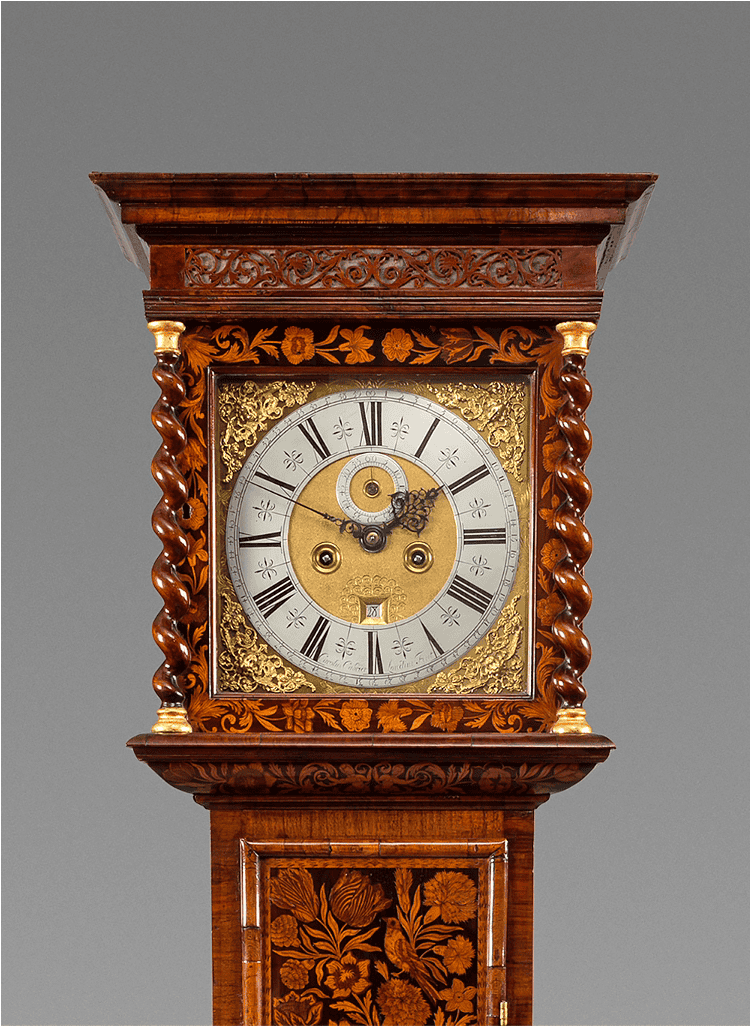
This was more than simply a father teaching a son a trade. The apprenticeship represented the transmission of a highly specialised body of knowledge at a time when horological expertise was still fundamentally dependent upon practical experience.
The younger Charles was freed in 1726 and went on to establish his own considerable reputation. His surviving watches demonstrate an increasingly sophisticated approach to repeating mechanisms, decoration and case design. One example in the Metropolitan Museum of Art, dating from 1741–42, incorporates a quarter-repeating movement by Charles Cabrier II within an elaborate pair case decorated with a repoussé representation of Apollo.
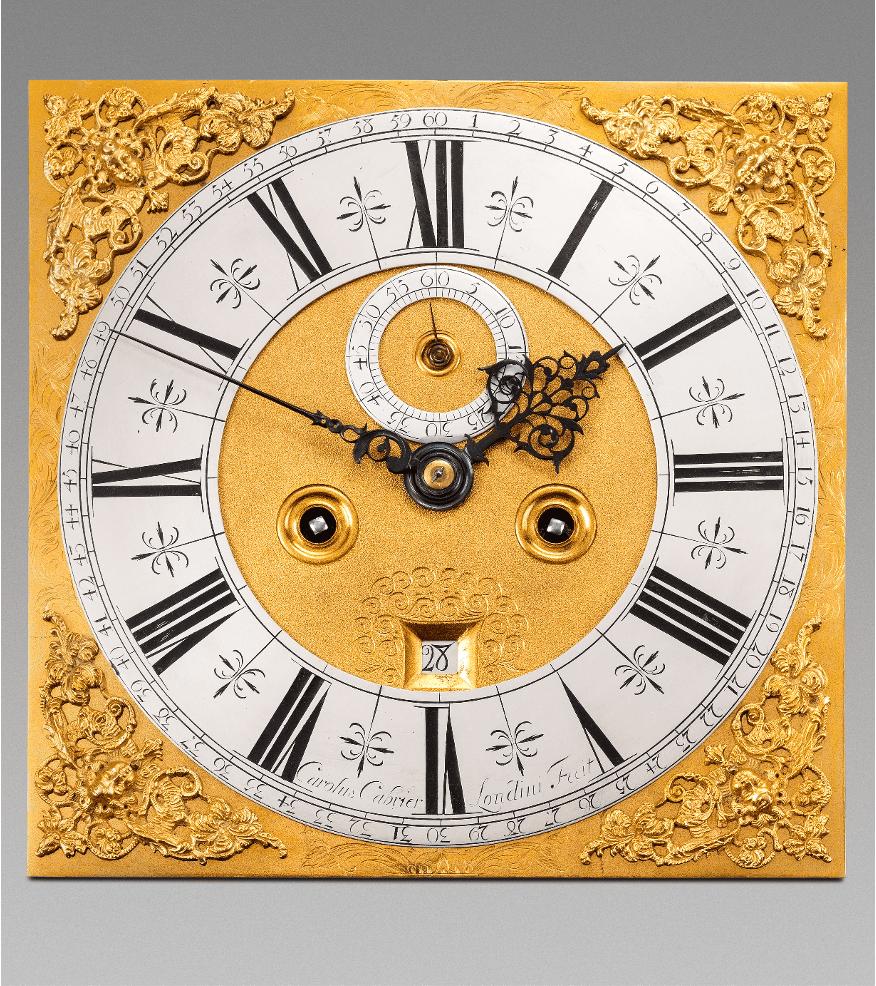
Cabrier I also trained other craftsmen. In January 1725 he took on John Jacmar of St Giles-in-the-Fields, himself of Huguenot descent, as an apprentice. The workshop therefore became part of the wider network through which Huguenot horological skills were transmitted within London.
His other son, John Cabrier, also became a clockmaker and was admitted to the Clockmakers’ Company in 1730. Although John died only a few years later, in 1737, the family tradition continued through his brother Charles.
It was ultimately this continuity that made the Cabriers so important. Three generations of the family would work as London clock and watchmakers, each contributing to the development of English horology.
A successful Huguenot craftsman
Cabrier’s career also illustrates something important about the Huguenot experience in London. The refugees who arrived from France were often described simply as craftsmen bringing continental skills to England. Yet the story of Cabrier reveals a more complex picture.
He was a craftsman, but he was also an entrepreneur who successfully established a business in one of Europe’s most important commercial cities. His will, written in October 1733 and proved in 1736, provides an unusually revealing glimpse of the prosperity he had achieved.
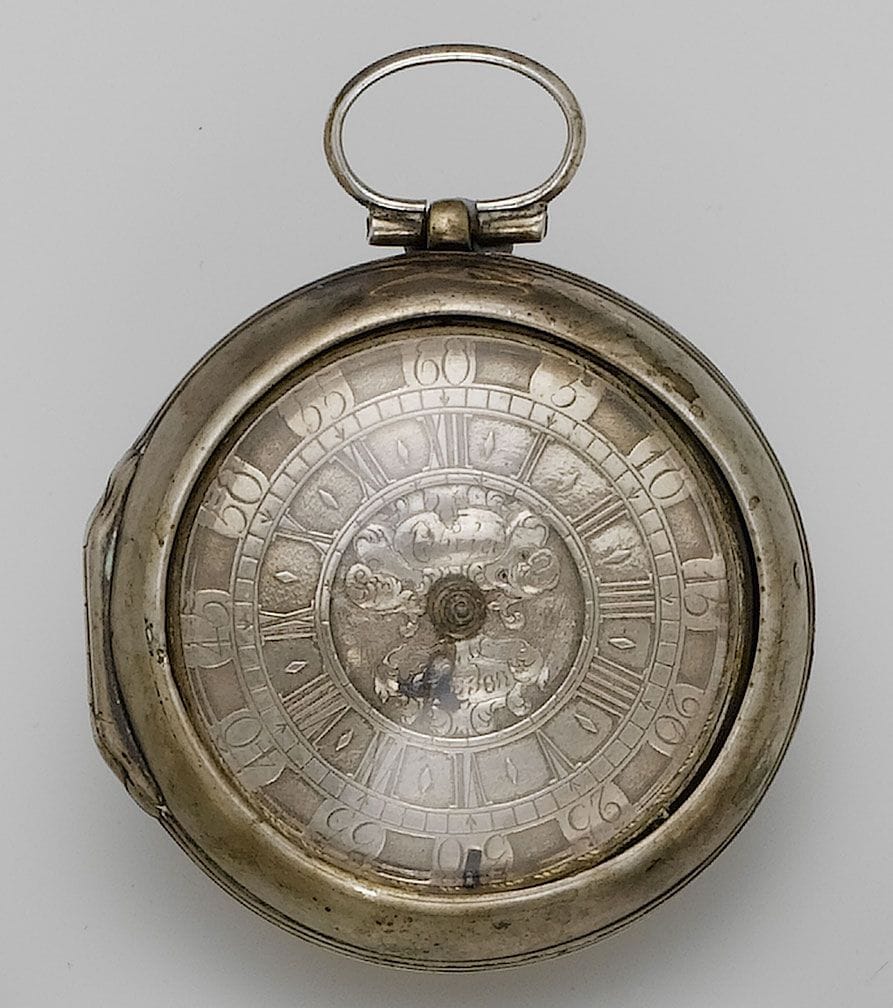
Charles Cabrier, London. Courtesy of Bonhams
Cabrier left property and financial interests to his surviving children, while also making specific provision for gold watches and chains, rings and earrings that he had already given to his second wife, Mary Fenwick, and his daughters Rebecca and Mary. The will was witnessed by another Huguenot watchmaker, Peter Mallet, demonstrating the continuing connections between members of London’s French Protestant community.
This is an important reminder that the Huguenot contribution to British horology was not simply one of technical skill. It was also a story of networks, families, apprenticeships and commercial enterprise.
The Cabrier legacy
Charles Cabrier died in 1736 and was buried at St Margaret Lothbury, close to the area in which he had established his London business. His death marked the end of the first generation of the Cabrier dynasty, but certainly not its influence.
His son Charles Cabrier II would go on to become an eminent watchmaker and Master of the Clockmakers’ Company. His grandson, Charles Cabrier III, continued the family tradition into the later 18th century.
The surviving work of these later generations can sometimes make it difficult to distinguish one Charles Cabrier from another. Yet the story begins with the immigrant watchmaker who arrived in London at the end of the 17th century and established the family name within the City’s horological community.
The Cabriers therefore represent something larger than a successful watchmaking family. They embody the process by which Huguenot craftsmanship became absorbed into, and helped transform, English horology.
Charles Cabrier arrived in London as part of a community displaced by religious persecution. Within a generation his name had become established among the City’s watchmakers, while the workshop he created had become the foundation of a dynasty.
His achievement was not a single technical breakthrough. It was something perhaps more enduring, the creation of a tradition. Through his watches, his apprentices and above all his descendants, Charles Cabrier helped ensure that the skills carried from continental Europe by the Huguenot refugees became an enduring part of London’s extraordinary horological heritage.
Hero Image: Artist’s impression © MrWatchMaster
In the story of British watchmaking, his legacy can still be found ticking quietly inside the cases of watches made almost three centuries ago.