
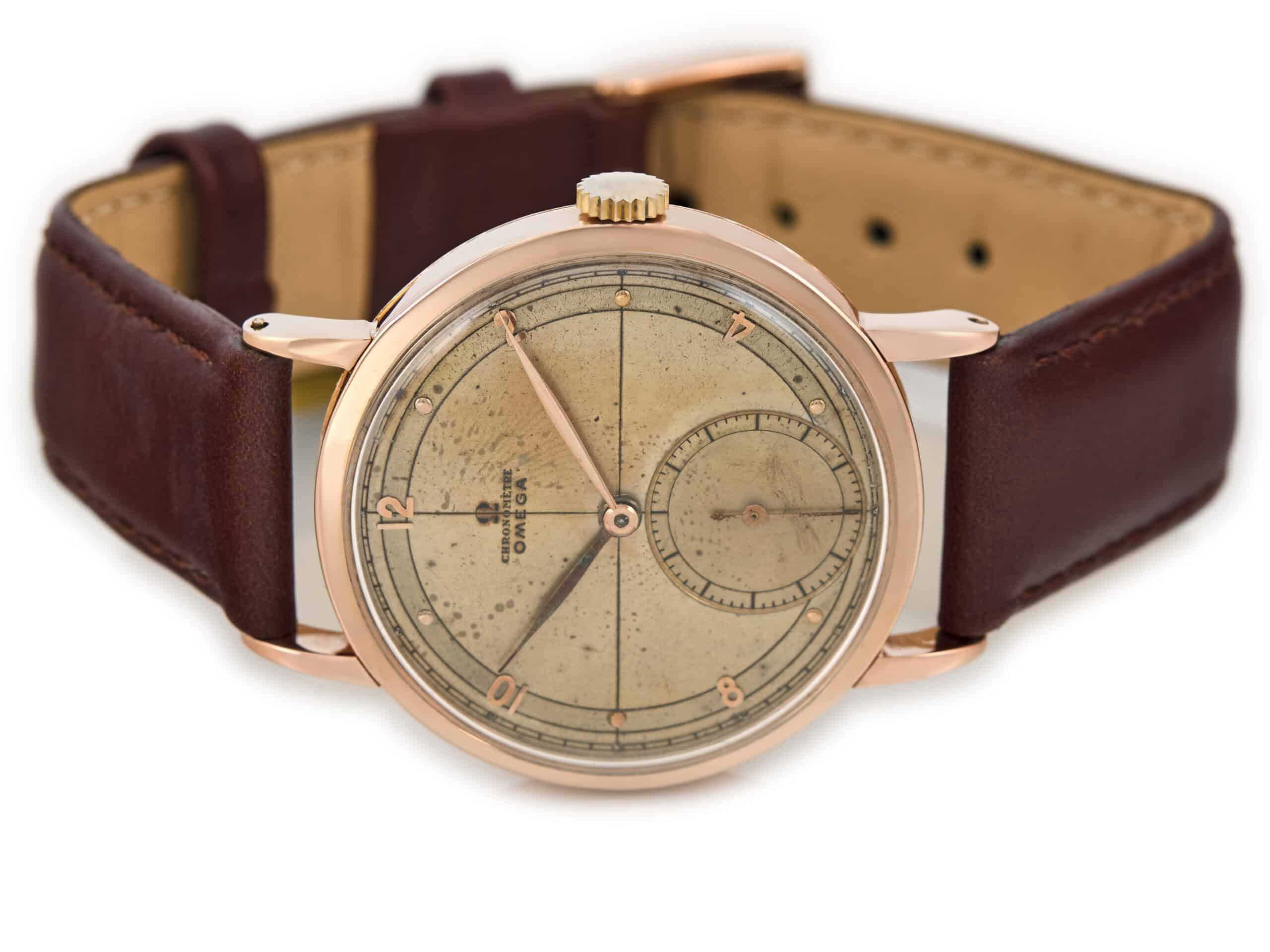
Rediscovering the Golden Age of Omegas: A Collector’s Guide
By Alan Wood
Uncover the history, innovation and timeless appeal of Omega’s mid-century watches, and why these vintage icons continue to captivate collectors today.

Alan Wood, founder of Vintage Gold Watches, is a trusted vintage watch dealer with over 35 years of private collecting experience. His deep knowledge and infectious passion for mechanical timepieces have earned him a highly respected reputation in the industry. Vintage Gold Watches, established in 2011, has become a reputable dealer thanks to Alan’s expertise and a skilled team of restorers. Alan’s love for vintage watches started as a young Mechanical Engineer and grew into an obsession. He believes the finest watches were made in the 1950s, ‘60s, and ‘70s, and he is thrilled to share them with others.
Collectors speak of Omega’s mid-century models with near-reverence. This was the era that forged the brand’s identity and produced some of the most wearable icons in watch history.
Few names evoke as much history and horological prestige as Omega. Since its founding in 1848 in La Chaux-de-Fonds, Omega has built a legacy of innovation, precision and timeless design. From observatory chronometer trials and timing the Olympic Games to supplying military timepieces and, most famously, seeing one of its watches become the first on the Moon, Omega’s journey stands apart.
Today, for collectors and enthusiasts, the mid-20th century, especially the 1940s through the 1960s, represents Omega at its vintage best. This era produced movements and designs that still define what a “classic Omega” means, and today we present a curated look at some of the most significant models from that golden period.
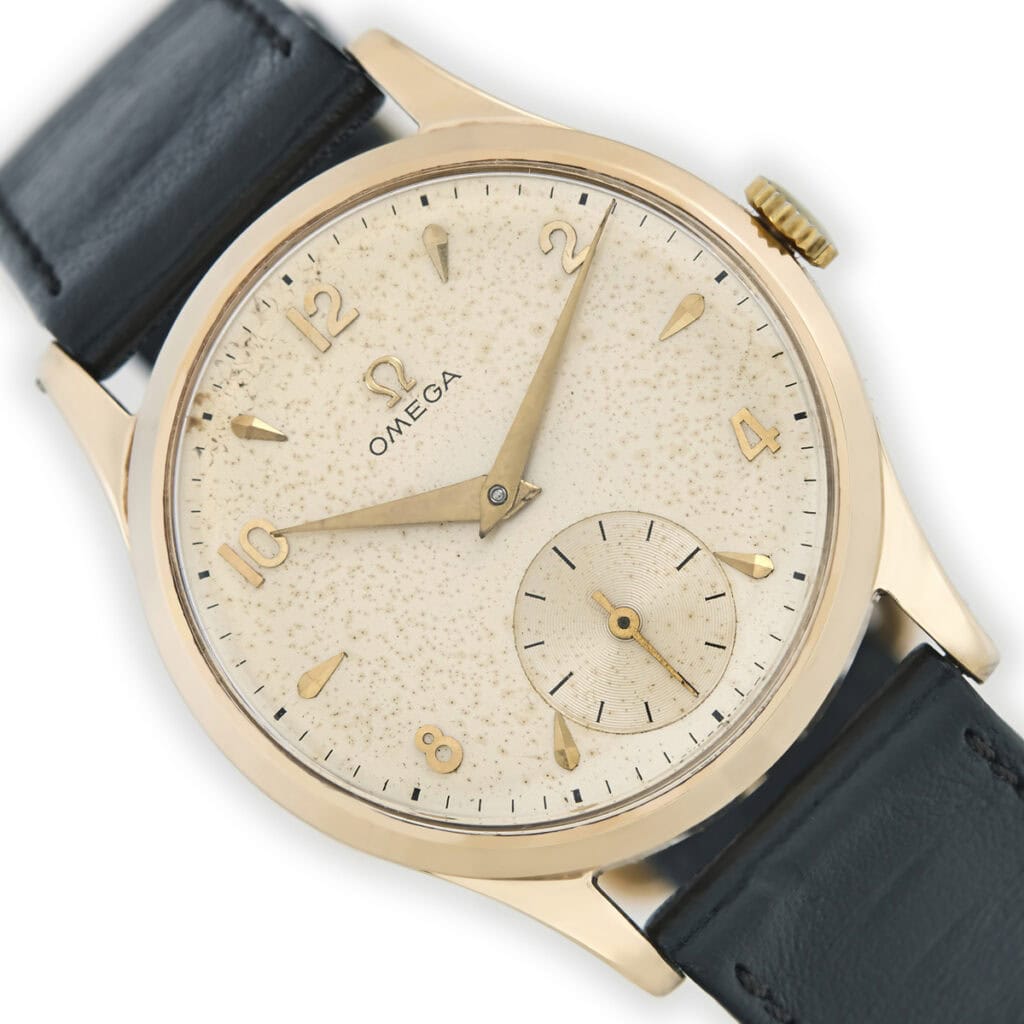
The Early Automatics: Bumper Rotors and Wrist Charm
Post-war watchmaking saw Omega pioneering early automatic calibres. The bumper-rotor automatics, such as Calibre 331, first appearing in 1946, and their successors, feature a half-swinging rotor that gently “bumps” between springs rather than performing a full 360° rotation. The tactile response and subtle winding feel offer a wrist experience quite different from modern full-rotor automatics. Today, these calibres are celebrated by collectors for their character and mechanical innocence.
In our selection, one standout is the 1952 Seamaster Bumper Automatic (Ref. 14351) in 18ct pink gold. By then, the Seamaster line was already becoming Omega’s answer to post-war demand for water-resistant, dependable, everyday wristwatches, versatile enough for both formal and casual wear. It remains a powerful example of early automatic reliability wrapped in vintage elegance.
Hand-Wound Classics: The 30T2 PC
Of course, not all vintage charm lies in early automatic movements. Omega’s manual-wind calibres have long held a revered place among purists. The 1947 Calibre 30T2 PC is a perfect example, known for its simplicity, robustness and high precision. It found life across elegant dress watches and military-issue pieces alike, earning its reputation as one of the most reliable manual movements of its time. For many collectors, a well-preserved 30T2-equipped piece is a gateway into vintage Omega territory.
Precision and Timing: Early Chronographs
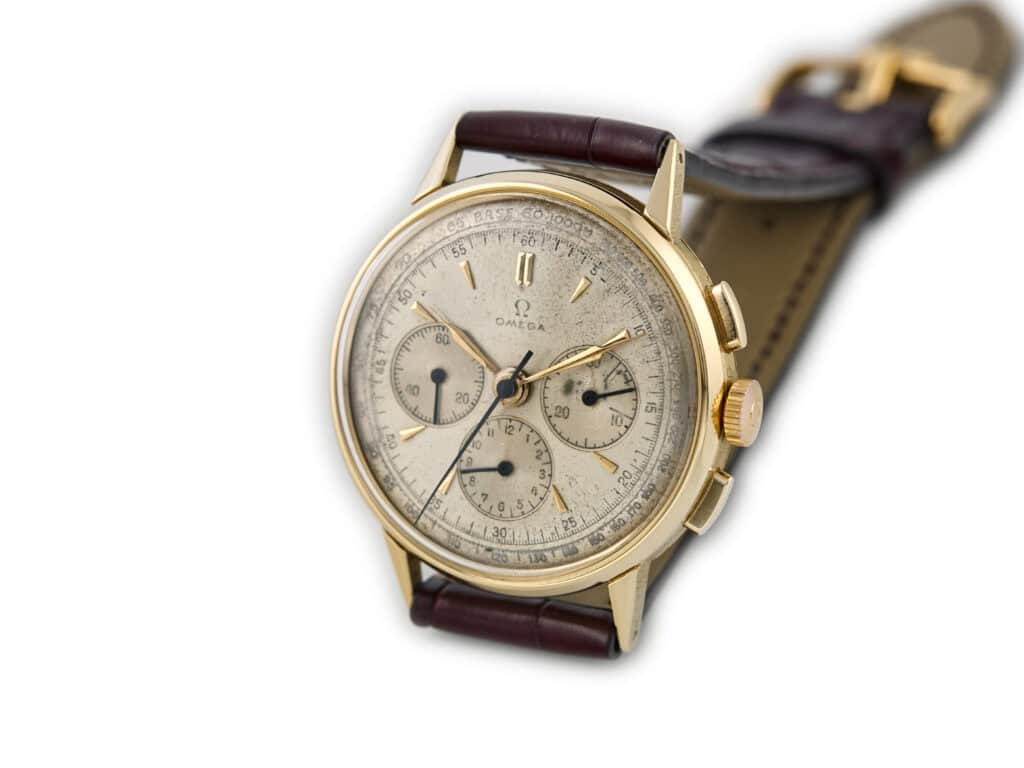
Omega’s chronograph heritage stretches back decades, from pocket-watch calibres in the early 1900s to wrist-worn instruments by the 1930s. By the 1940s, the company had refined its chronograph offerings, blending utilitarian purpose with refined execution. A 1948 chronograph in precious-gold case exemplifies this period of transition: elegant casework paired with a serious timing mechanism. The groundwork laid in this era would eventually lead to the iconic column-wheel chronograph movements that defined Omega’s future.
The Flagship Icon: Constellation
In the early 1950s, after decades of chronometry competitions and observatory trials, Omega launched its flagship collection: the Constellation. Inspired by the limited-run 1948 Centenary watch (made in celebration of Omega’s 100th anniversary), the Constellation became synonymous with accuracy, luxury and refinement.
Key hallmarks included chronometer-rated movements and the unmistakable observatory-embossed medallion on the caseback, a nod to Omega’s record-breaking performance in chronometer trials. Many models also featured the iconic “pie-pan” dial, with its sharply faceted twelve-sided design that catches the light beautifully and became a cherished symbol of mid-century watch elegance.
Among our favourites are two pink-gold Constellations from the 1960s: movements Cal. 561 and Cal. 565. These embody the best of what vintage Omega stood for – understated luxury, reliable chronometer-grade performance and a design ethic that remains timeless.
Why These Vintage Omegas Matter Today
These early models are more than collector’s items. They mark the evolution of wristwatches when mechanical craftsmanship, functional innovation and aesthetic refinement merged.
- The pie-pan dial – a design touch that remains desirable to this day.
- The bumper rotor – a mechanical character often lost in modern automatic designs.
- The chronometer heritage – where precision and official certification elevated wristwatches to instruments of reliability.
- The military and utility lineage – reflecting a time when watches were tools, not just fashion statements.
- The chronograph legacy – a foundation that would one day power wristwatches on the Moon.
This rich heritage is part of what makes vintage Omegas appealing to both seasoned collectors and newcomers. They offer technical depth, historical significance and timeless style, often at a more accessible price point than many high-end contemporary or vintage competitors.
Collecting Vintage Omegas: What to Look For
When exploring vintage Omegas, consider:
- Originality: Correct dial, hands, case, movement – right down to referencing correct calibre numbers.
- Condition: Cases, lugs and dials age differently – patina can be charming, but major damage or heavy polishing often hurts value.
- Movement quality and provenance: Ensure the movement matches the case and keeps good service history.
- Documentation and service history: Service records and provenance increase value and peace of mind.
- Wearability: Many of these models are smaller and thinner than modern watches – perfect for a classic, discreet wrist presence.
For collectors on a budget or those new to vintage, early automatic Seamaster or manual-wind 30T2 pieces are often more attainable entry points than Constellations, while still offering authentic vintage charm.
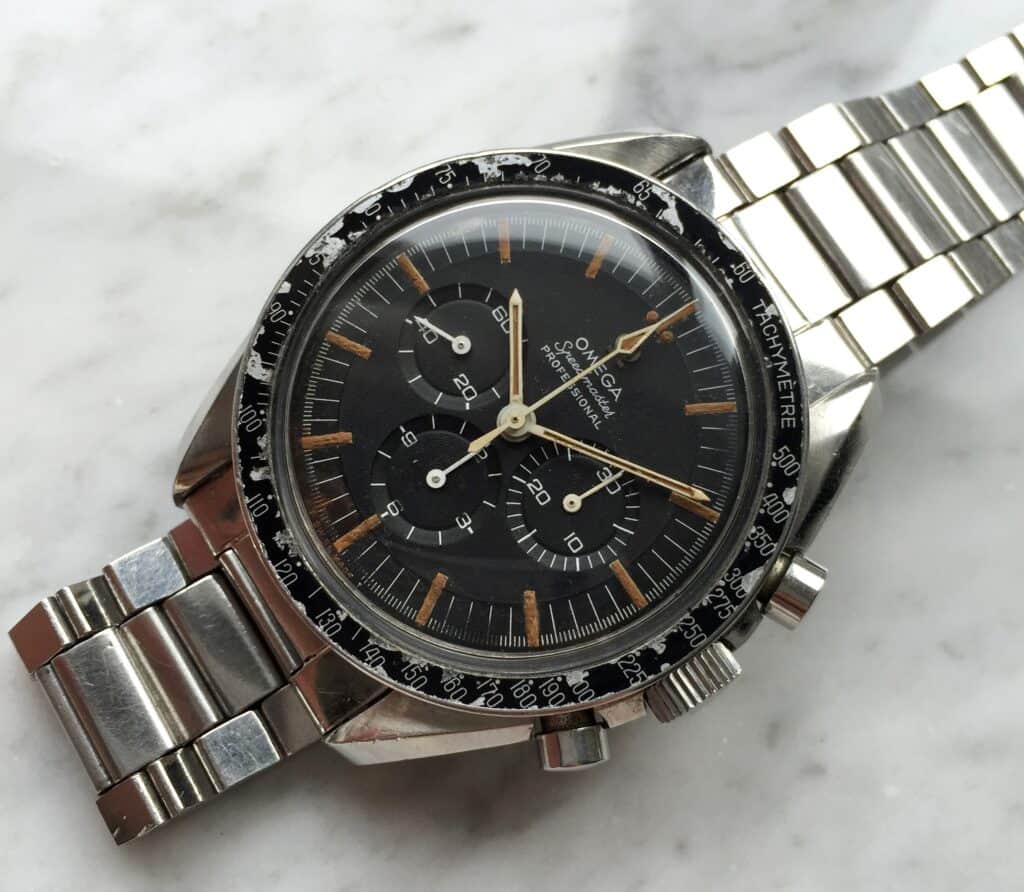
Why Now Is a Great Time to Invest
Vintage Omegas continue to benefit from steadily growing interest. As collectors increasingly value originality, craftsmanship and history, these mid-century pieces are gaining renewed recognition. A well-chosen Cal. 30T2, a refined bumper-automatic or an elegant “pie-pan” Constellation isn’t just a nod to heritage – it’s a wearable piece of horological history.
Moreover, unlike modern releases, these watches have already completed their carbon footprint decades ago. By choosing vintage, enthusiasts support sustainable collecting, valuing craftsmanship over constant consumption, and history over hype.
Owning a Moment of Omega History
Omega’s golden era represents more than a bygone design aesthetic: it encapsulates a period when innovation, precision and elegance coalesced into watches that defined a generation. Whether you’re drawn to the tactile charm of a bumper automatic, the refined simplicity of a manual-wind 30T2, the precision of a beautifully engineered chronograph, or the quiet sophistication of a gold Constellation, these pieces offer provenance, character, and connection to watchmaking history.
For anyone considering expanding into vintage timepieces, now is an excellent moment to explore what mid-century Omega has to offer. The craftsmanship remains intact, the history is tangible, and the value – both emotional and financial – continues to grow. Dive into the heritage, enjoy the mechanics, and wear a piece of horological legacy.
Stay informed on vintage watch collecting by signing up for the free Vintage Gold Watches newsletter, for expert insights, latest arrivals and market trends straight to your inbox.