Split Watches Introduces The GMT Collection Inspired By Seminal Moments In Music
Split Watches marks a new chapter for the brand with a watch grounded in lived experience, material honesty, and human connection.
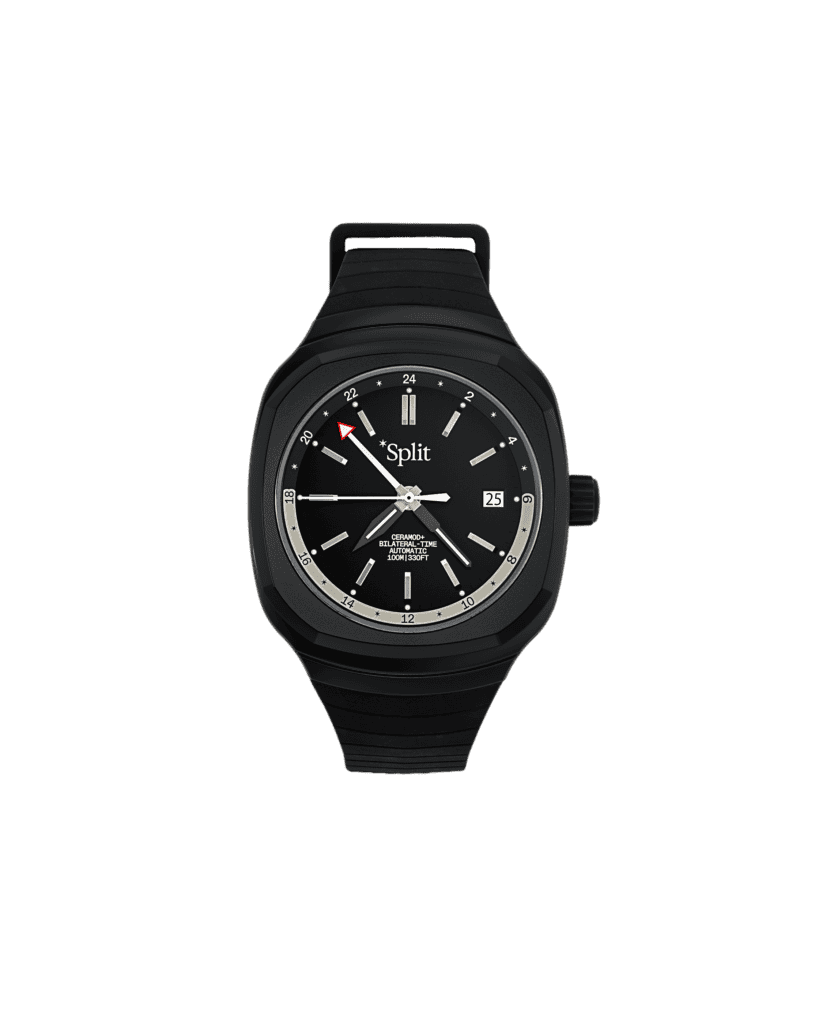
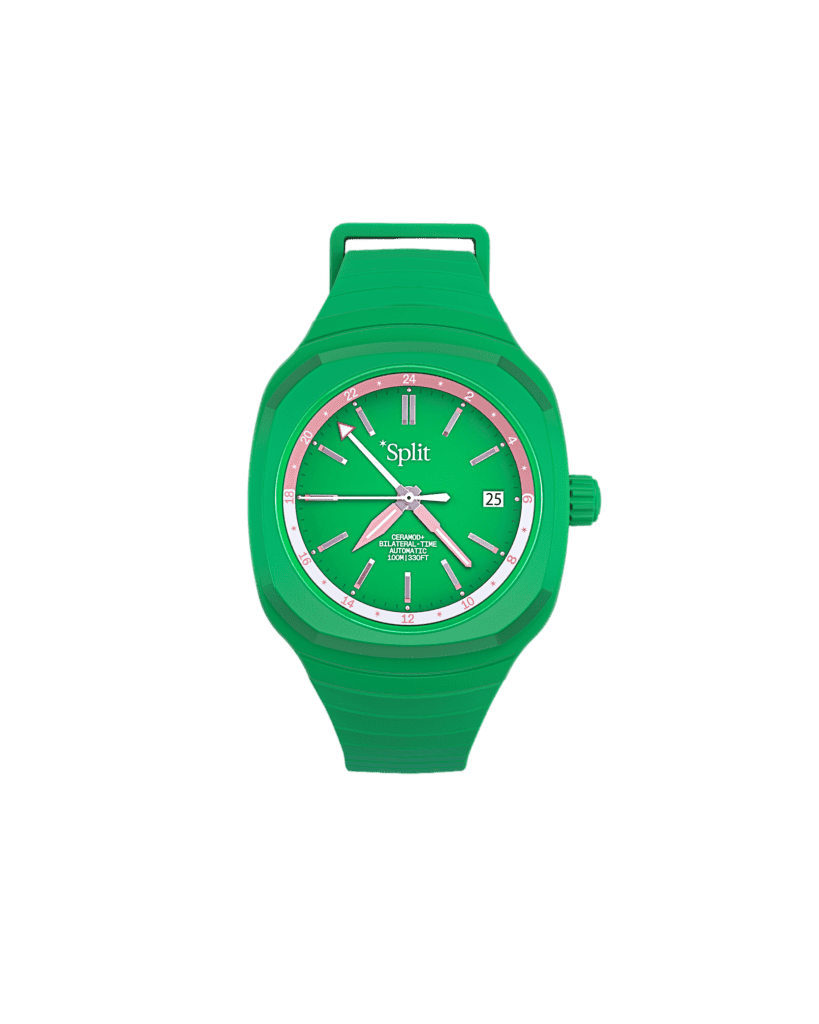
Rejecting the familiar codes of traditional luxury, Split approaches watchmaking through the lens of meaning rather than status.
For Split, luxury is not defined by price or excess, but by intention, the freedom to opt out of noise, urgency, and imitation. Time is not something to display, but something to experience.The Split GMT embodies this philosophy. Designed for everyday life, it reflects the founders’ belief that a watch should be lived in, not lived up to.
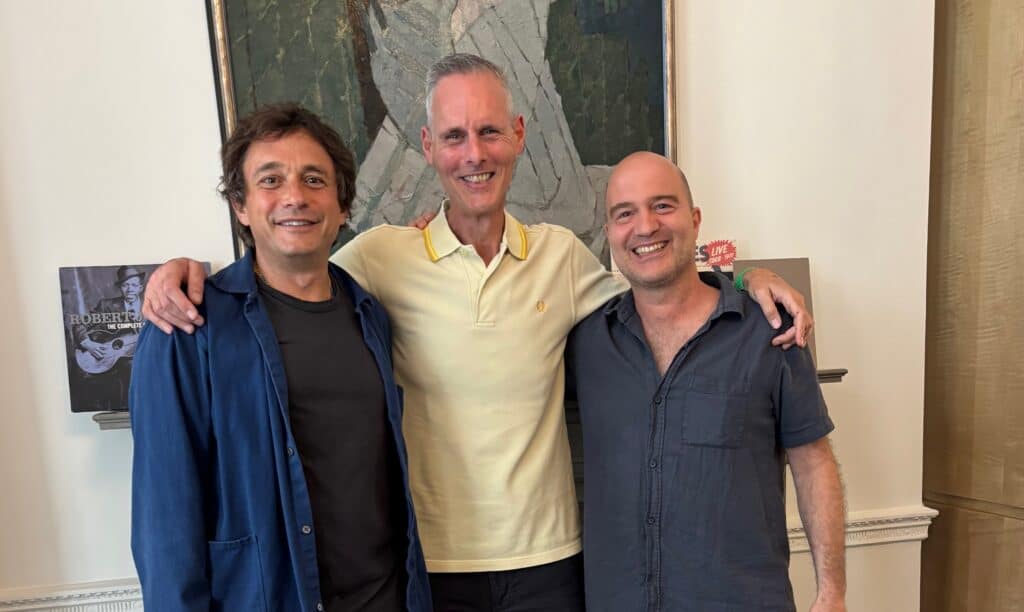
“The watch must withstand the test of time. We’ve made it using the very best modern materials, suited to today’s lifestyles. There is incredible skill in this industry, but not everyone connects with the outdated codes attached to it. We wanted to create something more honest.” Ed Margulies, Co-Founder, Split Watches
Founded by Ed Margulies and Dara Amjadi, Split Watches was born from a conversation between two longtime friends questioning what a watch should represent today. While the brand is young, both founders bring decades of experience and a clear intention to challenge convention.
Margulies, a third-generation watchmaker, trained in Switzerland and spent much of his career within the upper tiers of the industry. Over time, a growing disconnect with its emphasis on status and perfection led him to step away. That honesty is central to Split’s identity shaped as much by personal experience as professional background. It informs a brand built not on perfection, but on openness, conversation, and authenticity.
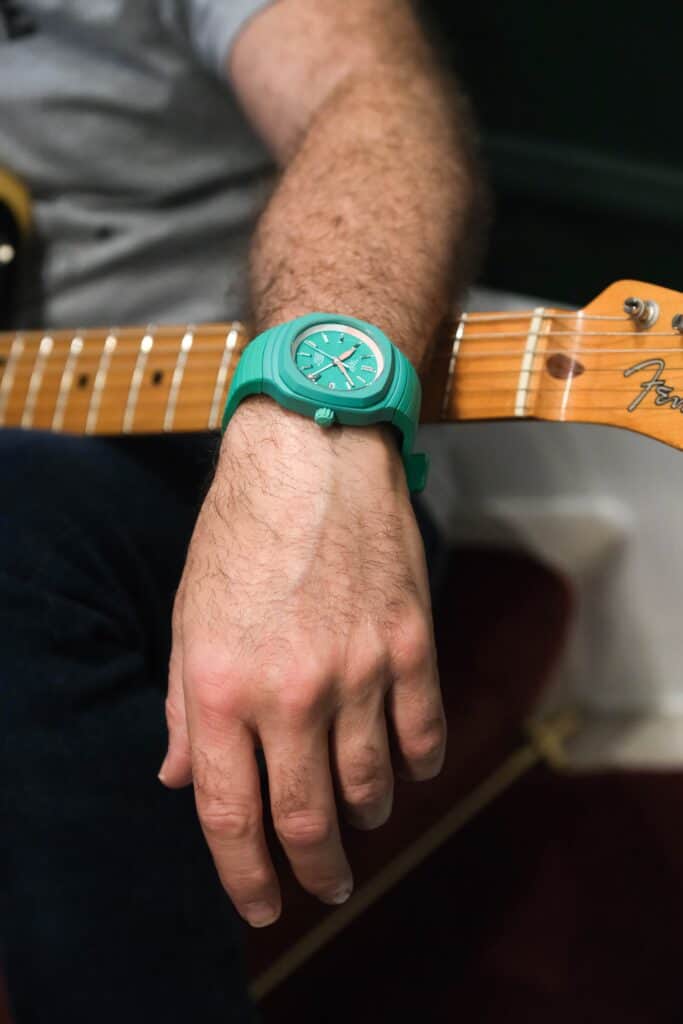
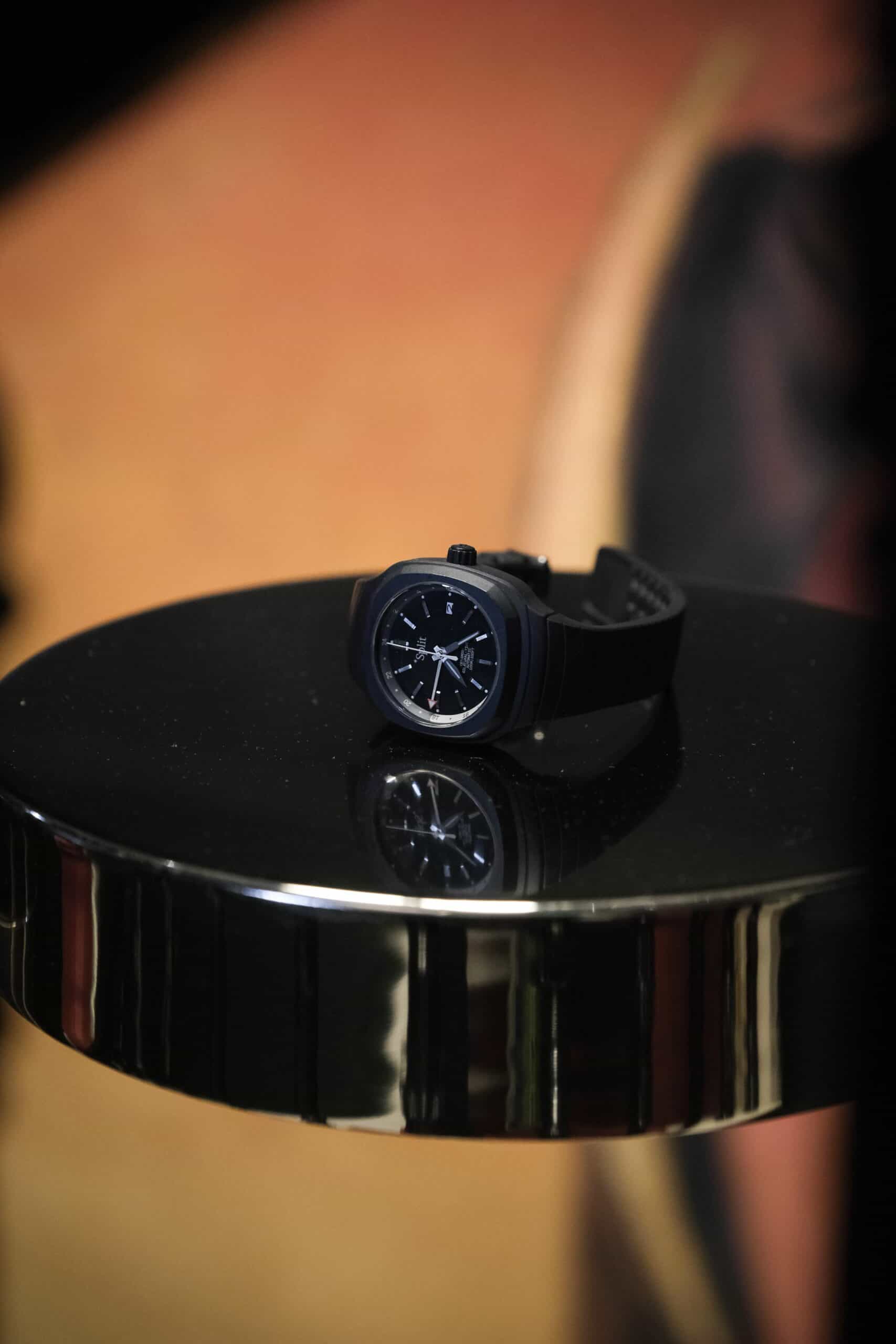
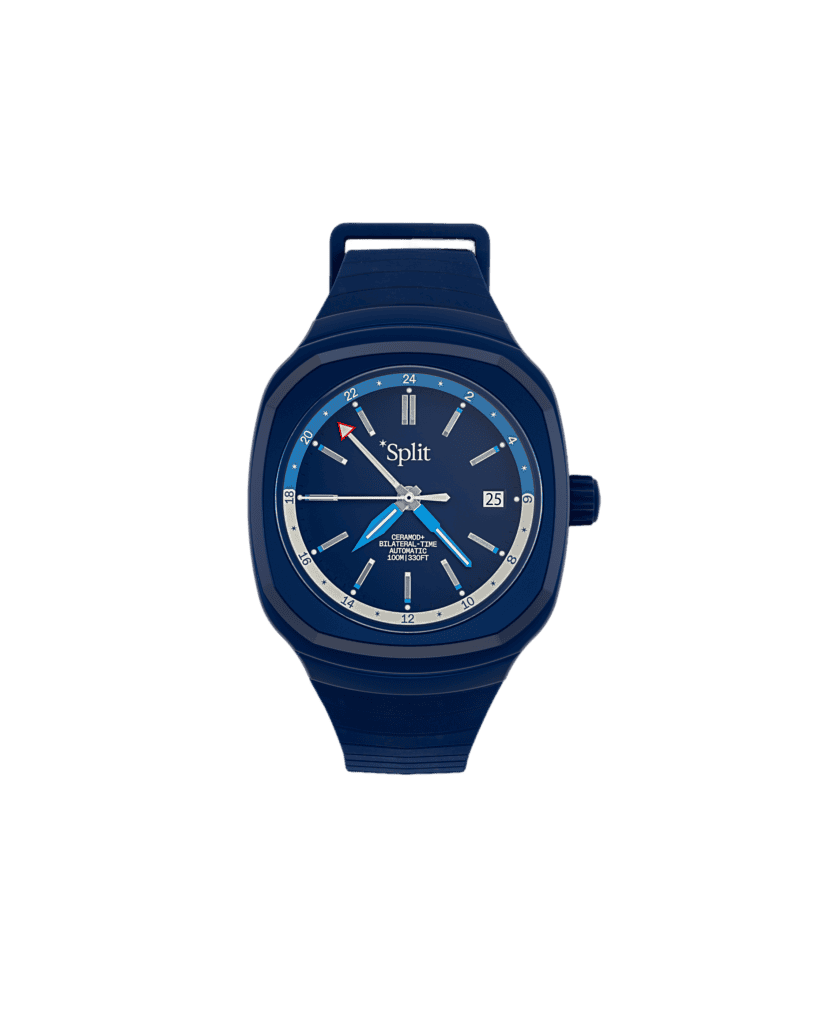
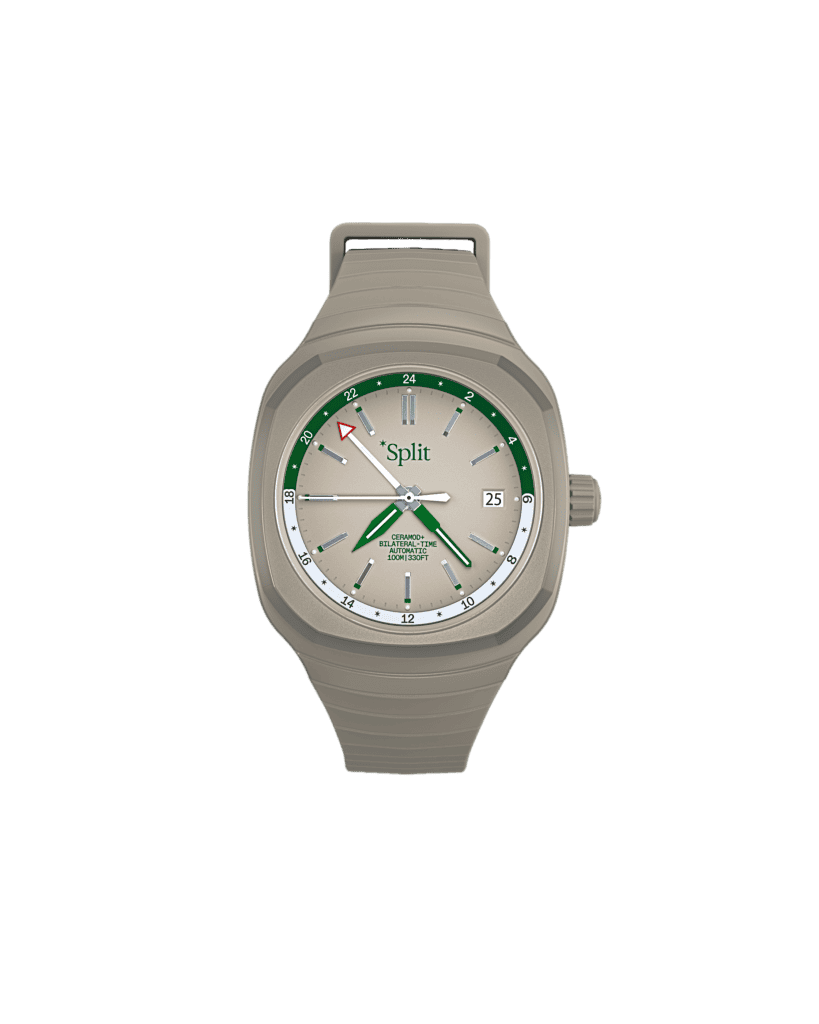
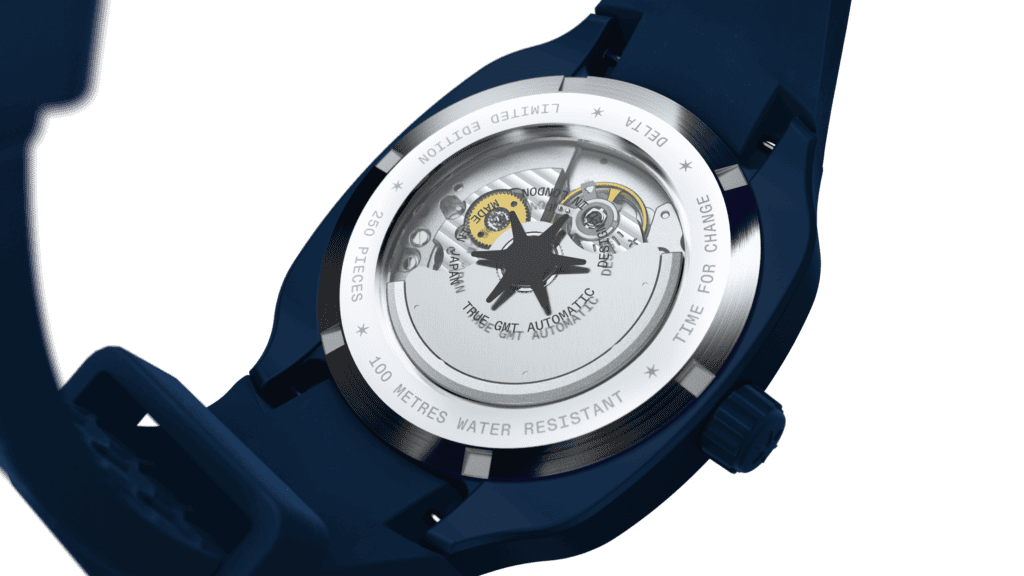
The 40mm Split GMT is built for durability and daily use, combining functional design with carefully chosen materials. At its core is the Miyota 9075 automatic movement, offering a true GMT function with independent local-hour adjustment, a feature typically reserved for higher price points.
The GMT Collection is inspired by seminal moments in music that altered the landscape forever. They did more than define genres; they redirected culture itself, taking people into new and uncharted waters. It focuses on a link between rivers and these moments in music. Both are always moving and never standing still, reflecting light and shade, ebbing and flowing, and always alive.
From this idea, the story of the collection began to take shape.
Available in four colourways, beige, blue, black, and green, the Split GMT draws inspiration from UK and US landscapes and rivers shaped by music, land, and water, including the Hudson River in New York, the Mississippi Delta, the Rea in Birmingham and the Westbourne in Notting Hill. Each watch is subtly rooted in place, connecting object to environment.
The Delta. The first watch to get a name was the Delta, either by instinct or accident. When the initial prototypes arrived, they were deep in work mode and, when Dara asked Ed to pass him “the watch on the table”, Ed wasn’t quite sure which one he meant as there were a few there.
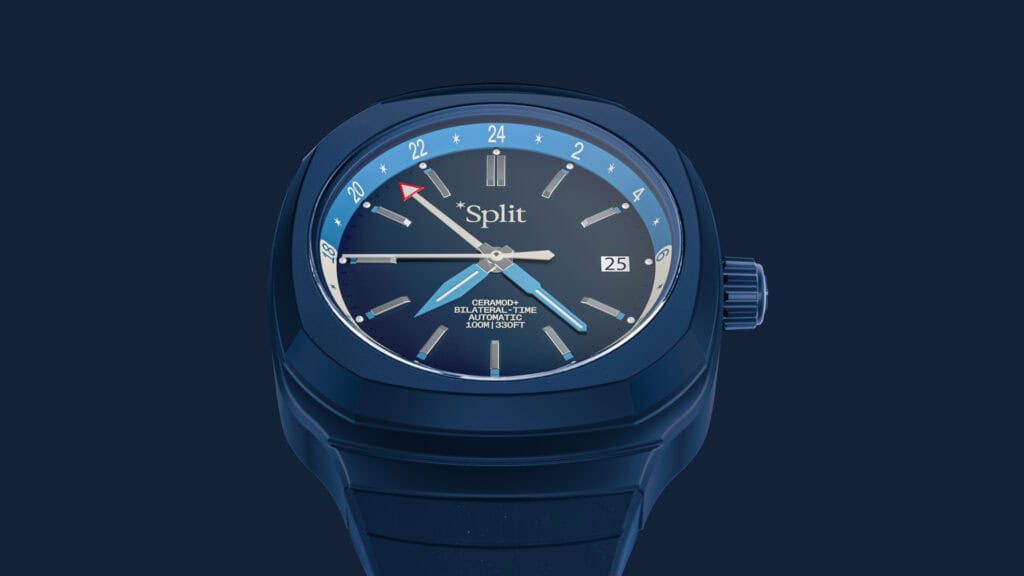
So, he replied, “the one with the blues”. It turned out to be a eureka moment, and from there, The Delta was born. The Mississippi Delta is the birthplace of the blues and gave us artists like Charley Patton, Robert Johnson, and Son House. (Blue)
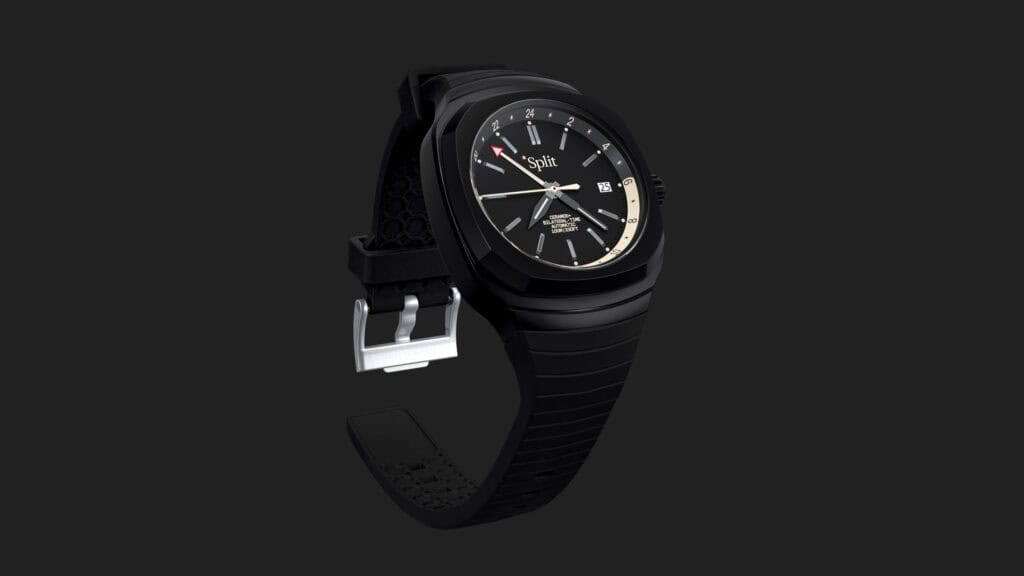
The Rea. Next came The Rea. A nod to the emergence of heavy metal, this watch draws its name from a small river in Birmingham, England, where pioneers like Black Sabbath and later Judas Priest developed their defining sounds. (Black)
The Hudson. Named after the river that runs alongside New York City, this GMT captures the electricity of the CBGB era in the 1970s.
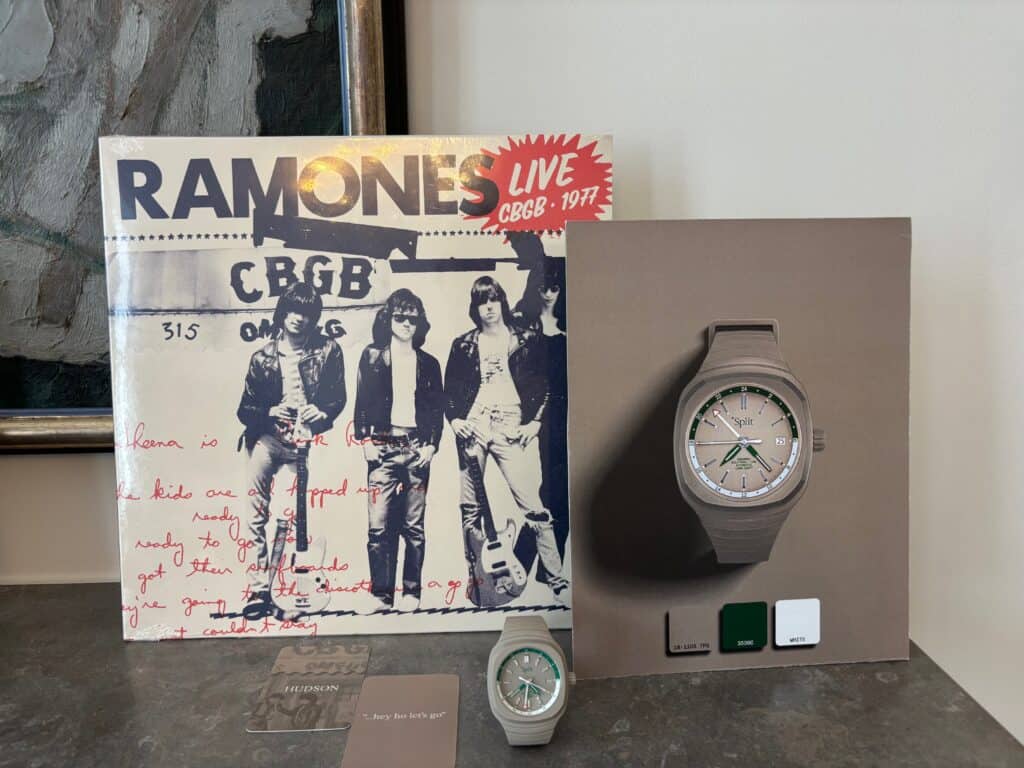
We wanted to encapsulate the raw energy of The Ramones (above), Television, and Blondie. The Hudson is movement, attitude, and edge, like the city itself. (Beige)
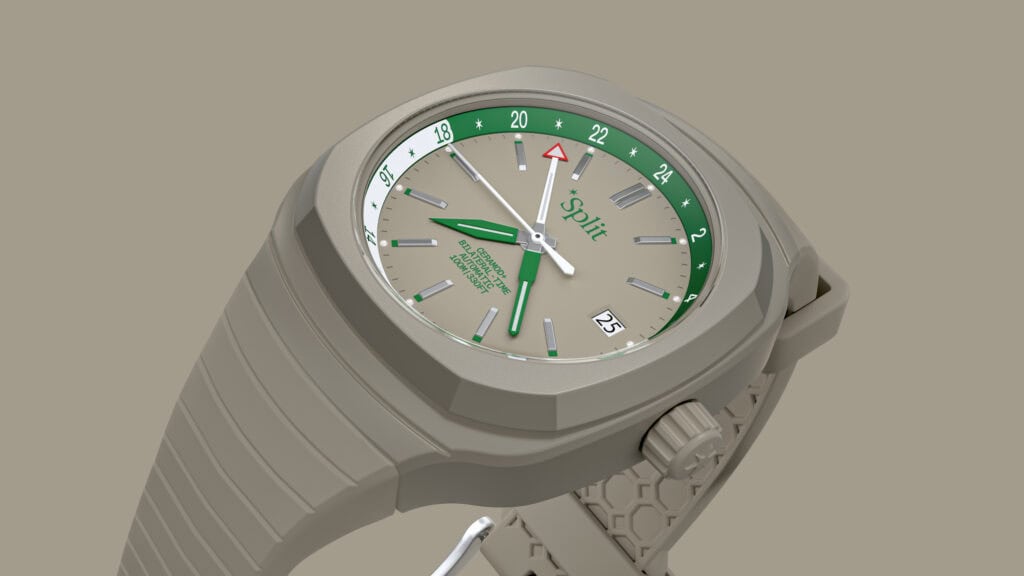
The Westbourne. And finally, The Westbourne. This was a tricky one.
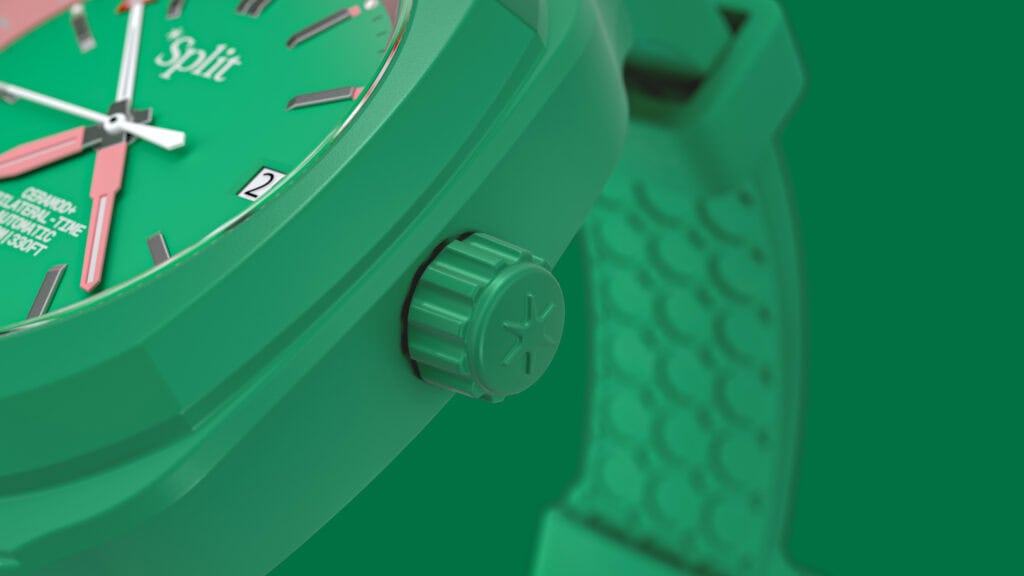
The UK punk scene was centered around the King’s Road and Notting Hill, with bands like the Sex Pistols and The Clash. We toyed with the idea of calling it The Thames, but it didn’t feel right. (Green).
The pair remembered that there is a river running beneath the shops on Westbourne Grove called the River Westbourne. It used to flood the shops above (it’s sadly been downgraded to a sewer now, which is a shame!).
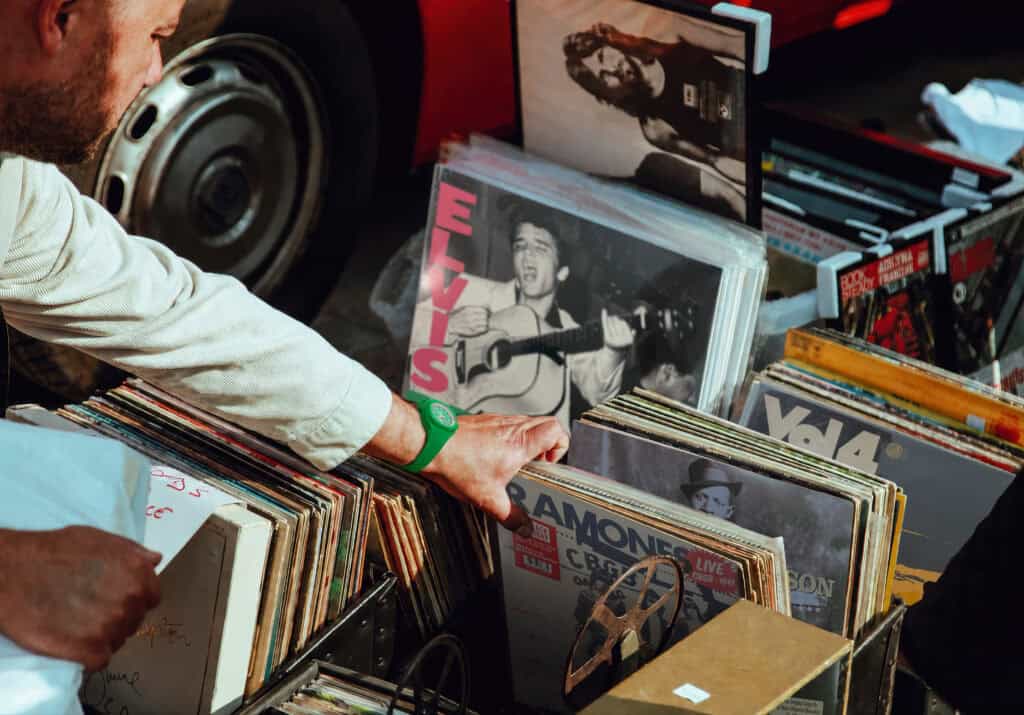
The area was where The Clash were based and where there was a fusion of punk and reggae sound systems that brought people from different backgrounds and identities together. This also brings things full circle, as The Clash’s London Calling album cover was itself a homage to Elvis Presley’s first album. Although different, they were all part of the same lineage.
Split first established its visual identity with the MC chronograph collection, defined by clean design, functional clarity, and understated branding. Details such as the unconventional 7:23 hand setting, forming a subtle frown, reflect the brand’s intention to encourage honesty over perfection.
Music remains a core influence. For Amjadi, it represents connection, a shared, emotional language that brings people together. That same energy runs through Split, a brand built not around status or spectacle, but around people, feeling, and conversation.
“A watch can spark something meaningful. We’re interested in what happens beyond the object.” Ed Margulies, Co-Founder, Split Watches
Every one of these scenes brought people together. They also drew inspiration from the album covers that defined these moments in time, as seen in the four GMTs. Time, like music and rivers never stands still.
Retail price: RRP £795.00
For more information please visit Split Watches