
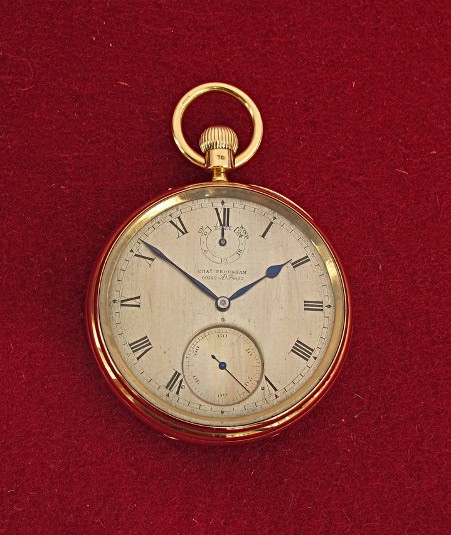
The Charles Frodsham & Co. Record Breaking Tourbillon Pocket Watch
A series of features focusing on specific timepieces by Charles Frodsham & Co. on display at the Clockmakers’ Museum. The items are part of the ‘Charles Frodsham, Precise Time: Two Centuries in the Making’ display celebrating one of Britain’s great horological names.
Towards the end of the nineteenth century, English watchmakers faced growing competition from overseas manufacturers. In response, Kew Observatory introduced trials across three classes, to demonstrate the quality of English watches. These rigorous tests awarded marks to the best-performing timepieces. Charles Frodsham & Co. regularly submitted watches and achieved the highest mark ever awarded to an English watch at Kew; this was the 18ct gold lever watch with one-minute tourbillon, no. 09182/11487.
Background to the Kew Observatory Trials
Once the unquestioned leader in horological innovation, Britain was losing ground to Swiss and American manufacturers. British makers still relied heavily on traditional workshop production and artisanal finishing, while continental and American firms embraced industrialisation, interchangeable parts, and increasingly sophisticated factory methods. Swiss watches were becoming more accurate, more affordable, and more widely distributed internationally.
The Kew trials were introduced in 1884 as a way of reasserting British excellence through measurable precision. The observatory itself had originally been founded in 1769 by King George III for astronomical observation and scientific experimentation. Over time, it developed expertise in precision measurement and instrumentation, making it a natural venue for chronometric testing. By the nineteenth century, observatory timing competitions had already become established in Switzerland, especially at Geneva and Neuchâtel, where watchmakers submitted specially prepared chronometers for rigorous scientific evaluation.
The tests were designed to provide an independent and highly respected assessment of a watch’s accuracy under controlled conditions. Watches submitted for trial underwent exhaustive testing over periods lasting up to 45 days. During this time, they were observed in different positions and temperatures to simulate real-world variations that could affect timekeeping.
One of the Finest Ever Performers
In 1907, a gold pocket watch achieved something no English watch had done before, and none would ever do again. Awarded an astonishing 93.9 (out of 100) marks at the observatory trials held at Kew Observatory, Charles Frodsham & Co.’s one-minute tourbillon pocket watch no. 09182/11487 set the highest score ever recorded for an English watch. More than a century later, that record still stands.
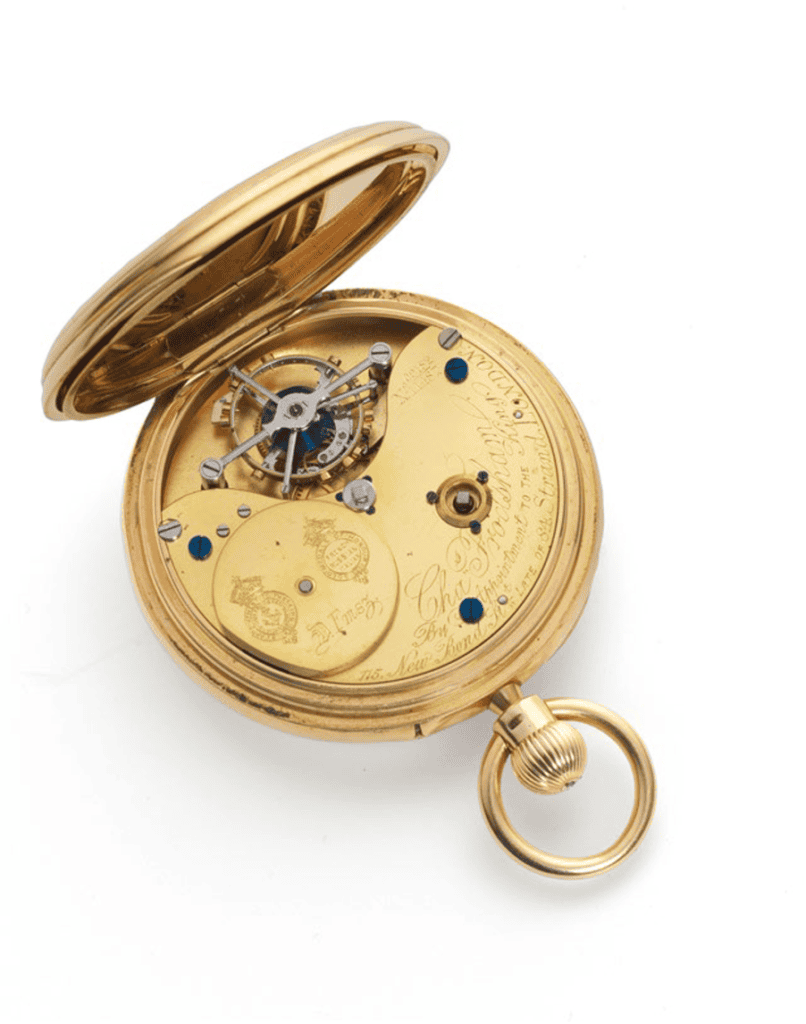
Today, the watch survives not merely as an exquisite Edwardian timepiece, but as the ultimate expression of English precision watchmaking at the very moment Britain’s dominance in horology was slipping away.
By the late nineteenth century, English watchmakers faced an uncomfortable reality. Switzerland had industrialised. America had mechanised. Traditional British workshops, still reliant on highly skilled handcraftsmanship, could no longer compete on volume or cost. Once the undisputed centre of horological innovation, England was beginning to lose ground.
The observatory trials at Kew were designed, in part, to resist that decline. Tested in multiple positions and temperatures, each watch was judged on the consistency of its daily rate. Tiny deviations were severely penalised. Only the most accurate timekeepers received the coveted Class “A” certification, with the rare designation “Especially Good” reserved for exceptional performers.
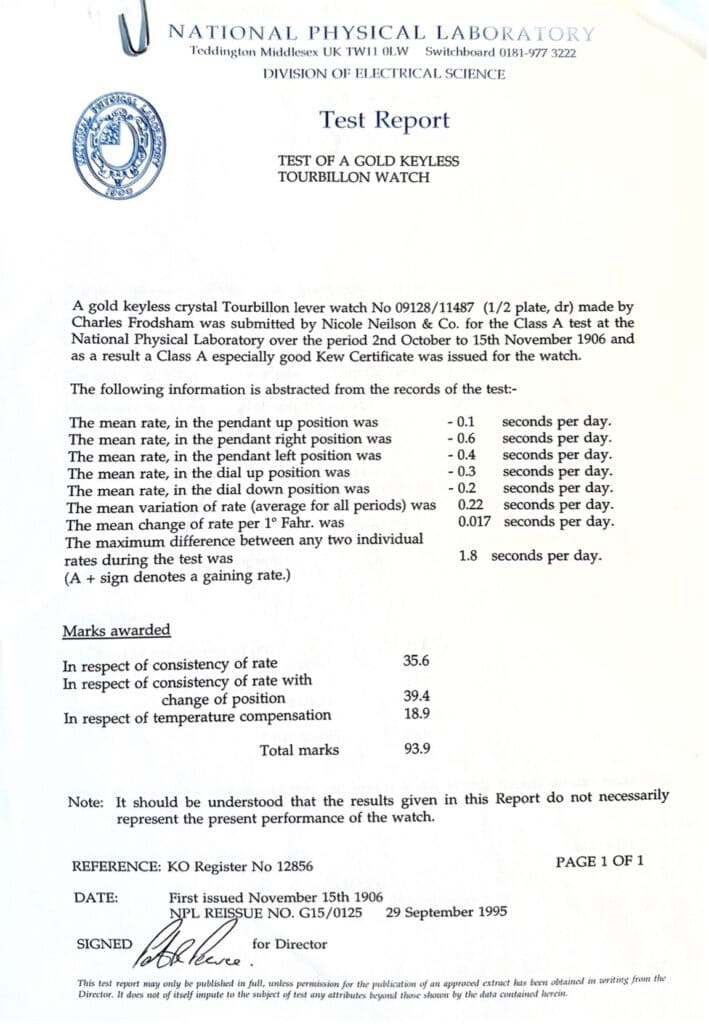
The system mirrored the great Swiss observatory competitions at Geneva and Neuchâtel, transforming precision timekeeping into a kind of scientific sport. Success at Kew was not a marketing flourish; it was empirical proof of mechanical excellence. Into this fiercely competitive arena entered watch no. 09182/11487.
Submitted by Nicole Nielsen & Co. and signed by Charles Frodsham & Co., the watch was tested between 2ndOctober and 15th November 1906. When the results were published, it ranked first among the top 50 watches tested that year, achieving an extraordinary 93.9 marks and earning a Class “A” “Especially Good” certificate.
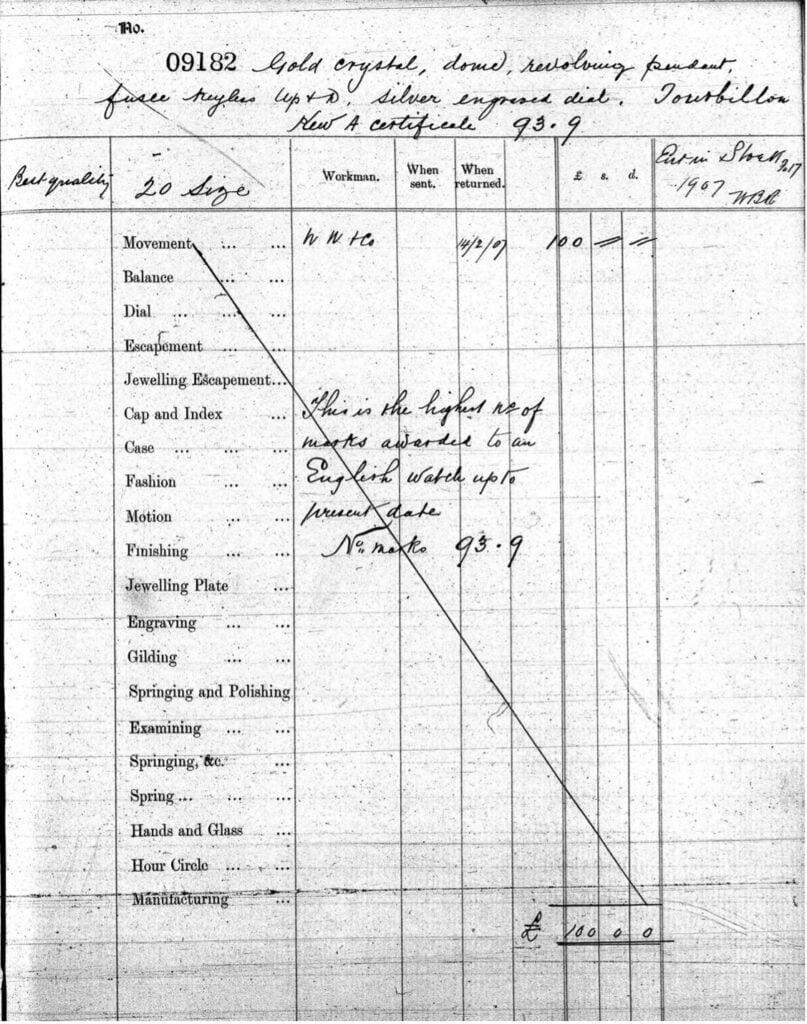
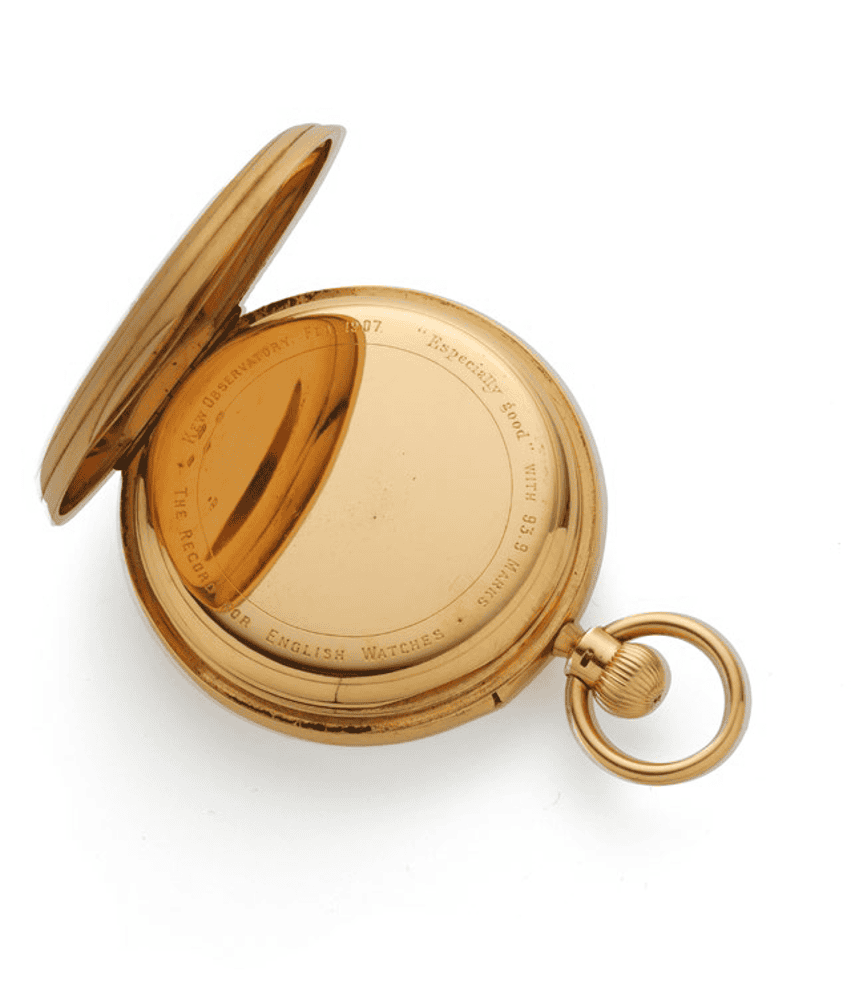
Frodsham’s clearly understood the magnitude of the achievement as they engraved around the inner dome of the 18-carat gold case the following words:
“The Record for English Watches, Kew Observatory, Feb 1907, ‘Especially good’ with 93.9 marks.”
It remains one of the great inscriptions in horological history (below), understated, deeply Edwardian, yet unmistakably triumphant. Technically, the watch is a masterpiece of contradictions and that is precisely what makes it so important.
At its heart is a one-minute tourbillon, among the rarest and most technically ambitious complications of the era. Invented by Abraham-Louis Breguet in 1801, the tourbillon was designed to counter the effects of gravity on a watch’s regulating organ by continuously rotating the escapement and balance within a moving carriage. In observatory competitions, where tiny variations mattered enormously, the tourbillon represented the highest pursuit of precision.
Yet this was no sleek Swiss chronometer stripped for efficiency. Frodsham’s tourbillon remained deeply English in architecture and philosophy. Its movement employed a traditional fusee-and-chain transmission, a system already considered old-fashioned by many continental manufacturers at that time. Swiss makers increasingly preferred the simpler going barrel system, which was cheaper and easier to produce. English horologists, however, continued to regard the fusee as the superior solution for ultimate chronometric stability.
That devotion to precision above practicality defines this watch. The movement is a catalogue of virtually every known refinement available to elite watchmakers of the period. A split bi-metallic compensation balance to counter thermal expansion, a free-sprung blued steel balance spring with overcoil for improved isochronism, a double roller lever escapement, and an English ratchet-tooth escape wheel. Even the finishing reflects observatory standards rather than decorative excess.
What emerges is not simply a luxury object, but a scientific instrument executed with extraordinary artistry. Equally fascinating is the collaboration behind it. Charles Frodsham represented one of the great names in English chronometry, holder of royal warrants and heir to Britain’s marine chronometer tradition. Nicole Nielsen, meanwhile, embodied the increasingly international nature of precision watchmaking, blending Swiss technical expertise with English finishing and regulation practices. Emil Nielsen was a Director of Frodsham’s which meant that the two companies were closely entwined.
Together, they produced a watch that feels like a final synthesis of two worlds, traditional English craftsmanship adapting, cautiously but brilliantly, to the demands of modern precision engineering.
The timing could hardly have been more poignant. Within a decade, the First World War would accelerate profound changes in watchmaking and society alike. Pocket watches would begin to give way to wristwatches. Industrial production would eclipse artisanal methods. English horology, once globally dominant, would continue its long decline.
Seen from that perspective, the extraordinary pocket watch resembles less a beginning than a culmination the last great statement of an old tradition fighting to maintain relevance in a rapidly changing world.
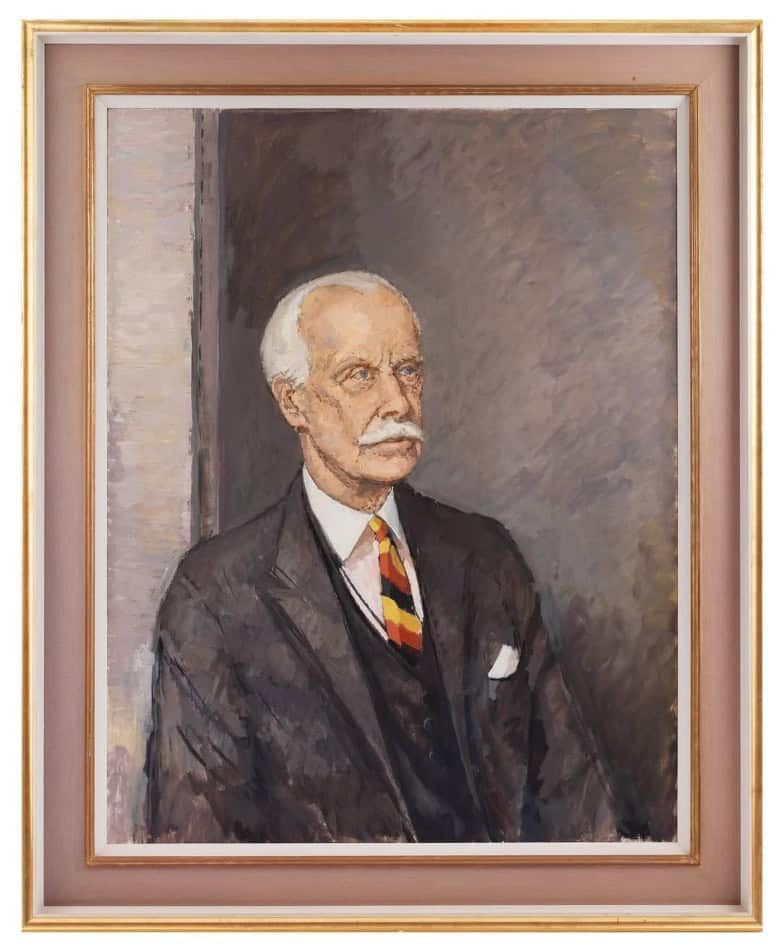
Its provenance only deepens the sense of historical resonance. The watch was originally made for the Marquis of Bute, among the most prominent aristocratic patrons of the Edwardian era. In 1944, during the privations of wartime Britain, it was purchased from Charles Frodsham & Co. by the 5th Lord Harris for £145 (£5,500 today), eventually passing into the care of the Harris (Belmont) Charity. Lord Harris (below) was one of the greatest horological collectors whose magnificent collection is housed at Belmont House.
That journey, from aristocratic commission to wartime acquisition to modern institutional preservation, mirrors the changing fortunes of Britain itself across the twentieth century.
Yet despite the historical layers surrounding it, the essential achievement of the watch remains startlingly immediate. Even today, observatory-grade pocket watches occupy the absolute summit of mechanical timekeeping. To encounter an English example holding the national record more than a century after its creation is remarkable.
More remarkable still is the fact that the record endured because the age that produced it effectively vanished. Frodsham’s ‘masterpiece’ was England’s final great argument for mechanical supremacy, a gold-cased declaration that precision, craftsmanship and scientific ambition could still coexist at the very highest level of horology.
The watch was exhibited at Bonhams on the 15th December 2017 as part of Horological Treasures of the Lord Harris Collection: An Exhibition. The extensive horological collection of Lord Harris housed at Belmont House, is well worth a visit.
If observatory trials were the Olympic Games of watchmaking, this was England’s last world record.
Where to see the Record-Breaking Tourbillon
The Charles Frodsham & Co. one-minute tourbillon pocket watch no. 09182/11487 has been generously lent by the Harris (Belmont) Charity and is on display at the Clockmakers’ Museum in the Science Museum until 28th February 2027.
Hero Image: Charles Frodsham & Co. 18ct gold lever watch with one-minute tourbillon, no. 09182/11487. Image courtesy of the © Harris (Belmont) Charity