

In this occasional series, we will explore the life and achievements of the greatest and most respected horologists of their time. In the long history of British watchmaking, few names carry the same weight and enduring prestige as Charles Frodsham. A master craftsman, entrepreneur, and innovator, Frodsham helped define the golden age of English horology in the nineteenth century.
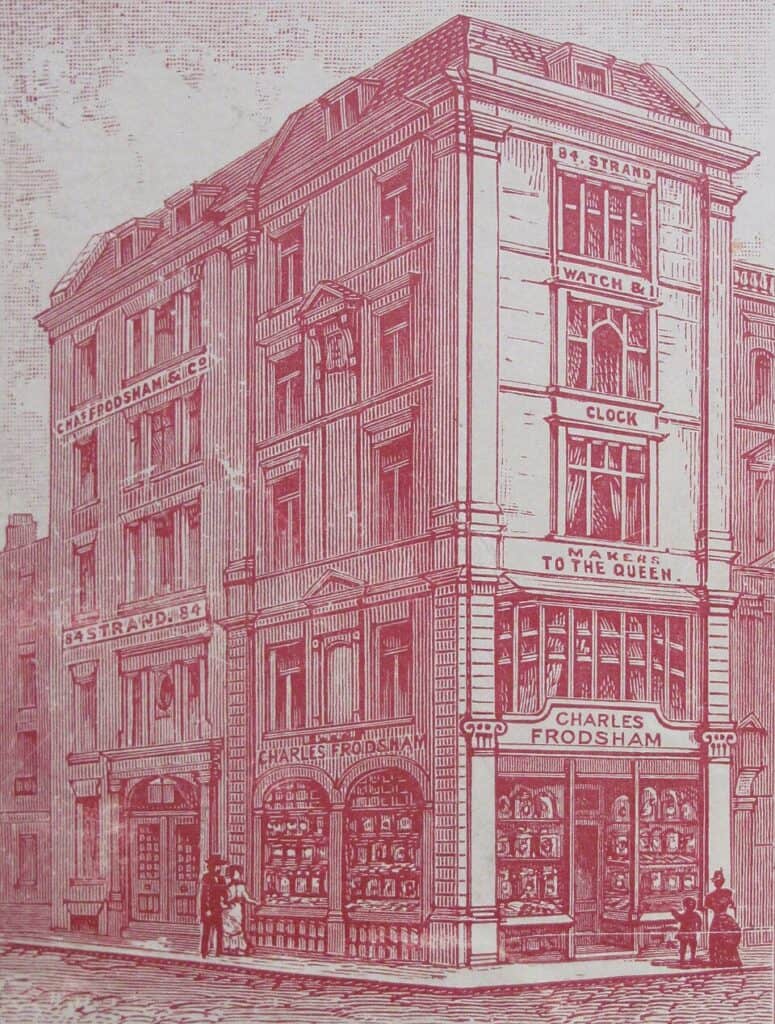
His work combined technical brilliance with meticulous craftsmanship, earning him recognition not only among collectors and connoisseurs but also from governments, scientists, and royalty.
This is the story of a man whose timepieces became synonymous with precision.

Early Life and Entry into Horology
Charles Frodsham was born in London in 1810 into a family already connected to the watch trade. His father, William James Frodsham, was a respected chronometer maker, and the young Charles grew up surrounded by the delicate mechanics of clocks and marine chronometers. This environment proved formative. From an early age, he was immersed in the discipline, patience, and mathematical precision required of a horologist.
He entered the family business as an apprentice and quickly demonstrated exceptional skill. The London watchmaking community of the early nineteenth century was among the most demanding in Europe, and advancement required both technical mastery and innovation. Frodsham possessed both.
The Rise of a Master Chronometer Maker
By the 1830s, Charles Frodsham had begun establishing his reputation as one of the most talented chronometer makers of his generation. Marine chronometers were the most demanding instruments in horology at the time. Accurate timekeeping at sea was essential for determining longitude, and governments invested heavily in the most precise instruments available.
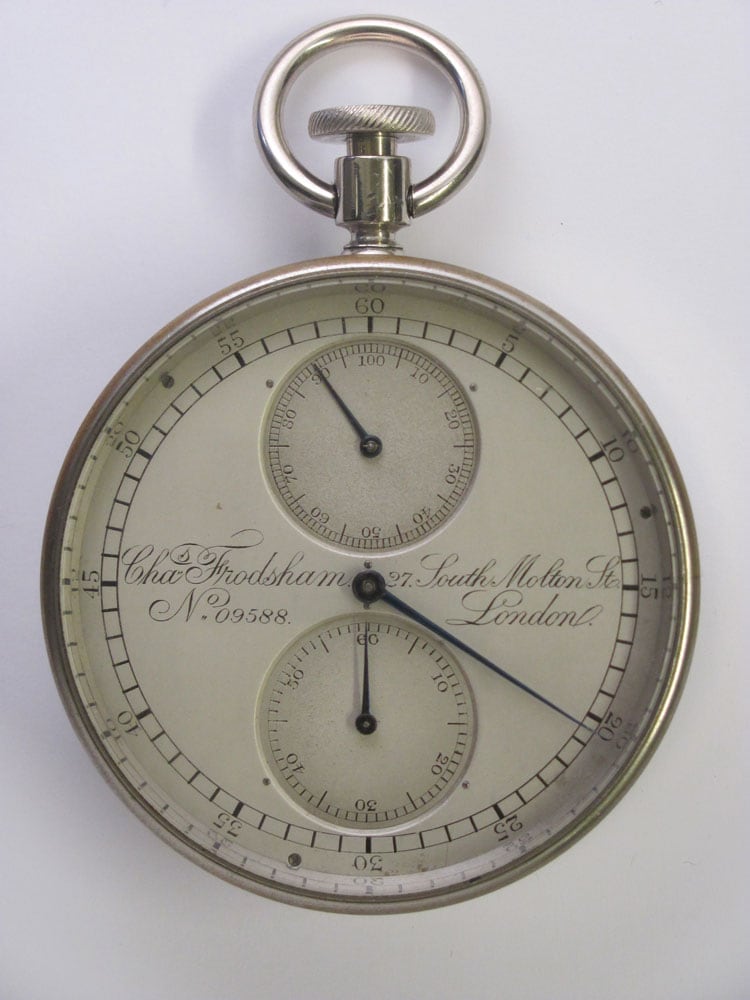
Frodsham’s chronometers quickly proved their quality in the rigorous trials conducted by the Royal Observatory at Greenwich. These competitions tested the stability and precision of timepieces under varying conditions, and Frodsham’s instruments regularly performed among the best.
His reputation grew steadily. By the mid-nineteenth century he had become one of the most respected makers of marine chronometers in Britain.
Official Recognition and Royal Patronage
Recognition soon followed from the highest levels.

Charles Frodsham was appointed Chronometer Maker to the Admiralty, supplying timekeeping instruments critical for naval navigation. His work also earned him a prestigious Royal Warrant as Clockmaker to Queen Victoria, a mark of exceptional trust and prestige in Victorian Britain.
These appointments reflected not only the accuracy of his instruments but also the reliability of his workshop. At a time when the British Empire depended heavily on naval power, chronometers were strategic tools. Makers capable of producing instruments of the highest precision were therefore held in extraordinary esteem.
Innovations in Precision Timekeeping
Frodsham’s work was characterised by both refinement and technical experimentation. He improved escapement designs, balance systems, and temperature compensation mechanisms, key elements affecting chronometer stability.

One of the most notable contributions associated with the Frodsham name is the double-impulse chronometer escapement. Although the concept evolved over time and involved several horologists, Frodsham played an important role in its nineteenth-century development.
He was also a prolific competitor in chronometer trials. His timepieces consistently placed highly in official testing, demonstrating exceptional performance across temperature changes and long durations.
Leadership in the British Horological Community
Charles Frodsham was not only a maker but also a leader within the watchmaking community. He served as Master of the Worshipful Company of Clockmakers twice in 1855 and 1862, one of the most historic guilds of the craft in London.
His election reflected the high regard in which he was held by his peers. He was one of the founding members, and later Vice President, of the British Horological Institute in 1858. During this period, British watchmaking faced growing competition from Swiss and American manufacturers. Maintaining standards of craftsmanship and innovation was critical, and Frodsham was among those leading the effort.

He was also active in organising exhibitions and advocating for technical excellence in horology.
International Recognition
The nineteenth century was an era of world fairs and industrial exhibitions, where nations showcased technological achievements. Frodsham’s work appeared in several of these exhibitions, including the Great Exhibition of 1851 in London.

His chronometers and precision timepieces were widely praised, earning medals and international recognition. These exhibitions played an important role in cementing Britain’s reputation as a leader in precision instrument making.
Legacy and Continuing Influence
Charles Frodsham died in 1871, but his legacy endured through the firm that bore his name. The company continued producing high-grade chronometers and clocks well into the twentieth century and remains one of the historic names in British horology.
Today, surviving Frodsham chronometers are prized by collectors and museums. They represent the pinnacle of nineteenth-century English precision engineering, objects built not merely to measure time, but to do so with extraordinary reliability. The company continues to produce its Double Impulse Chronometer Wristwatch, the first wristwatch to utilise the Daniels Double Impulse Chronometer Escapement, which is completely symmetrical, highly detached, and oil free.

More broadly, Frodsham stands as a symbol of the British chronometer tradition: a period when London workshops produced some of the most accurate mechanical timekeepers in the world.
Charles Frodsham, Precise Time: Two Centuries in the Making is on display at the Clockmakers’ Museum in the Science Museum, South Kensington, London.
Hero image: Courtesy of Charles Frodsham & Co.