
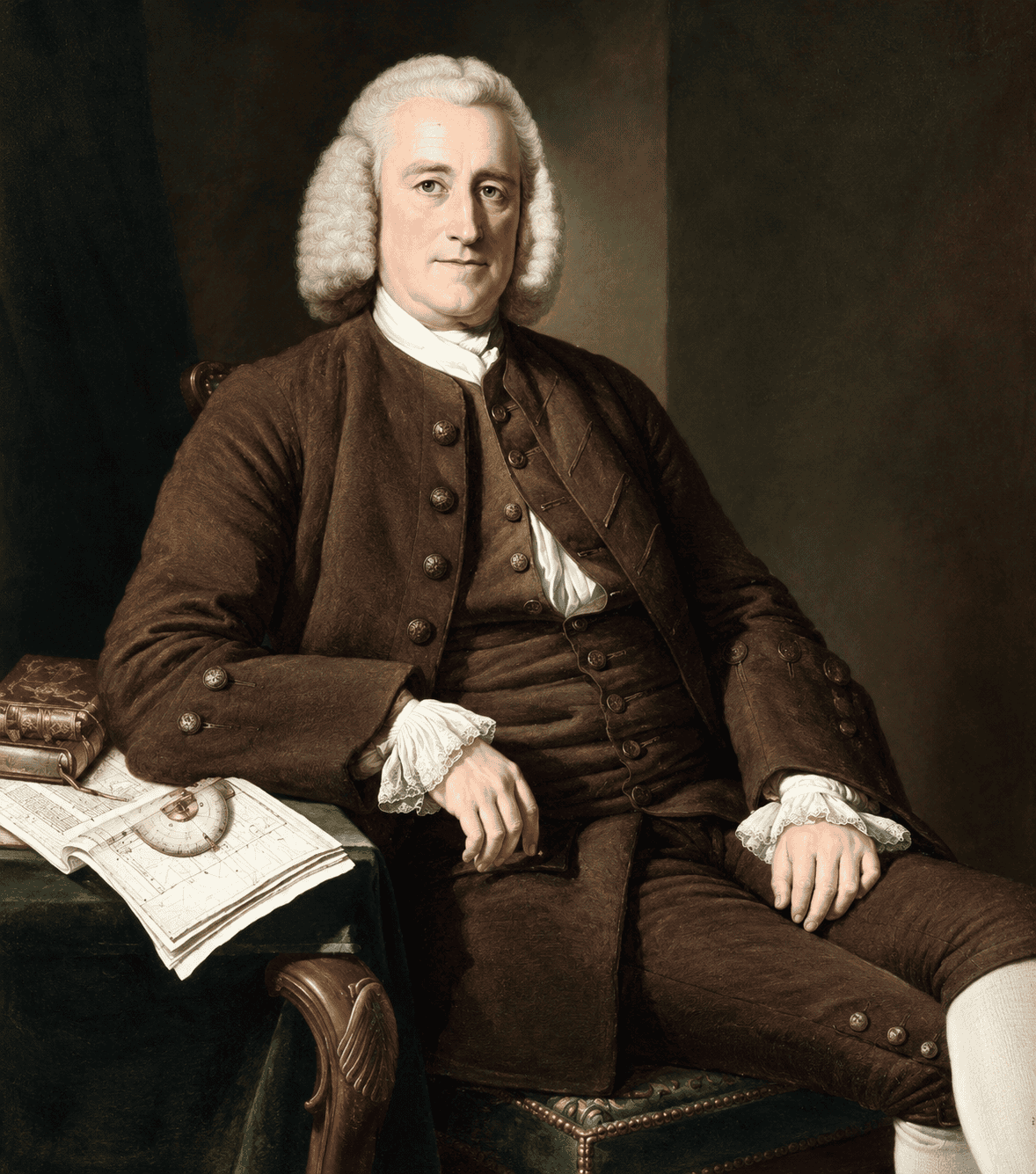
The Greatest Horologists Of Their Time: John Ellicott (1706–1772)
In this occasional series, we explore the lives and achievements of the greatest and most respected horologists of their time. Few eighteenth-century English clockmakers combined scientific curiosity, mechanical ingenuity and exceptional craftsmanship quite as successfully as John Ellicott.
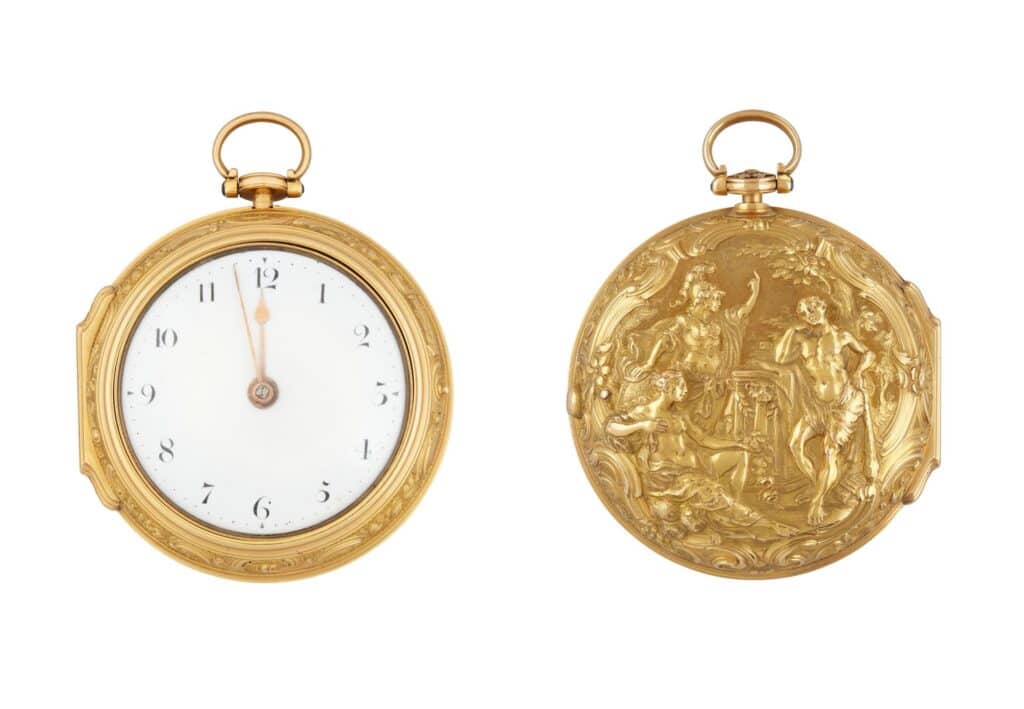
A distinguished clock and watchmaker, Fellow of the Royal Society and eventually Clockmaker to King George III, Ellicott belonged to a generation that helped transform English horology into an internationally respected centre of precision engineering.
His name is particularly associated with the development of temperature-compensated pendulums, improvements in timekeeping technology and the production of beautifully finished clocks and watches for an increasingly sophisticated clientele.
Although perhaps less familiar to the general public than Thomas Tompion or George Graham, Ellicott deserves recognition as one of the most accomplished and scientifically engaged horologists of the eighteenth century.
From A Family Of Clockmakers
John Ellicott was born in London in approximately 1706, the son of John Ellicott senior, an established clockmaker who had developed a successful business in the capital.
The Ellicott family had Cornish origins, and his father had become a member of the Clockmakers’ Company in 1696. He subsequently established premises in the City of London, initially in Austin Friars and later in Swithin’s Alley, close to the Royal Exchange.
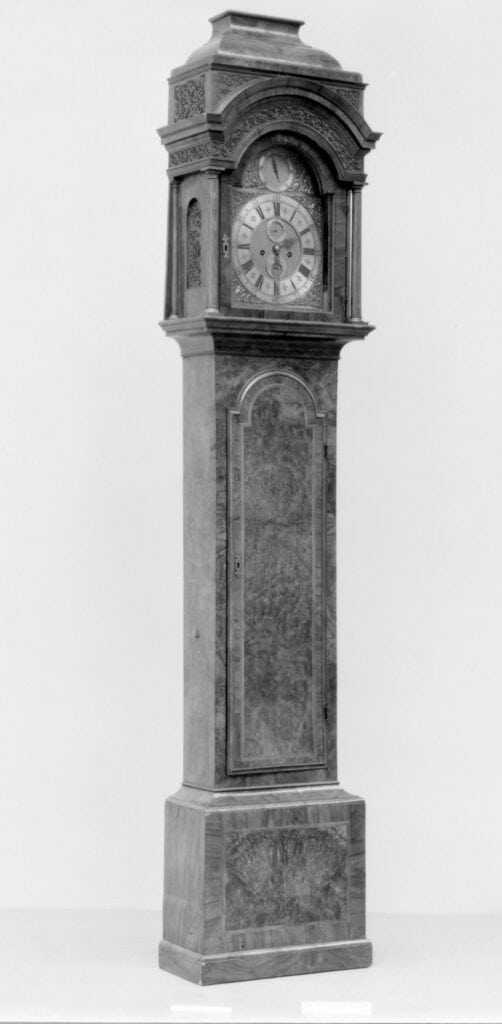
The younger John inherited not simply a business but a tradition of mechanical craftsmanship and an appreciation of the importance of accurate timekeeping.
Details of his early education and training remain relatively obscure. However, his later achievements demonstrate an exceptional understanding of mechanics, mathematics and the scientific principles underlying the measurement of time.
Following his father’s death in 1733, Ellicott continued the family business, developing its reputation and establishing himself among London’s leading clock and watchmakers.
His premises at Swithin’s Alley, Royal Exchange, placed him at the heart of the capital’s commercial and scientific community. London was then one of Europe’s most important centres of horological innovation, attracting talented craftsmen, wealthy patrons and leading figures in experimental science.
A Clockmaker With A Scientific Mind
What distinguished John Ellicott from many of his contemporaries was his active interest in the scientific principles behind his craft.
The eighteenth century was a period of extraordinary progress in physics, astronomy and mechanical engineering. The increasing importance of accurate timekeeping was closely connected with scientific observation, navigation and the determination of longitude.
For a clockmaker of Ellicott’s ability, these developments presented both an intellectual challenge and an opportunity. In 1738, he was elected a Fellow of the Royal Society, a significant distinction that recognised his standing within the scientific community.
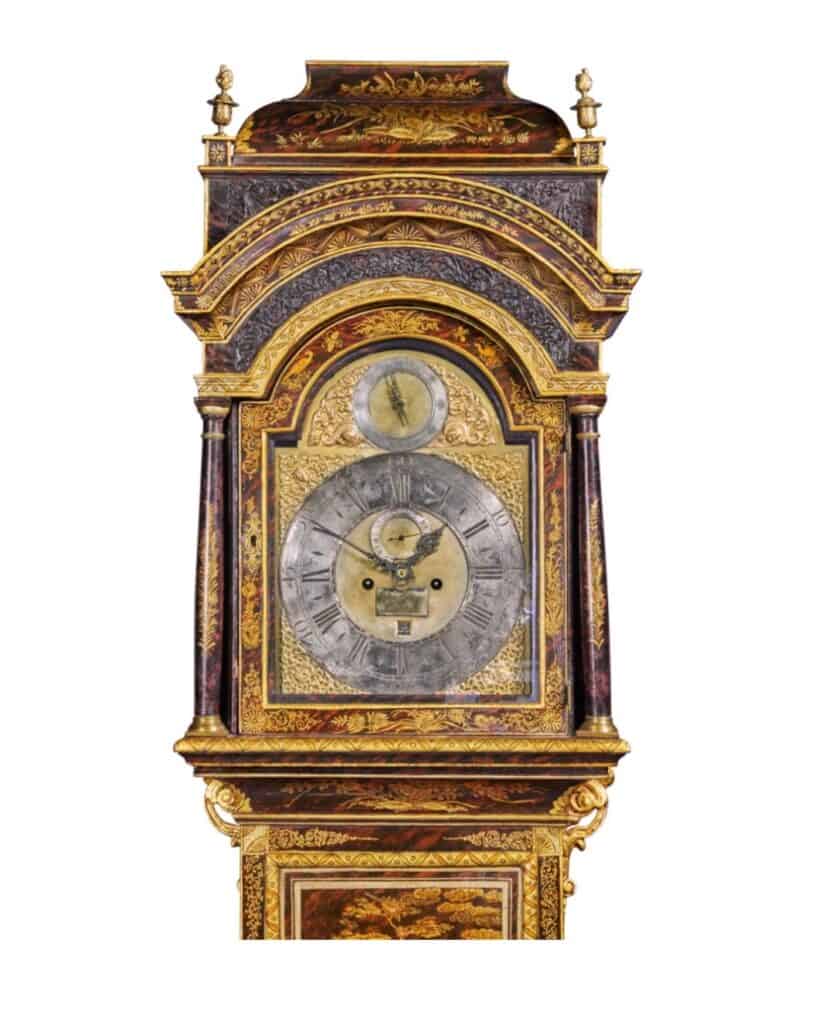
His association with the Society reflected a wider relationship between the practical skills of the clockmaker and the theoretical interests of the natural philosopher.
Ellicott was not simply manufacturing instruments to measure time. He was interested in understanding why clocks behaved as they did, how their accuracy could be improved and how mechanical construction might overcome the limitations imposed by the physical environment.
This scientific approach would become particularly evident in his work on pendulum compensation.
The Challenge Of Temperature And Timekeeping
One of the principal difficulties confronting clockmakers was the effect of temperature on the length of a pendulum.
The accuracy of a pendulum clock depends upon the regularity of its oscillations. However, as temperatures rise and fall, the metal pendulum rod expands and contracts. Even relatively small changes in length can alter the period of oscillation and consequently affect the accuracy of the clock.
For clocks intended for scientific observation or precision timekeeping, this presented a considerable problem. Ellicott devoted particular attention to this challenge and developed a compensated pendulum intended to counteract the effects of temperature variation.
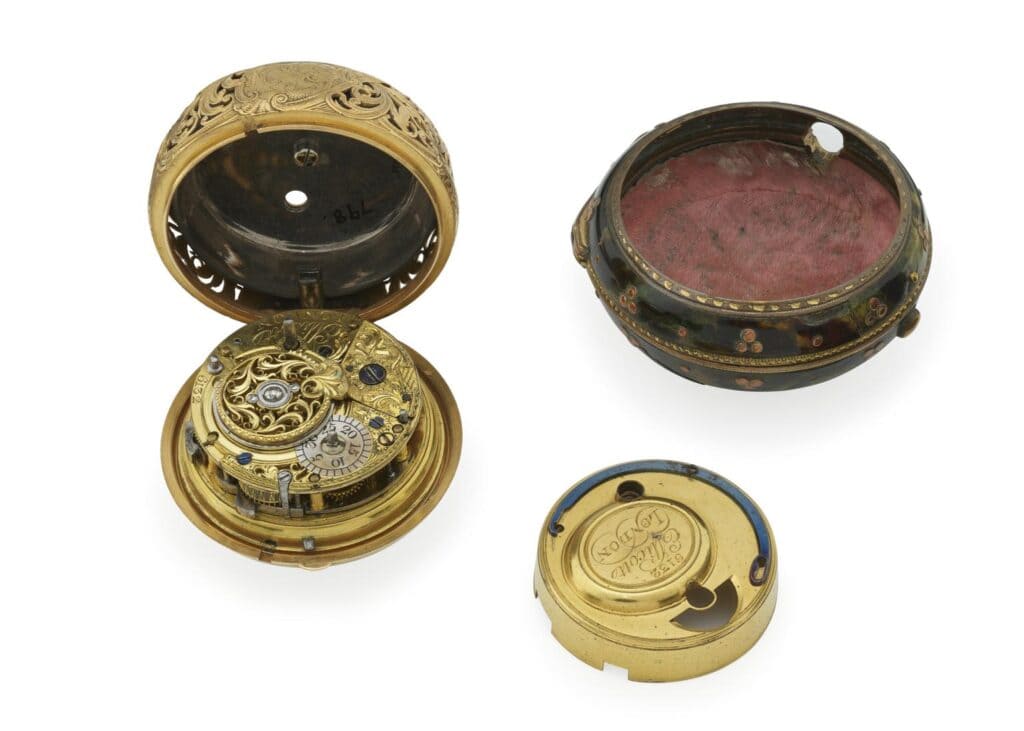
© The Board of Trustees of the Science Museum
His approach involved the use of different metals and mechanical arrangements to balance the expansion and contraction that would otherwise alter the pendulum’s effective length. The principle was an important contribution to the continuing search for greater accuracy in mechanical timekeeping.
Ellicott published his observations on the subject, including an account of his compensated pendulum in the eighteenth century. His work formed part of a wider scientific conversation involving leading clockmakers and instrument makers who were attempting to improve the reliability of precision clocks.
Although other compensated pendulum designs were also being developed, Ellicott’s contribution demonstrated the increasingly sophisticated relationship between horology and experimental science.
The Cylinder Escapement And Fine Watchmaking
Ellicott was also associated with the use and development of the cylinder escapement, a mechanism that played an important role in the evolution of portable timekeeping.
The escapement is the component that regulates the release of energy from a watch’s mainspring, allowing the balance to oscillate at a controlled rate.
The cylinder escapement, developed earlier in the eighteenth century by George Graham, offered a comparatively compact alternative to the older verge escapement.
Its construction allowed watchmakers to produce slimmer watches, while also offering opportunities for improved performance when carefully executed. Ellicott’s watches demonstrate his ability to work with these increasingly sophisticated mechanisms.
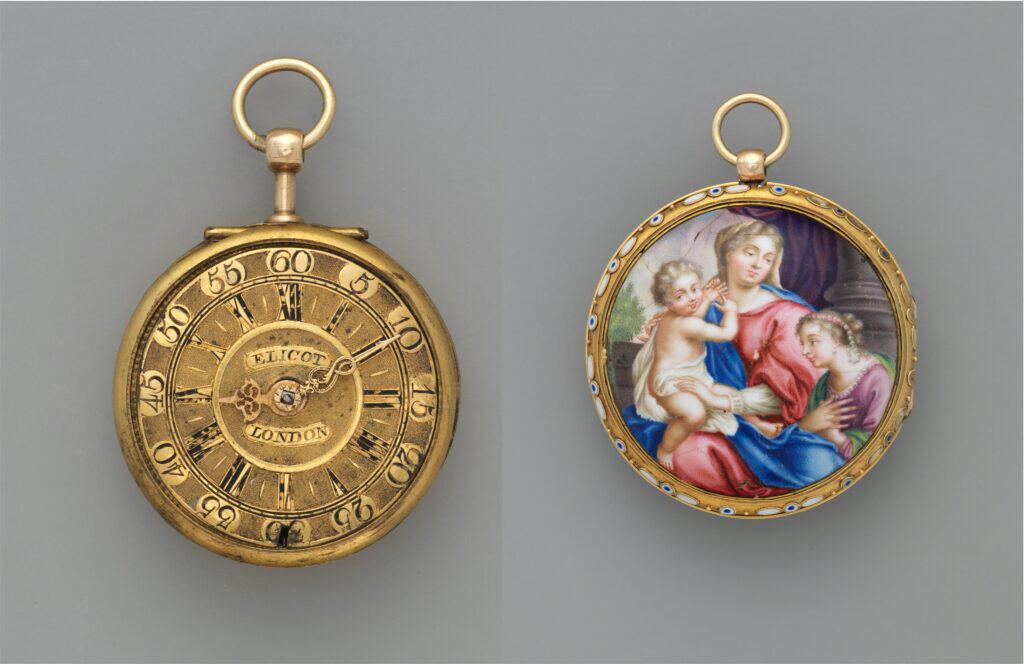
His reputation rested on the combination of mechanical quality, attractive finishing and reliability. The best examples of his work were expensive instruments, intended for customers who appreciated both their technical sophistication and their craftsmanship. His watches were particularly admired by wealthy collectors and members of fashionable society.
The prices commanded by his work could be remarkable. Horace Walpole, writing in 1759, referred to a watch by Ellicott costing 134 guineas, with a further 16 guineas for its seal. Such a price provides an indication of the extraordinary status enjoyed by the finest London watchmakers of the period.
Royal Recognition
Ellicott’s reputation eventually brought him one of the highest honours available to an English clockmaker: appointment as Clockmaker to King George III. The appointment reflected the standing he had achieved through decades of successful work and his reputation for producing instruments of exceptional quality.
Royal patronage was an important endorsement in eighteenth-century London. It confirmed that a maker’s work had reached a standard suitable for the royal household and provided considerable prestige within the wider horological community.
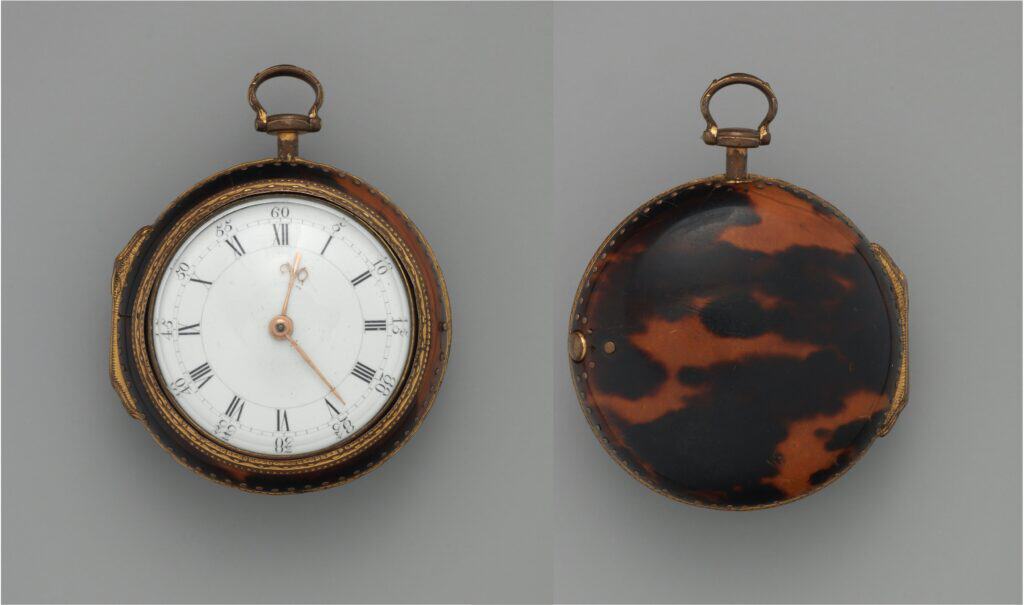
George III himself was a keen collector of scientific instruments and had a particular interest in mechanical and technical subjects. Ellicott’s appointment therefore brought together two individuals whose interests extended beyond the practical business of keeping time.
The Royal Collection continues to preserve important examples of the period’s horological craftsmanship, illustrating the exceptional quality of the instruments produced for royal and aristocratic patrons.
A Business Continued By The Next Generation
John Ellicott’s business was not simply a personal enterprise. It became a family concern that would continue into the next generation. His son Edward joined him in 1760, and father and son worked together for approximately twelve years.
During this partnership, their clocks were generally signed simply ‘Ellicott, London’, a signature that reflected the established reputation of the family workshop.
The continued production of clocks and watches under the Ellicott name helped maintain the business’s standing during a period when English horology was becoming increasingly sophisticated.
The workshop’s output included a range of instruments, from elegant domestic clocks to technically ambitious timepieces intended for discerning customers. The Ellicott name consequently became associated with both precision and refinement.
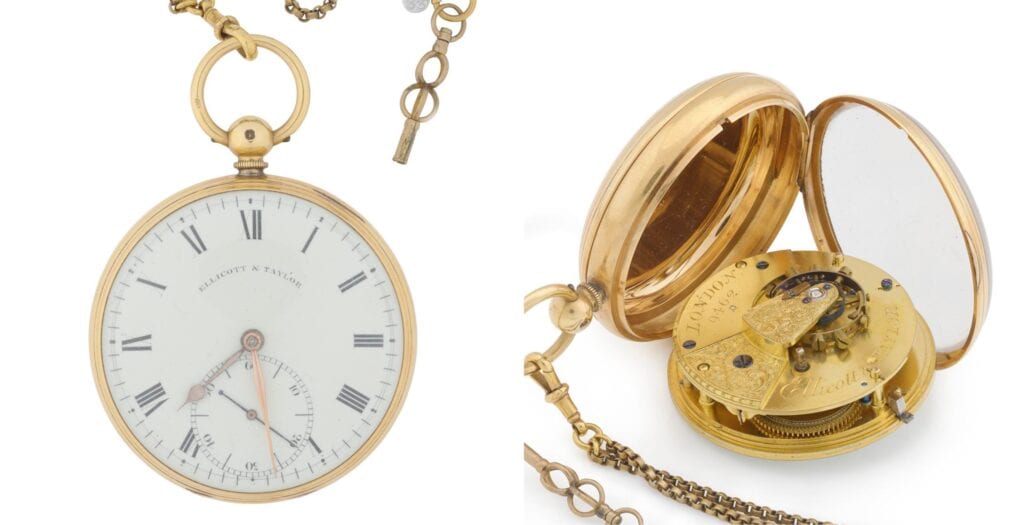
The business continued into the next generation under John’s grandson, also named Edward Ellicott. In the early nineteenth century, he entered into partnership with James Taylor, establishing the firm of Ellicott & Taylor, whose name appears on a number of fine clocks and watches (above). The partnership is recorded as dating from around 1805, with 1811 also cited as the year the firm formally adopted the Ellicott & Taylor name.
The Ellicott Legacy
John Ellicott died in 1772, leaving behind a considerable reputation as both a craftsman and a contributor to the scientific understanding of timekeeping. His career illustrates the increasingly close relationship between horology and science during the eighteenth century.
The finest clockmakers of the period were no longer simply skilled metalworkers and mechanics. They were also experimental thinkers, applying mathematics, physics and observation to the practical problems of precision engineering.
Ellicott exemplified this development. His work on compensated pendulums addressed one of the fundamental challenges of accurate timekeeping, while his watches demonstrated the high standards achieved by London’s finest makers.
His election to the Royal Society and appointment as Clockmaker to George III provide further evidence of the esteem in which he was held. Today, surviving examples of Ellicott’s clocks and watches are preserved in important museum collections, including the Metropolitan Museum of Art and the Victoria and Albert Museum.
They remain tangible reminders of an age when the finest mechanical timepieces represented the very highest achievements of contemporary engineering and craftsmanship. In the story of English horology, John Ellicott occupies an important place between the great pioneers of the seventeenth century and the increasingly sophisticated precision makers of the later eighteenth century.
His legacy is not merely that of a celebrated clockmaker, but of a man who understood that the pursuit of accurate timekeeping was as much a scientific endeavour as it was an art. John Ellicott was, in every sense, a master of his time.
Hero Image: Artist’s impression of John Ellicott © MrWatchMaster