
The Greatest Horologists Of Their Time: Joseph Knibb (1640–1711)
In this occasional series, we explore the life and achievements of the greatest and most respected horologists of their time and few names in the history of English clockmaking command quite the same respect as Joseph Knibb.
Knibb was an exceptionally gifted craftsman, an inventive mechanic and one of the most distinguished clockmakers of the English Restoration period, who helped establish the reputation of British horology during one of its most exciting and transformative eras.
His clocks are admired not simply for their technical accomplishment, but for their remarkable proportions, elegant restraint and mechanical ingenuity. More than three centuries after his death, his name remains synonymous with the finest traditions of seventeenth-century English clockmaking.
From Oxfordshire To The World Of Clockmaking
Joseph Knibb was born in 1640 in Claydon, a small village in north Oxfordshire. He was the son of Thomas Knibb, a yeoman farmer, and belonged to a family that would become one of the most important clockmaking dynasties of seventeenth-century England.
His cousin, Samuel Knibb, was already established as a clockmaker, and it is generally believed that Joseph learned his craft under his guidance. This apprenticeship would provide the foundation for a career that would eventually place him among the most celebrated makers of his generation.
By the early 1660s, Joseph had established himself in Oxford, initially working in St Clement’s before moving his business to Holywell Street. His younger brother John subsequently became involved in the business, developing his own reputation as a clockmaker and later becoming Mayor of Oxford.
Oxford at this time was an important centre of intellectual and scientific activity. The growing interest in astronomy, mathematics and experimental science created an environment in which accurate timekeeping was increasingly valued. Knibb was ideally placed to benefit from this intellectual atmosphere.
His early work already demonstrated a considerable understanding of mechanical construction, together with an instinctive appreciation of proportion and design. In 1668 he was admitted to the freedom of Oxford, allowing him to trade within the city.
A New Era In English Horology
The second half of the seventeenth century witnessed one of the most significant developments in the history of timekeeping: the introduction of the pendulum clock.
Following Christiaan Huygens’ development of the pendulum regulator in 1656, clockmakers across Europe began exploring ways to improve the accuracy of mechanical clocks.
English makers were at the forefront of this revolution. Ahasuerus Fromanteel had been instrumental in introducing pendulum clockmaking to England, while Thomas Tompion and other talented craftsmen were developing increasingly sophisticated movements. Joseph Knibb emerged as one of the most inventive participants in this new age.
In 1670 he moved to London, where he became a member of the Worshipful Company of Clockmakers. The capital offered a far larger market and brought him into contact with wealthy patrons, scientific thinkers and other leading makers. His workshop quickly established a reputation for producing clocks of exceptional quality.
Knibb’s clocks were notable for their combination of technical sophistication and visual elegance. His movements were often relatively delicate in construction, while his cases displayed a refined simplicity that distinguished them from many of their contemporaries. He understood that a clock was both a scientific instrument and an important piece of domestic furniture.
The Knibb Signature: Innovation And Elegance
Joseph Knibb was particularly inventive in the development of striking and repeating mechanisms. His clocks demonstrate an interest in making mechanical timekeeping more versatile, practical and convenient. He experimented with different striking arrangements, including Roman striking, in which the hours were indicated using Roman numerals rather than the more familiar sequence of blows.
This is one of the distinctive features associated with his work. His clocks also incorporated sophisticated striking and repeating functions, demonstrating the technical ambition of his workshop.
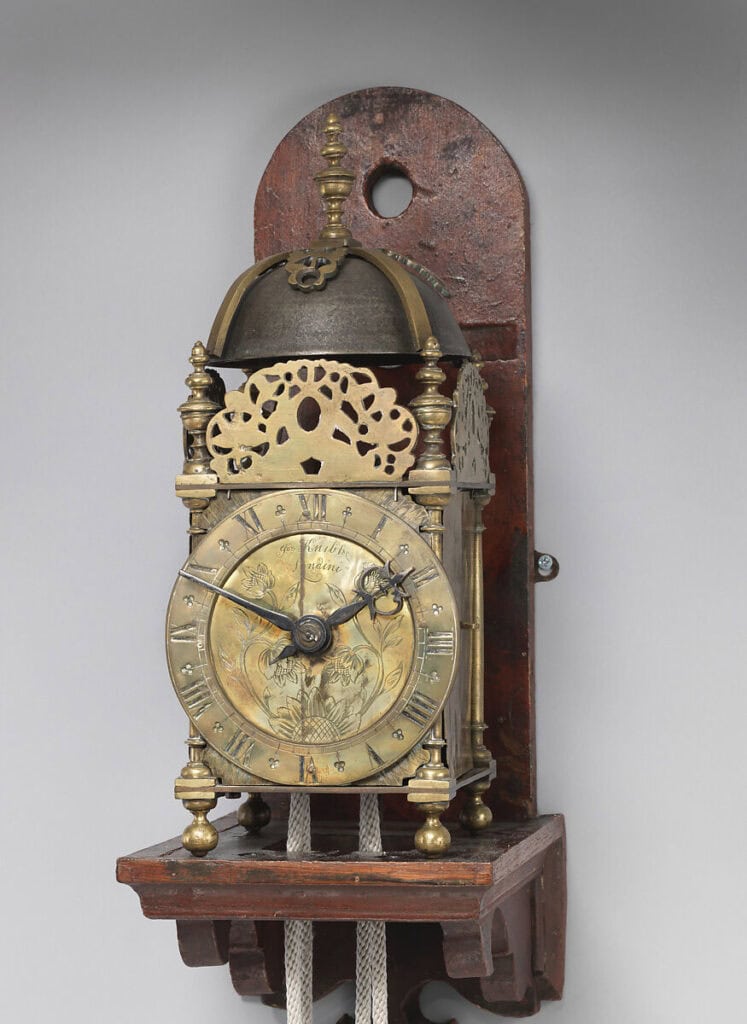
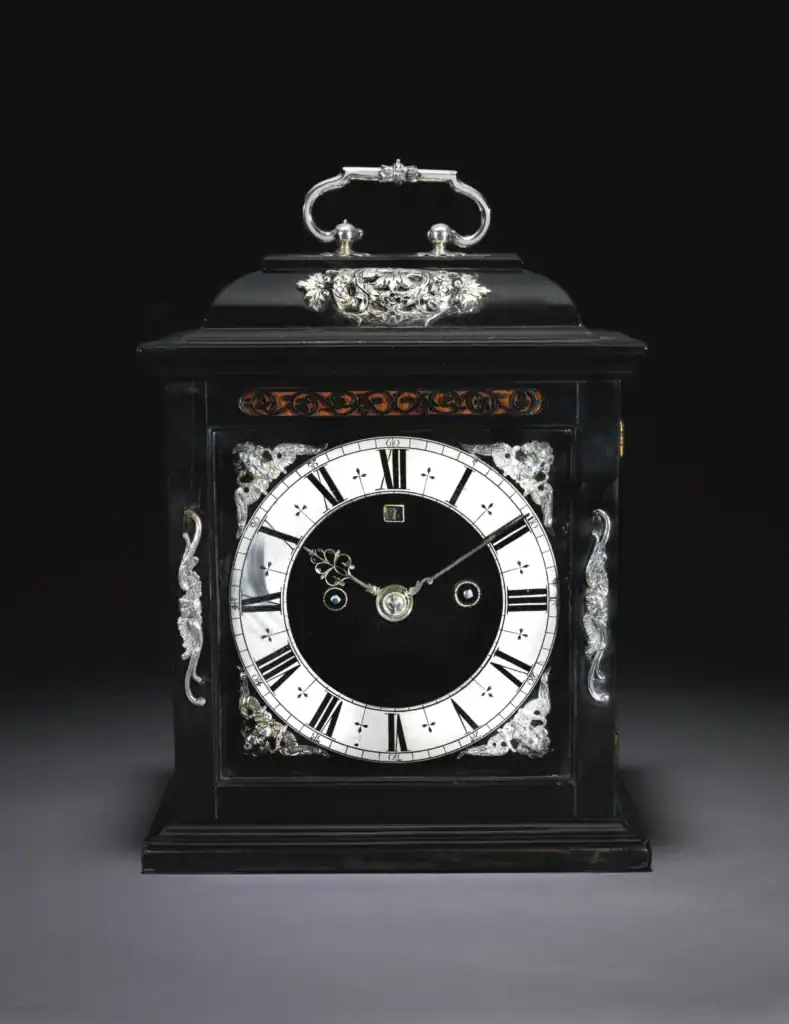
Knibb produced a wide variety of timepieces, including lantern clocks, longcase clocks, table clocks and smaller domestic clocks. His work ranged from relatively straightforward timekeepers to elaborate pieces incorporating calendar indications and complex striking mechanisms. Among his most admired creations are his longcase clocks.
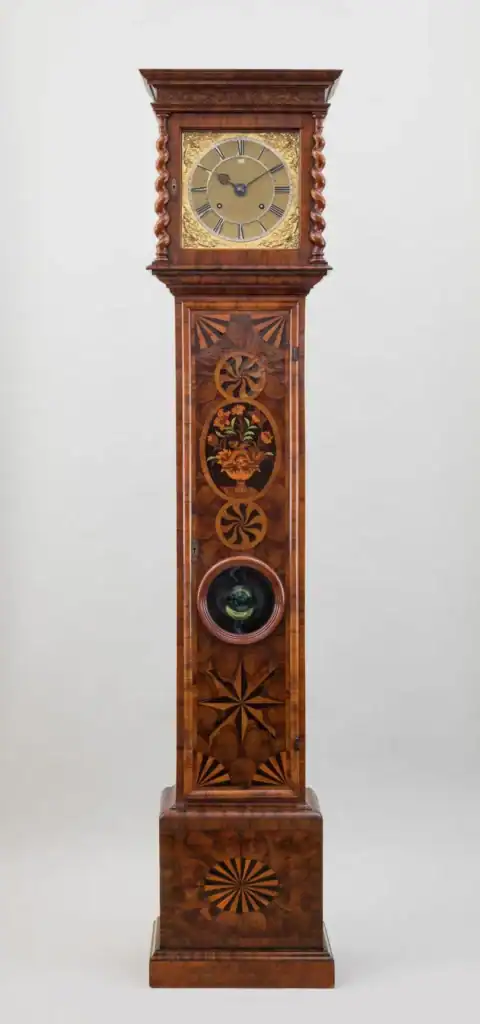
These tall, elegant instruments frequently featured walnut or ebony cases, beautifully proportioned hoods and finely finished brass dials. Their restrained decoration allowed the quality of the craftsmanship and the precision of the mechanism to take centre stage.
A particularly fine example is the longcase clock with calendar dating from approximately 1680–85, now in the collection of the Metropolitan Museum of Art in New York.
The clock features a walnut-veneered case, a gilded and silvered brass dial and a sophisticated brass-and-steel movement. It is an excellent illustration of Knibb’s ability to combine mechanical complexity with understated elegance.
Royal Patronage And A Growing Reputation
Knibb’s reputation soon extended beyond the commercial clockmaking market. In 1677 he supplied a turret clock for Windsor Castle, a significant commission that demonstrated the confidence placed in his abilities.
Further payments recorded in 1682 on behalf of King Charles II provide additional evidence of his royal connections. Such commissions were important not only financially but also in establishing a maker’s standing among the wealthiest and most influential patrons of the day.
Knibb became increasingly prominent within the London clockmaking community. He served as a Steward of the Clockmakers’ Company in 1684 and was appointed an Assistant in 1689. These positions reflected the esteem in which he was held by his fellow craftsmen.
His workshop was also part of a wider network of makers and retailers that helped establish London as one of Europe’s most important centres of horological production.
The Knibb Family Legacy
Joseph was not the only talented member of his family. His brothers John and Peter were also involved in clockmaking, while other members of the wider Knibb family contributed to the development of English horology.
John continued to work in Oxford after Joseph’s departure for London, building a successful business and eventually entering civic life. The Knibb name consequently became associated with two important centres of English clockmaking.
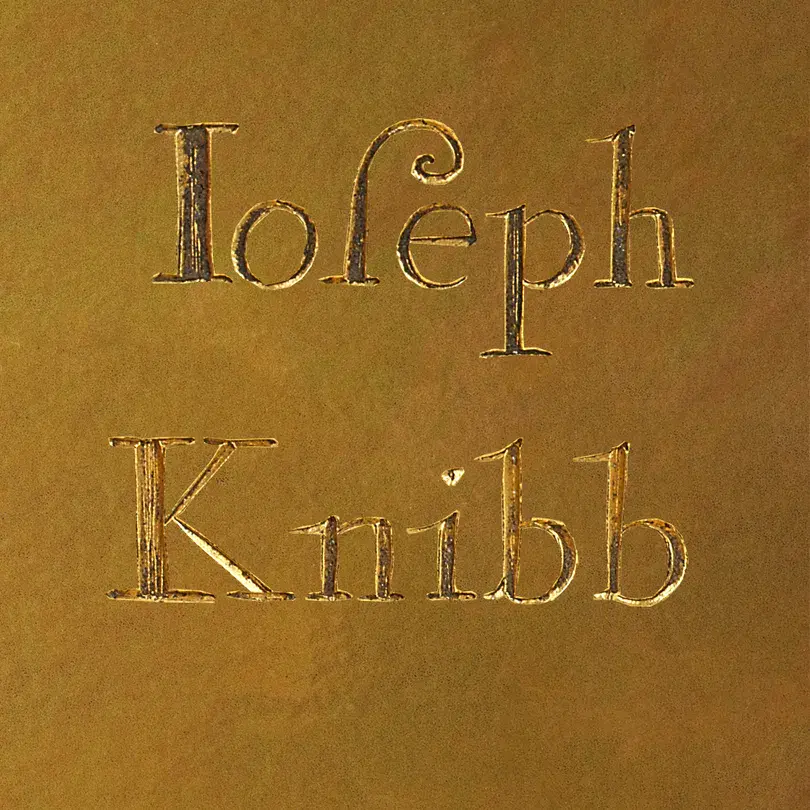
Joseph’s own output was considerable, and surviving examples demonstrate the range of his abilities. His clocks are particularly valued for their mechanical originality, fine workmanship and distinctive aesthetic qualities.
The relationship between Knibb and his contemporaries is also an interesting aspect of his story. His work belongs to the same remarkable generation as Thomas Tompion, Edward East and other celebrated makers who transformed the standards of English clockmaking.
While Tompion would eventually become known as the Father of English Clockmaking, Knibb deserves recognition as one of the most imaginative and accomplished craftsmen of that extraordinary period.
Retirement In Hanslope
In 1697, Joseph Knibb retired from his principal London business and moved to Hanslope in Buckinghamshire, where he had acquired an estate several years earlier.
His departure from London marked the end of an important chapter in his professional life, although he did not necessarily abandon clockmaking altogether.
Clocks bearing the inscription ‘Joseph Knibb of Hanslop’ are particularly scarce and are highly regarded by collectors. These later examples provide a fascinating glimpse into the final period of his career, when he was no longer operating on the same commercial scale as his London workshop.
Joseph Knibb died in 1711, leaving behind a remarkable body of work and a reputation that would endure for generations.
An Enduring Legacy
Today, Joseph Knibb is recognised as one of the greatest English clockmakers of the seventeenth century. His surviving clocks are treasured by museums and private collectors alike. Their importance lies not merely in their age or rarity, but in the extraordinary combination of mechanical ingenuity, craftsmanship and aesthetic refinement that they represent.
At a time when English horology was establishing its international reputation, Knibb helped demonstrate what could be achieved through a combination of technical imagination and artistic sensitivity. His clocks remain among the finest expressions of the English Golden Age of clockmaking.
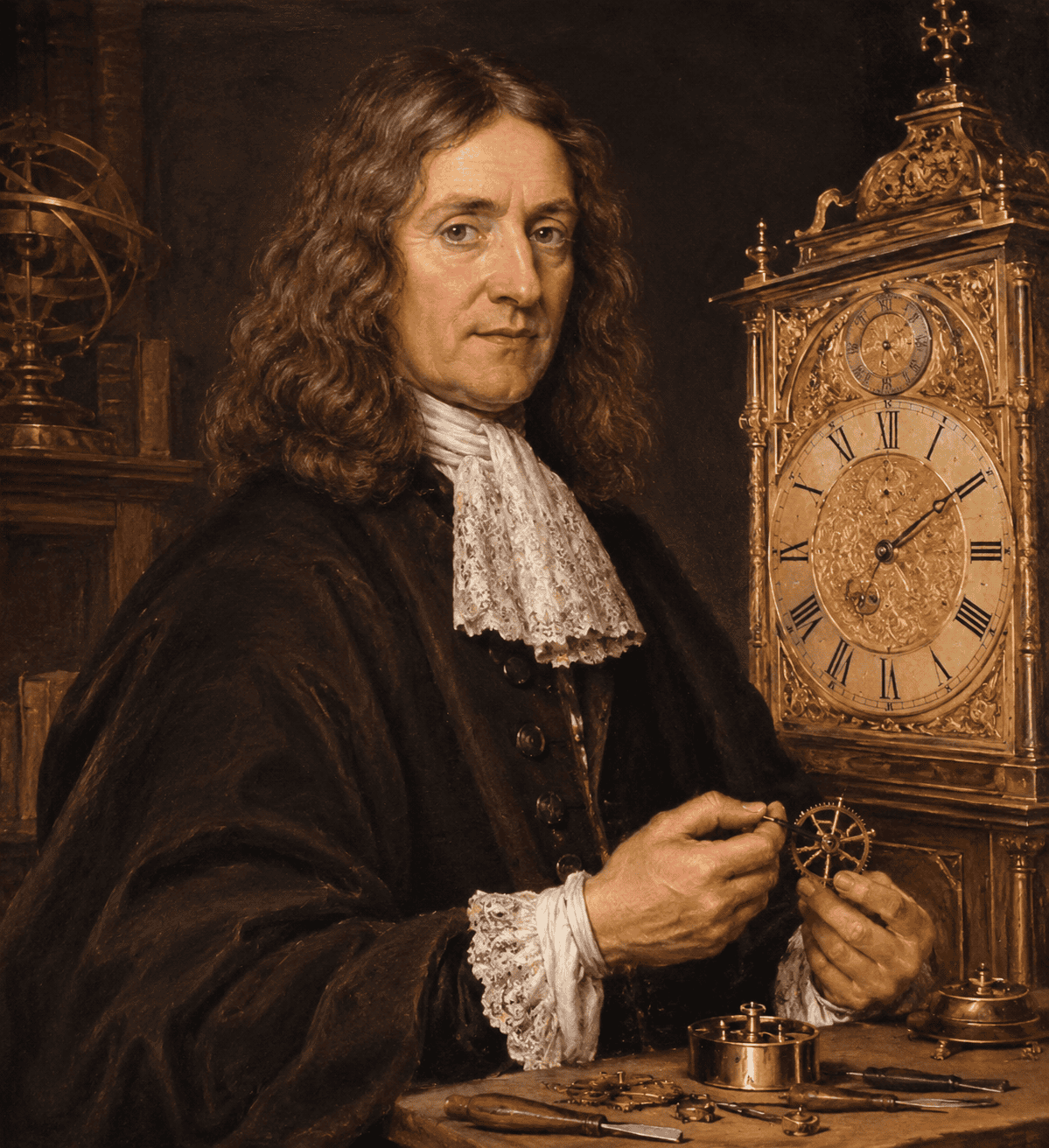
Hero Image: Artist impression of Joseph Knibb in his Oxfordshire workshop. Image © MrWatchMaster