
What A UK Buyer Checks Before Buying A Pre-Owned Cartier Or Panerai
By Ben Steele
When I’m offered a pre-owned Cartier or Panerai, I check five things in the same order: the papers, the serial number, the watch itself, its condition and whether it runs. I base my offer on what comes out of those checks, and none of them tells me enough on its own.
I run Watch Boutique and have bought pre-owned luxury watches in the UK for over 10 years. The order stays the same for any top-end brand. What changes is how each brand records its serial numbers, which is why I’ve used Cartier and Panerai as the examples here.
| Check | What I’m trying to establish | What it cannot tell me alone |
| Box and papers | What came with the watch, and whether the papers match it | That the watch is genuine |
| Serial number | Whether the number on the watch matches the papers and the brand’s records | Whether a real number has been copied onto a fake |
| The watch itself | Whether it looks and behaves like the real thing | How it has been looked after |
| Condition | Whether it is sellable as it is: case, strap or bracelet, bezel, glass | How the movement will behave in future |
| Running | Quartz: is it ticking. Automatic: is the second hand sweeping | When it was last serviced |
Papers come first
The first question I ask any seller is whether they have the box and the papers. It’s the quickest way to see what I’m dealing with. I ask for photos of the papers first and match them to the watch when I see it. If they don’t line up, I stop there, and I’d always rather a seller found that out before travelling than when we meet.
What counts as papers depends on the brand and the year. Cartier changed its paperwork around 2016: newer watches come with an international warranty card, older ones with a warranty certificate. Both count, and either is worth having. If the papers have gone missing altogether, I can still assess the watch. Here is how Watch Boutique values a Cartier without papers.
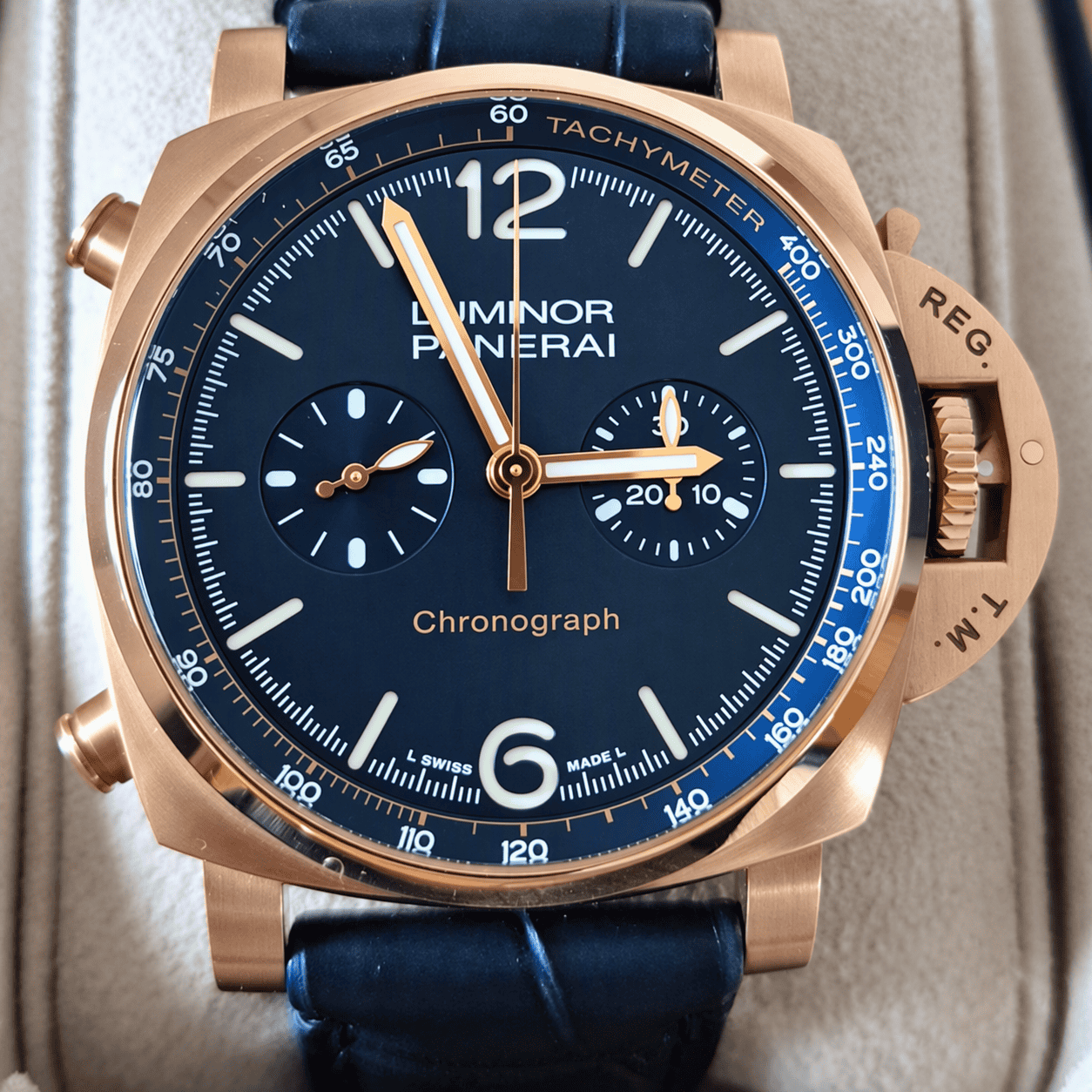
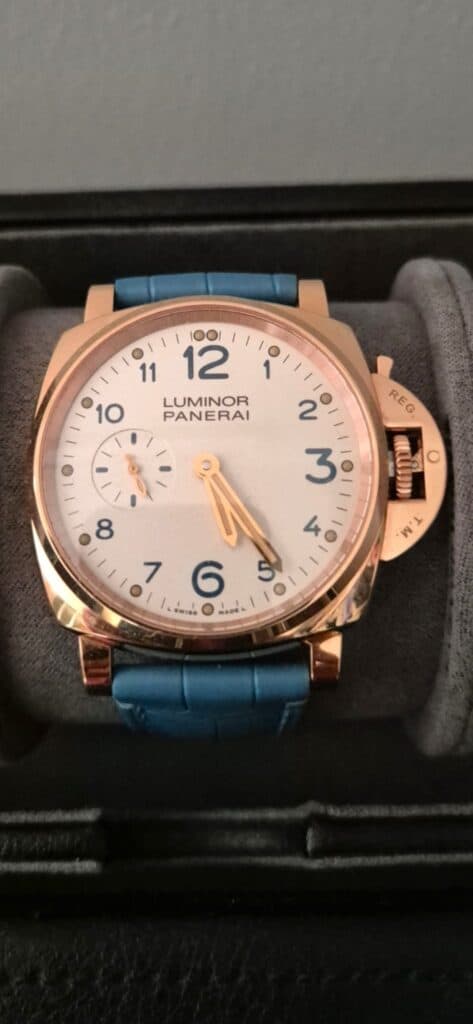
Panerai uses a warranty card too, with a QR code on it that the owner scans to register the watch with Panerai. Most Panerai sellers do still have the card and the extra strap. The trouble is that they don’t always bring them. People don’t keep everything together, and then we meet and something has been left at home. I can only price what is in front of me. A missing extra strap isn’t the end of the world. A missing warranty card is worse, and it can change the valuation significantly or even whether I buy the watch at all.
The serial number: a strong check, not a perfect one
The serial number is my second layer, and it matters much more when there are no papers. Some brands let you check a serial number against their records or a registration system. Cartier has Cartier Care, where owners register a watch by its serial number. Panerai’s Pam.Guard takes the serial number or the warranty card’s QR code, and Panerai says it can refuse to register a watch it suspects is lost or stolen. I use these to support my checks.
In my experience a serial check is about 99% reliable, and not 100%. There are some very good fakes out there that carry a matching serial number for the right watch, because the number has been cloned from a real one.
What a serial check can and cannot tell you. It can tell you whether a number matches the papers or the brand’s records. It cannot tell you that the watch carrying the number is the real one, because a fake can wear a number copied from another watch.
Papers make a sale easier, but a watch without them can still be genuine. If the papers and serial leave questions unanswered, I look more closely at the watch itself. If something doesn’t sit right at any stage, I’d rather say so and stop than talk myself into a purchase.
Condition: is it sellable as it is?
Once I’m happy the watch is right, I ask whether it’s sellable as it is. I look at the case, the strap or bracelet, the bezel and the glass, and then at the movement. A quartz watch needs a battery and has to be ticking, which matters with Cartier because many of its watches are quartz. On an automatic I check that the second hand is sweeping.
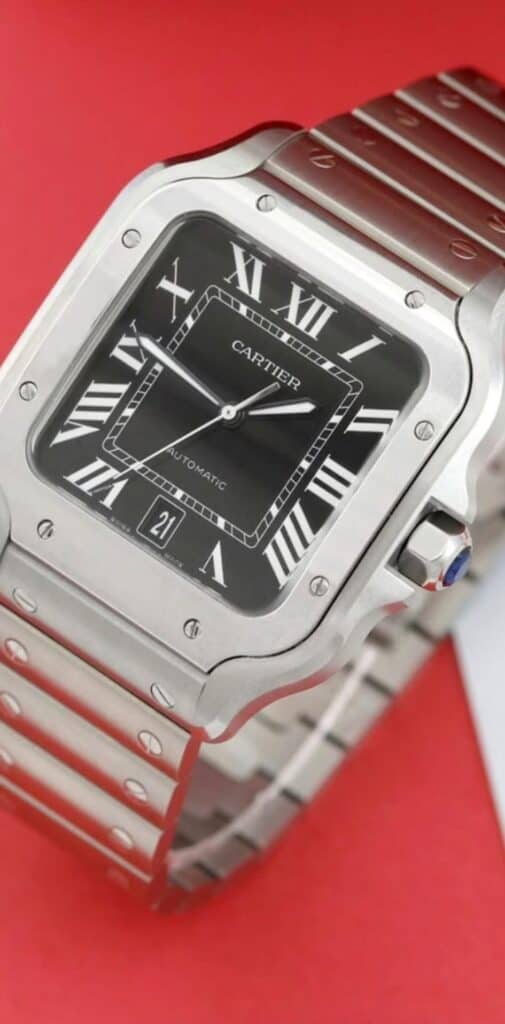
The Tank, the Santos and the Ballon Bleu are the Cartiers I see most, and the same checks apply to all three.
A watch that needs a polish isn’t a problem for me, and a tired strap or bracelet is a small issue. Neither stops a watch being worth buying, although condition does affect the offer.
If a watch is ticking or the second hand is sweeping, I know it runs. I still don’t know when it was last serviced.
Before you contact a buyer
Three things are worth doing first.
- Make sure it runs. If a watch arrives not running, I can’t tell whether it’s the battery or the movement, so the offer has to allow for that. On a quartz watch, a new battery from a local watch-battery shop costs a few pounds and shows whether the battery was the problem.
- Clean it. A clean watch shows a buyer it has been looked after. Tidy it as best you can.
- Check the papers match. Compare the serial number on the papers with the one on the watch before you contact anyone.
Then gather everything that came with it and bring it all. People often agree a sale from photos, arrive, and find they’ve left the spare links or the warranty card at home. With a Panerai, double-check you have the warranty card and the extra strap before you set off. The card especially can make a real difference to the offer, and what Watch Boutique looks at when valuing a Panerai explains why.
If you’re thinking of selling, photos of the watch and its papers are enough for me to give you a first answer, and I’ll tell you straight away if something looks wrong. Visits are by appointment.

About the author
Ben Steele is the owner of Watch Boutique, a UK buyer of pre-owned luxury watches based in Manchester with an office in Mayfair, London. He values every watch personally, from Rolex, Omega, Breitling and Cartier to Patek Philippe and Audemars Piguet, and has bought watches in the UK trade for over 10 years.