
Piaget and the Art of Ornamental Stones Is A Legacy Reignited
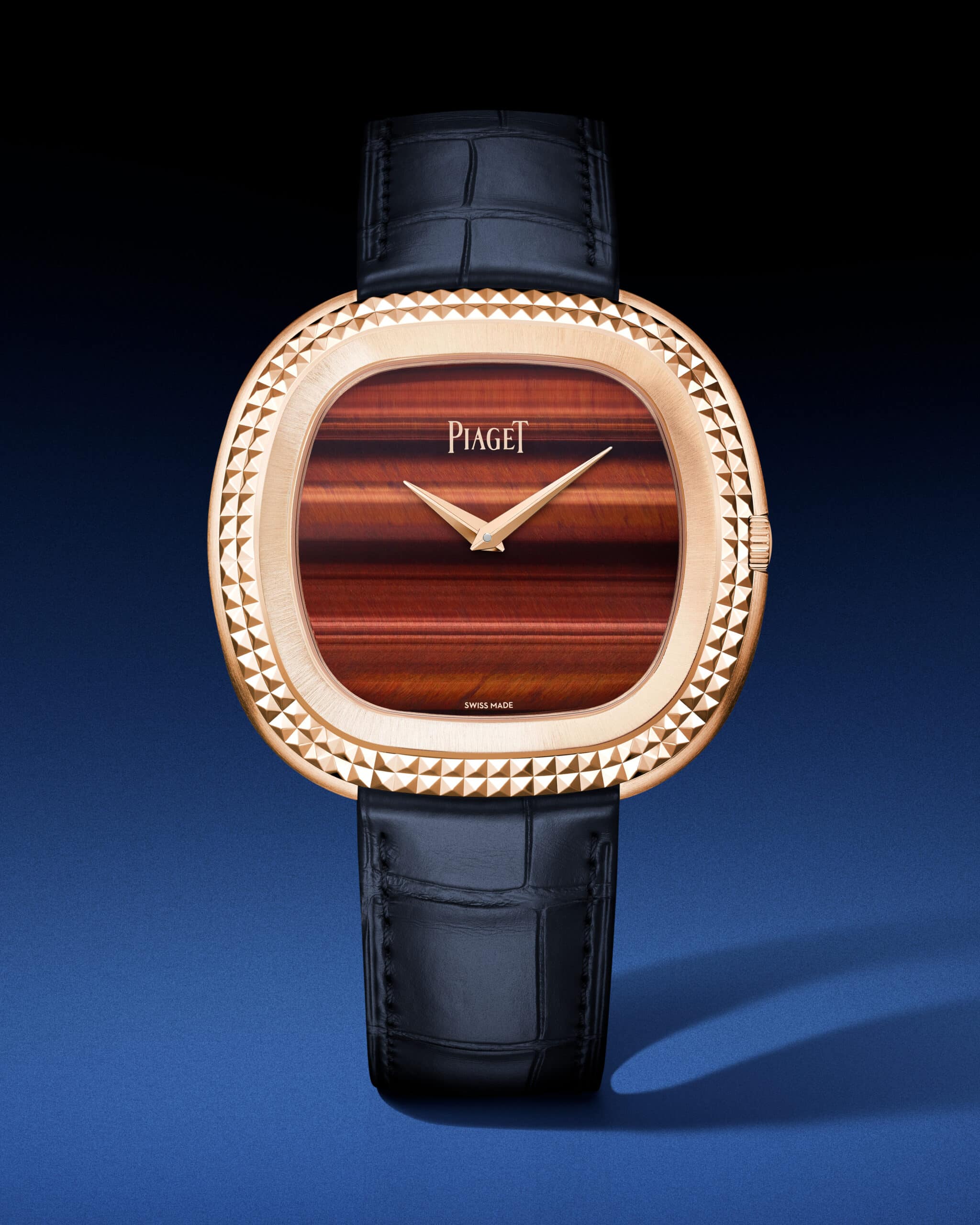
Few maisons have embraced colour with the same audacity and artistic conviction as Piaget. In an industry historically dominated by restraint, the brand’s fearless use of ornamental stones has long set it apart, transforming the humble watch dial into a canvas of natural beauty, texture and expression. For 2026, that legacy returns with renewed energy, reaffirming Piaget’s position as a true pioneer of chromatic watchmaking.
A Radical Beginning
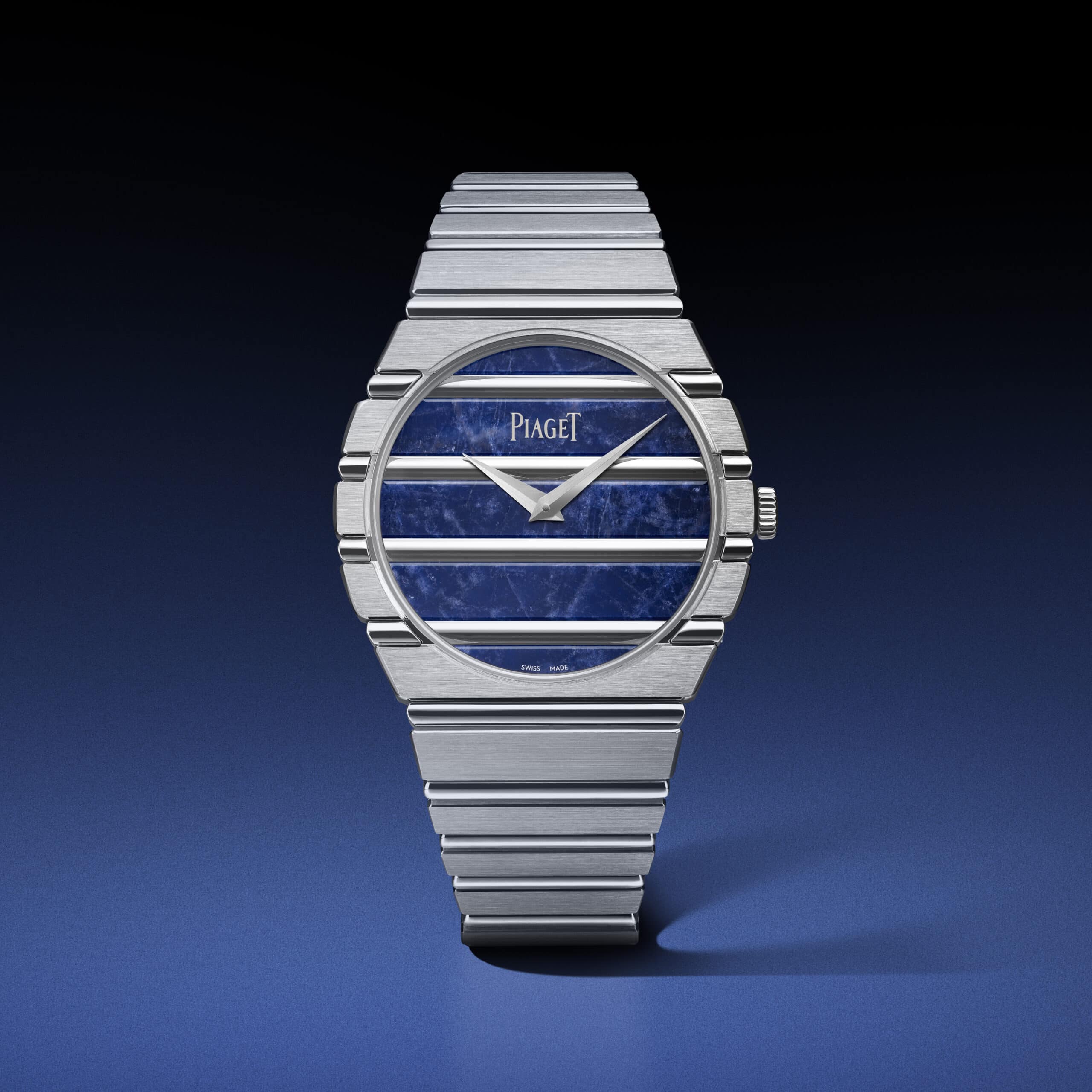
Piaget’s journey into ornamental stones began in 1963, during a period of profound cultural and aesthetic change. Under the vision of Gérald and Valentin Piaget, grandsons of founder Georges-Édouard Piaget, the Maison made a bold departure from convention. While much of the watch industry pursued steel and accessibility, Piaget doubled down on precious materials, elevating the watch into the realm of jewellery.
Central to this creative liberation was the ultra-thin 9P movement, introduced in 1957. Its slim profile allowed for expansive, uninterrupted dials, perfect for showcasing the hypnotic patterns of lapis lazuli, malachite, turquoise and tiger’s eye. The dial was no longer a functional necessity; it became the focal point of artistic expression.
Colour, Culture and the Piaget Society
Piaget’s timing could not have been more precise. The vibrant, rebellious spirit of the 1960s and ’70s found a natural ally in these boldly coloured creations. The Maison’s jewellery watches, often paired with intricately hand-crafted gold bracelets, captured the mood of a generation that embraced individuality, glamour and self-expression.
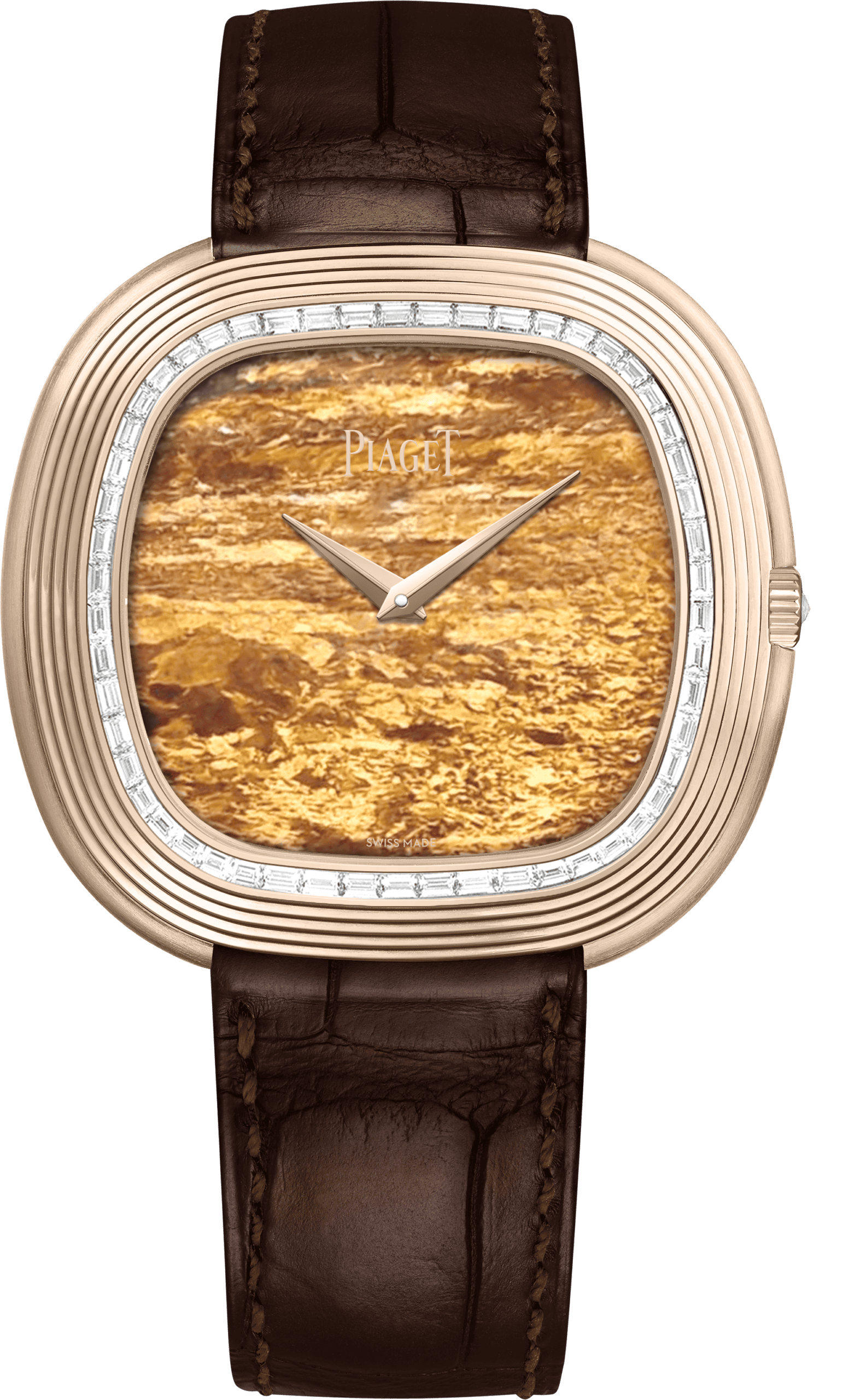
This era also saw the rise of the Piaget Society, an influential circle curated by Yves Piaget. Artists, actors and tastemakers gravitated toward the brand, drawn by its unconventional elegance and artistic daring. Ornamental stones, with their organic patterns and almost mystical allure, resonated deeply with the era’s fascination with nature and futurism alike.
Craftsmanship Meets Individuality
Working with ornamental stones is no small feat. Each dial must be cut to extreme thinness, sometimes as little as 0.4mm, while preserving structural integrity and visual perfection. The process is fraught with risk; a single misstep can result in breakage. Yet it is precisely this challenge that underscores Piaget’s mastery.
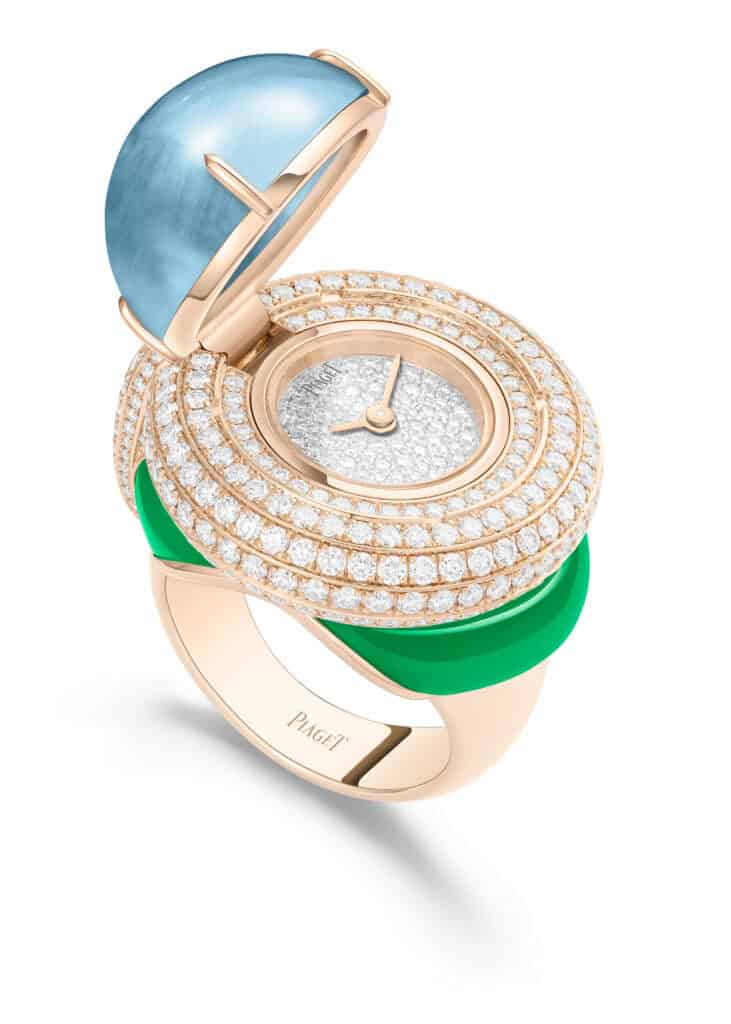
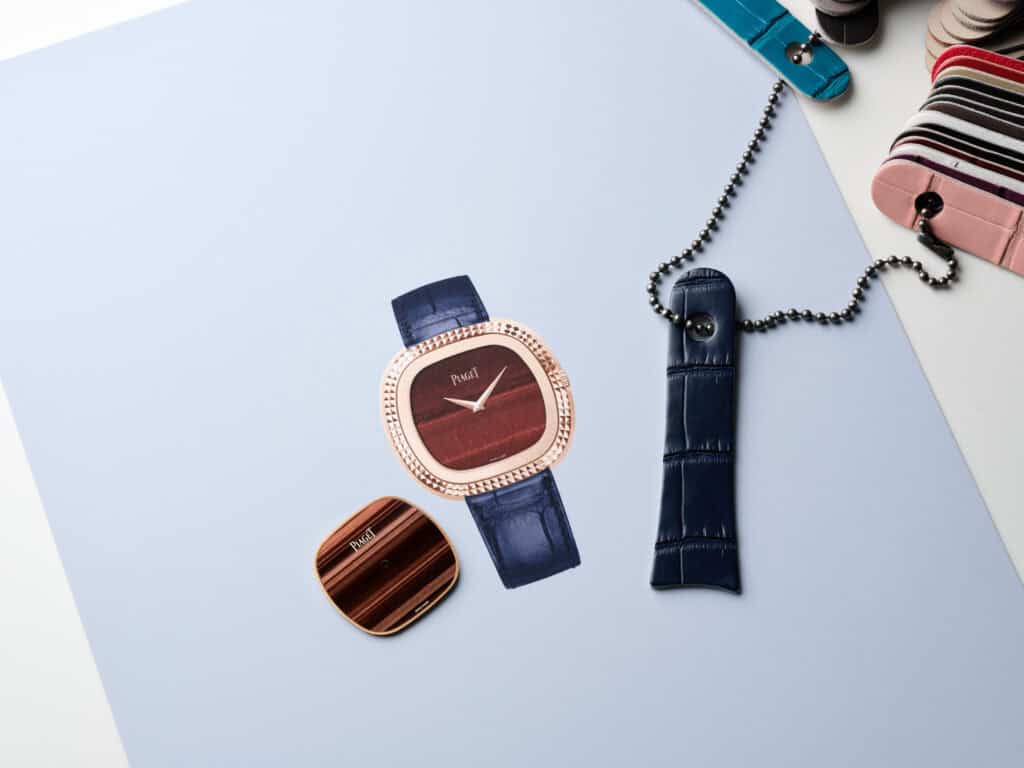
Even in the 1960s, the maison anticipated the modern desire for personalisation. Its “Style Selector” allowed clients to create bespoke combinations of stone dials, gold bracelets, numerals and diamond settings, an early expression of the individuality that defines luxury today.
A Living Legacy
Fast forward to 2026, and Piaget’s “Art of Colour” enters a new chapter. Drawing from its rich archives, the maison introduces fresh interpretations that bridge past and present. Signature blue tones, long associated with Piaget, reappear across contemporary models, while new ornamental stones bring unexpected depth and intrigue.
Among the highlights are reimagined cuff watches and sculptural sautoir pieces, where stones such as opal, verdite and pietersite are carved into fluid, organic forms. In these creations, the boundary between case and dial dissolves entirely, turning each watch into a tactile object of art.
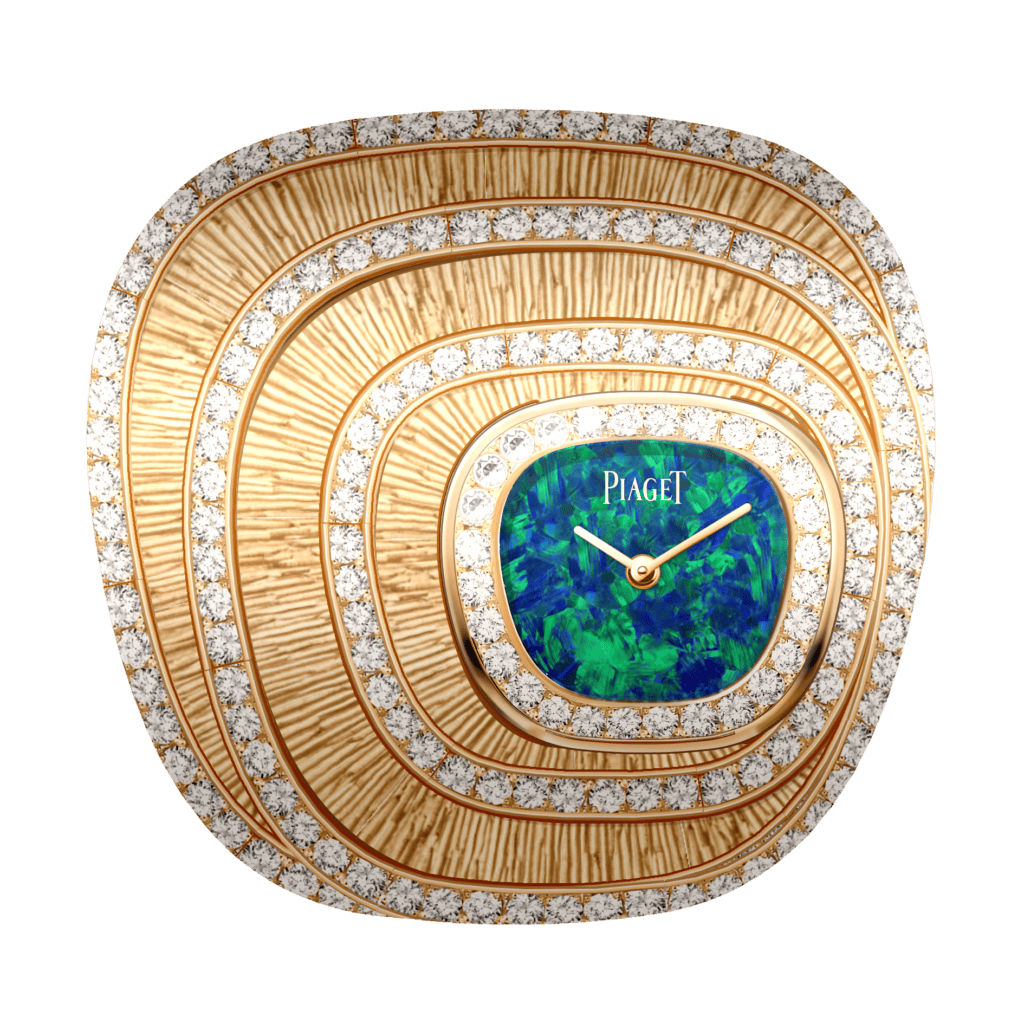
Equally compelling is the integration of ornamental stone into high watchmaking. The latest evolution of the Altiplano Ultimate Concept Tourbillon incorporates stone within its astonishingly thin architecture, proof that technical innovation and decorative artistry can coexist at the highest level.
The Enduring Appeal of Stone
What makes ornamental stones so enduringly captivating is their individuality. No two pieces are ever the same; each dial carries its own natural signature, formed over millennia. In an age increasingly defined by mass production, this uniqueness feels more relevant than ever.
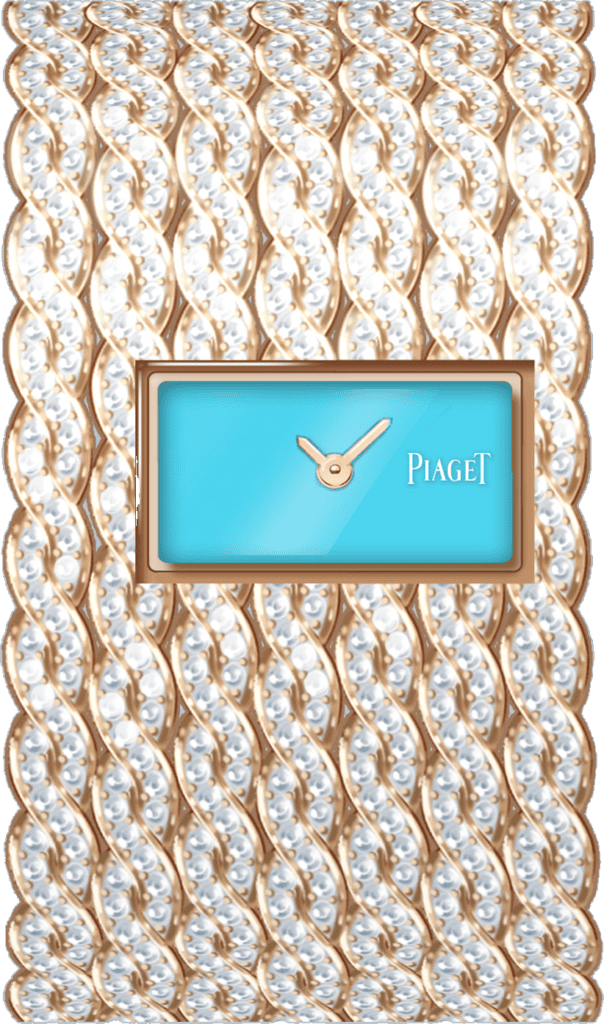
For Piaget, ornamental stones are not merely decorative elements, they are storytellers. They speak of geology, artistry and human ingenuity, brought together through exceptional craftsmanship.
A Bold Future Rooted in Heritage
As Piaget continues to explore new materials and creative directions, its commitment to colour remains unwavering. The 2026 collection is not simply a tribute to the past; it is a confident statement of intent, proving that the maison’s daring spirit is as vibrant today as it was over half a century ago.
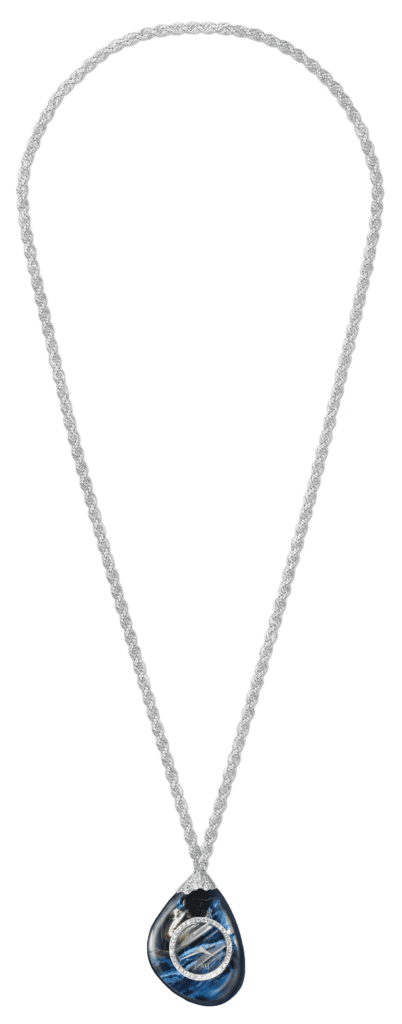
In the world of fine watchmaking, where tradition often reigns supreme, Piaget reminds us that true luxury lies not only in precision, but in the courage to create something unexpected and unforgettable.
For more information please visit Piaget