
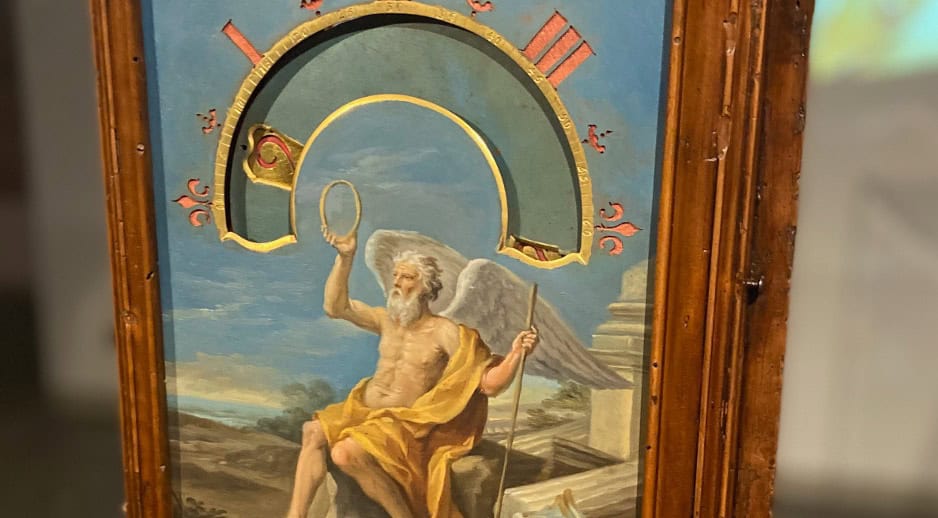
The Night Clock: The Papal Request That Illuminated Time
Long before bedside alarm clocks, luminous watch dials and smartphone screens, the challenge of telling the time after dark posed a genuine problem. In the seventeenth century, clocks announced the hours with bells and striking mechanisms, while reading a conventional dial required candlelight, an inconvenience that could prove disruptive, expensive and potentially dangerous. Yet from this practical dilemma emerged one of the most fascinating innovations in horological history: the night clock.
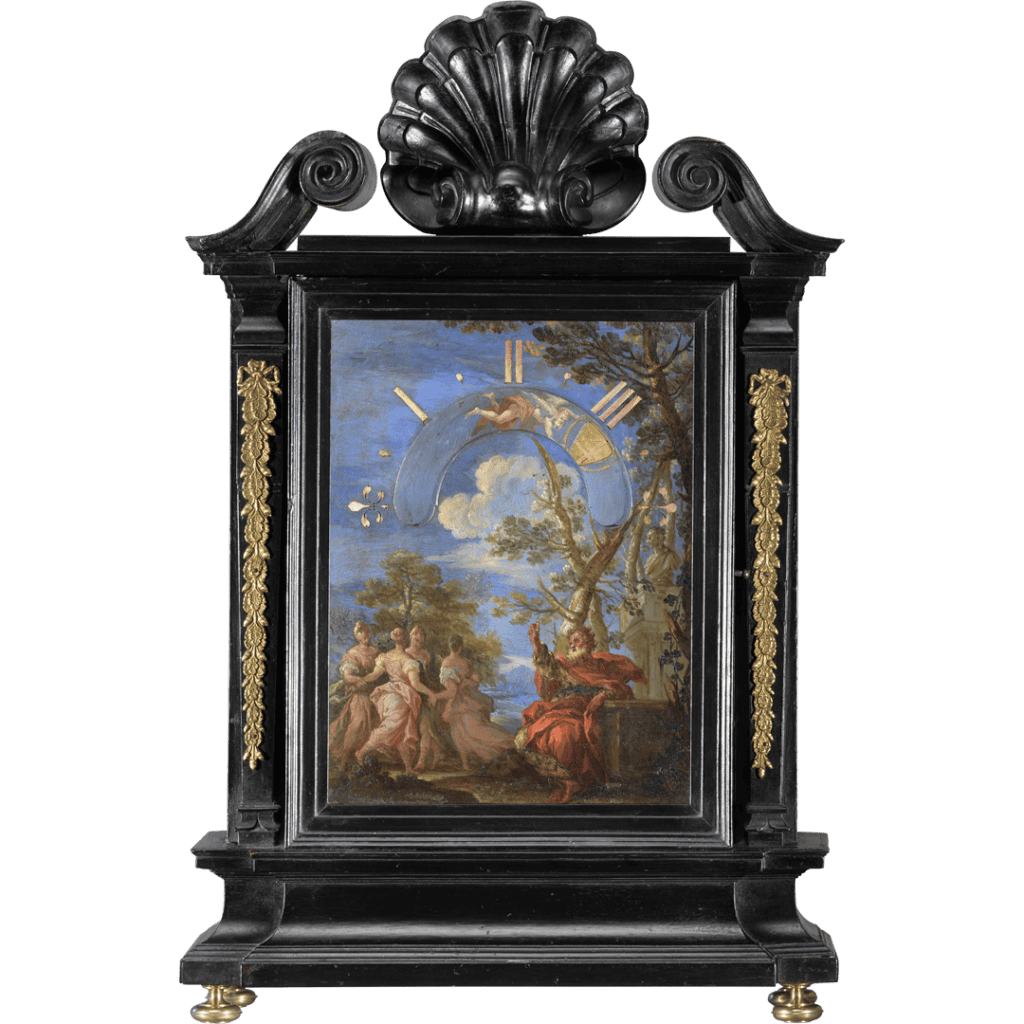
Conceived in Rome during the reign of Pope Alexander VII and perfected by the gifted clockmaker Giuseppe Campani, the orologio notturno transformed the way people experienced time after sunset. More than simply a novelty, it was an ingenious precursor to modern illuminated displays and a remarkable example of seventeenth-century scientific creativity.
A Problem in the Apostolic Palace
By the middle of the seventeenth century, Pope Alexander VII presided over a vibrant Rome that had become one of Europe’s centres of art, architecture and science. Born Fabio Chigi in Siena in 1599, the Pope was a patron of learning and maintained close relationships with scholars, astronomers and craftsmen.
Life in the Vatican followed a strict rhythm. Religious observances, audiences and administrative duties all demanded careful attention to the hour. Yet determining the time during the night was not straightforward. Mechanical clocks could strike the hours, but their chimes disturbed sleep. Lighting candles each time one wished to consult a clock was cumbersome and carried obvious risks.
The Pope desired something quieter and more refined, a means of reading the hour in darkness without waking attendants or requiring a flame to illuminate the dial. It was a challenge that called for exceptional ingenuity.
Enter Giuseppe Campani
The solution came from one of the most gifted instrument makers of Baroque Rome. Giuseppe Campani was born in 1635 and, together with his elder brother Matteo, established a workshop that became renowned for producing clocks, telescopes and scientific instruments of remarkable precision. Their creations attracted princes, cardinals and scholars from across Europe.
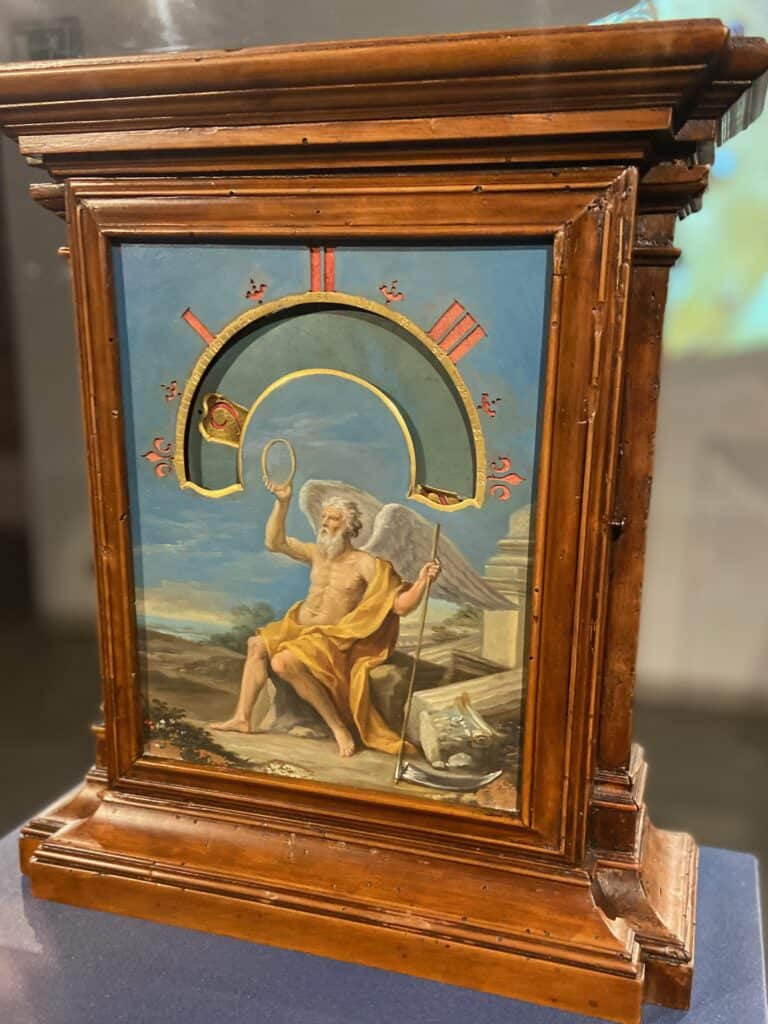
Although Campani would later gain international recognition for his astronomical telescopes, it was his night clock that first brought him widespread acclaim. Around 1655, he devised a mechanism unlike anything that had existed before.
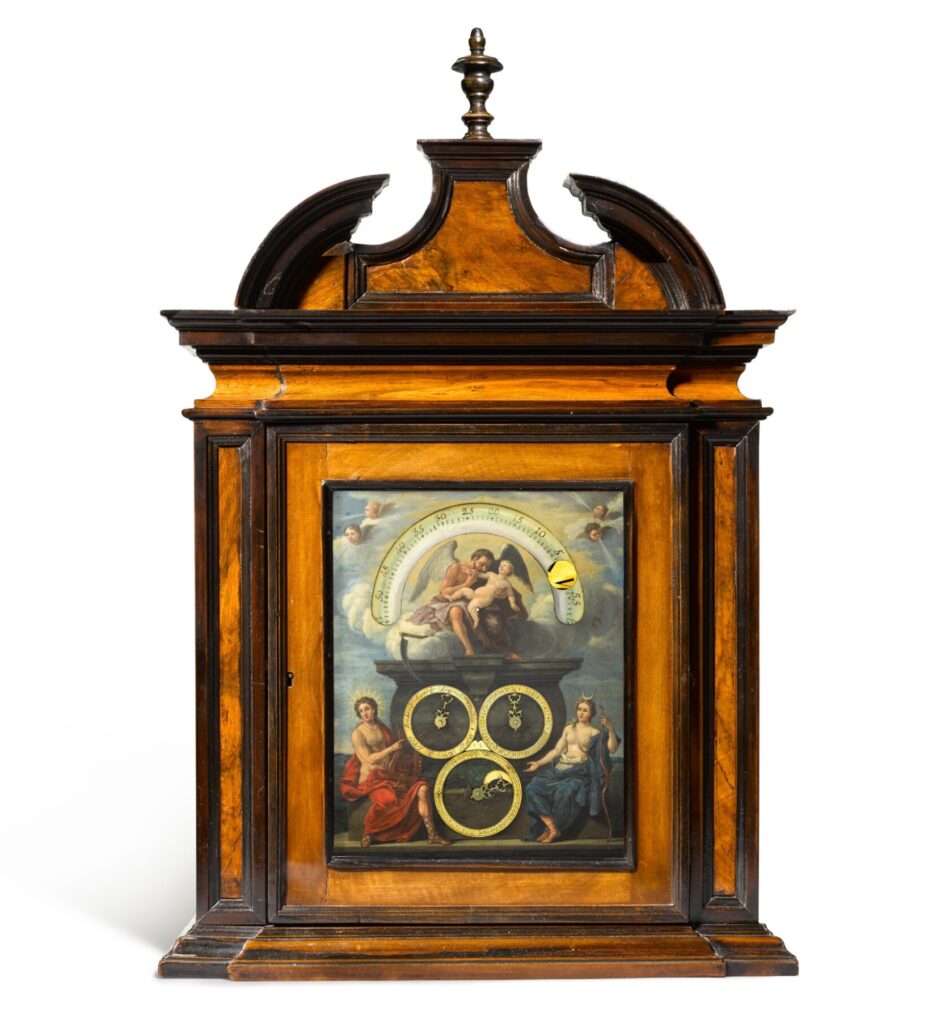
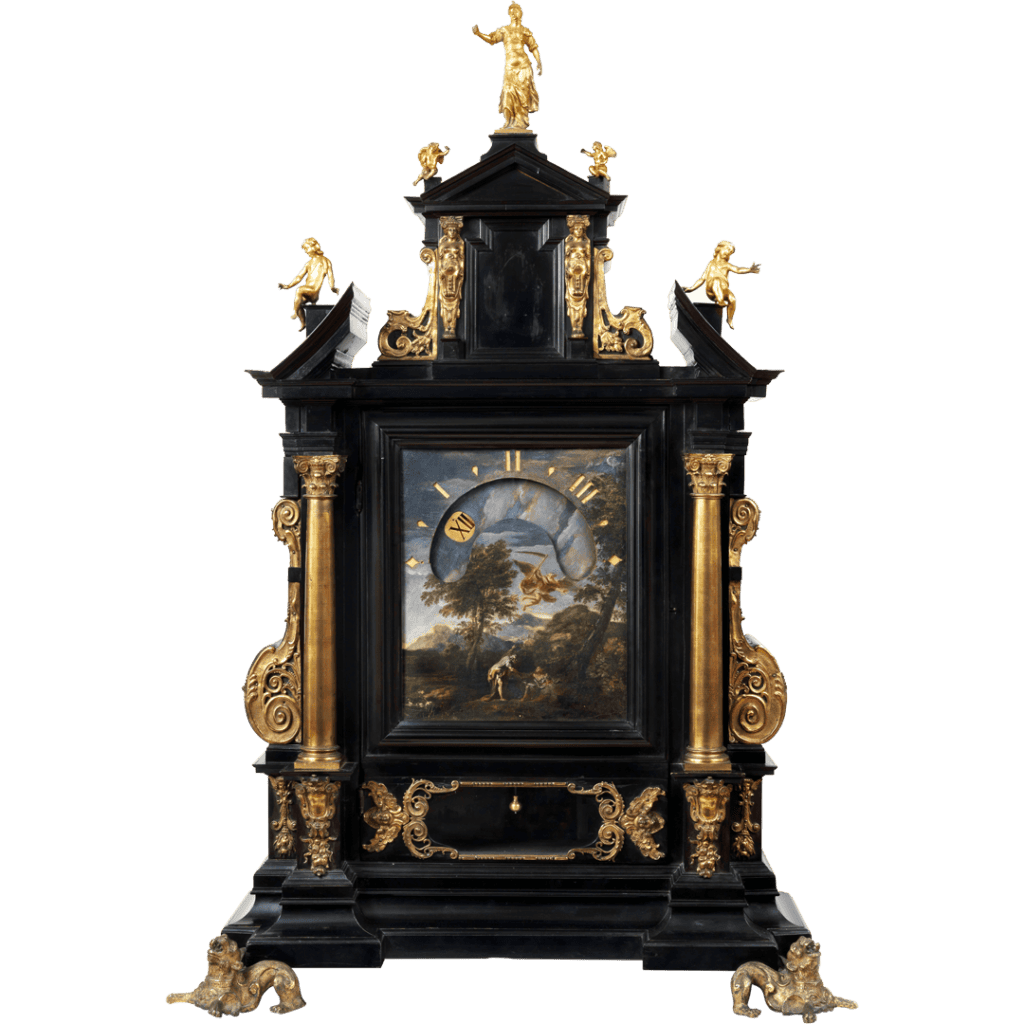
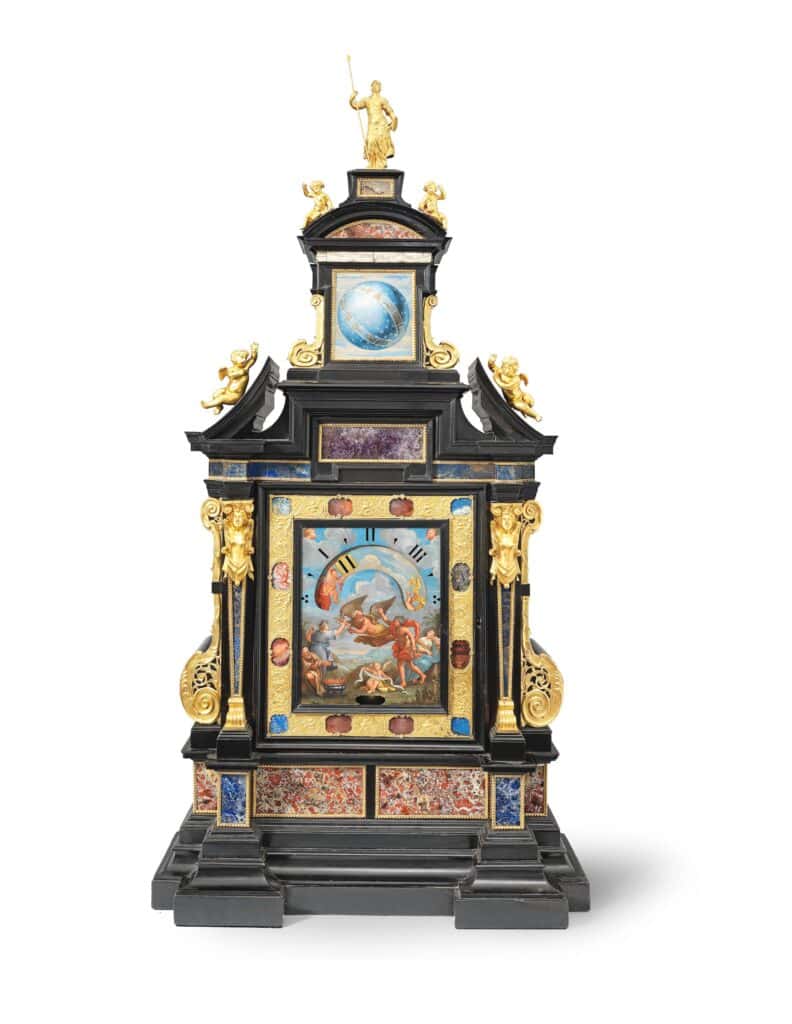
Instead of displaying the entire dial, Campani employed a rotating disc marked with the hours. A small aperture in the front panel revealed only the current hour. Behind the disc sat a lamp, usually fuelled by olive oil—which gently illuminated the numeral visible through the opening. As the disc turned, successive hours appeared, allowing the time to be read at a glance in complete darkness. It was an elegant solution to an everyday problem.
A Revolutionary Concept
To modern eyes, the idea may appear deceptively simple. Yet in the seventeenth century, the concept represented a revolution. Conventional clocks relied on sound to communicate the passing hours. Campani’s invention instead used light. In essence, it created one of history’s earliest illuminated displays.
The mechanism required extraordinary precision. The lamp had to remain hidden while providing sufficient illumination. The rotating disc needed to move smoothly and accurately. Heat from the flame had to be carefully managed to avoid damaging the movement. Above all, the clock had to operate silently.
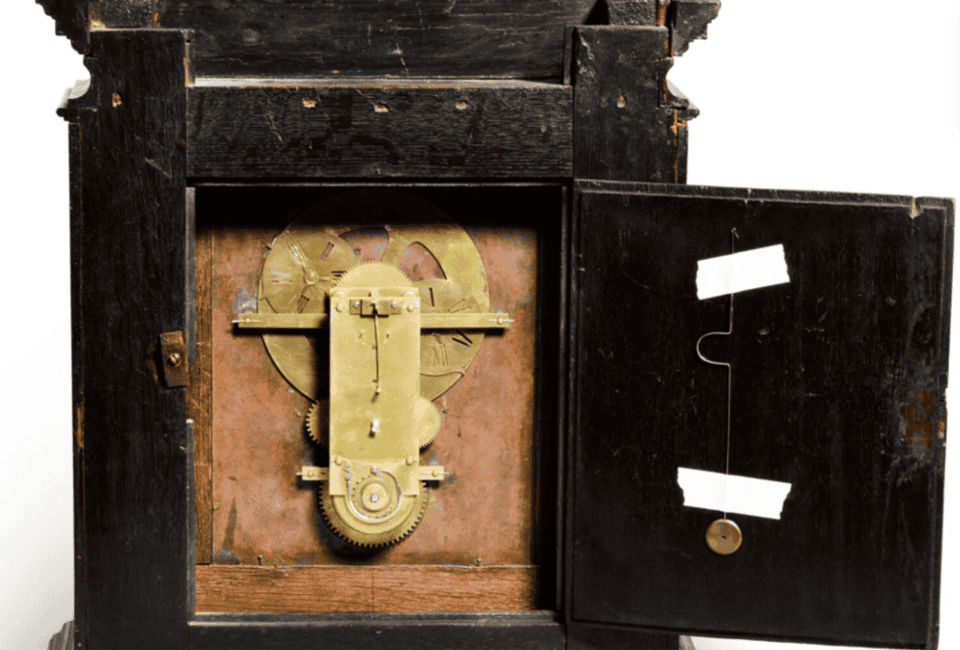
The result was a masterpiece of practical engineering wrapped in the elegance of Baroque design. For Pope Alexander VII, the invention provided exactly what he sought: a discreet means of knowing the hour without disturbing the tranquillity of the Apostolic Palace.
Rome: A Centre of Scientific Innovation
The creation of the night clock reflected the spirit of scientific inquiry flourishing in seventeenth-century Rome. The city was home to mathematicians, astronomers and polymaths whose interests extended far beyond theology. Among the most influential was the Jesuit scholar Athanasius Kircher, one of the era’s great intellectual figures. Kircher maintained a keen interest in mechanical devices and described Campani’s night clock in his writings, helping spread knowledge of the invention throughout Europe.
Rome itself had become a crossroads of ideas. Patrons commissioned fountains, churches and palaces from Gian Lorenzo Bernini, while scientists experimented with optics and astronomy. In this atmosphere, craftsmen such as Campani occupied a unique position, bridging art and science. Their workshops functioned not merely as businesses but as laboratories of invention.
Fame Across Europe
Word of Campani’s remarkable clock travelled quickly. Members of the aristocracy and royal households became fascinated by the idea of reading the time in darkness. Soon, versions of the night clock appeared in noble residences beyond Italy. Wealthy patrons commissioned examples that combined sophisticated mechanisms with lavish decoration.
Many were housed in elaborate wooden cases adorned with gilding and marquetry. Some featured artistic embellishments in keeping with the Baroque taste for splendour and theatricality. Yet despite their luxurious appearance, the clocks remained fundamentally practical devices.
Their popularity also reflected changing attitudes toward time itself. As society became increasingly organised and punctual, accurate and accessible timekeeping assumed greater importance. Campani’s invention answered a growing desire to master the hours, even while the world slept.
The Campani Legacy
Although the night clock earned Giuseppe Campani considerable fame, it represented only one aspect of his remarkable career. He became celebrated for producing some of the finest refracting telescopes of the seventeenth century. Astronomers throughout Europe sought his instruments, and his lenses enabled important observations of planets and celestial phenomena.
The rivalry between Campani and fellow instrument maker Eustachio Divini became legendary. Their competition drove improvements in optical technology and contributed significantly to scientific progress. Yet among horological historians, the night clock remains one of Campani’s most original achievements. It demonstrated his extraordinary ability to combine mechanical precision with practical innovation.
Surviving Masterpieces
A number of Campani night clocks survive today, offering a glimpse into this remarkable chapter of horological history.
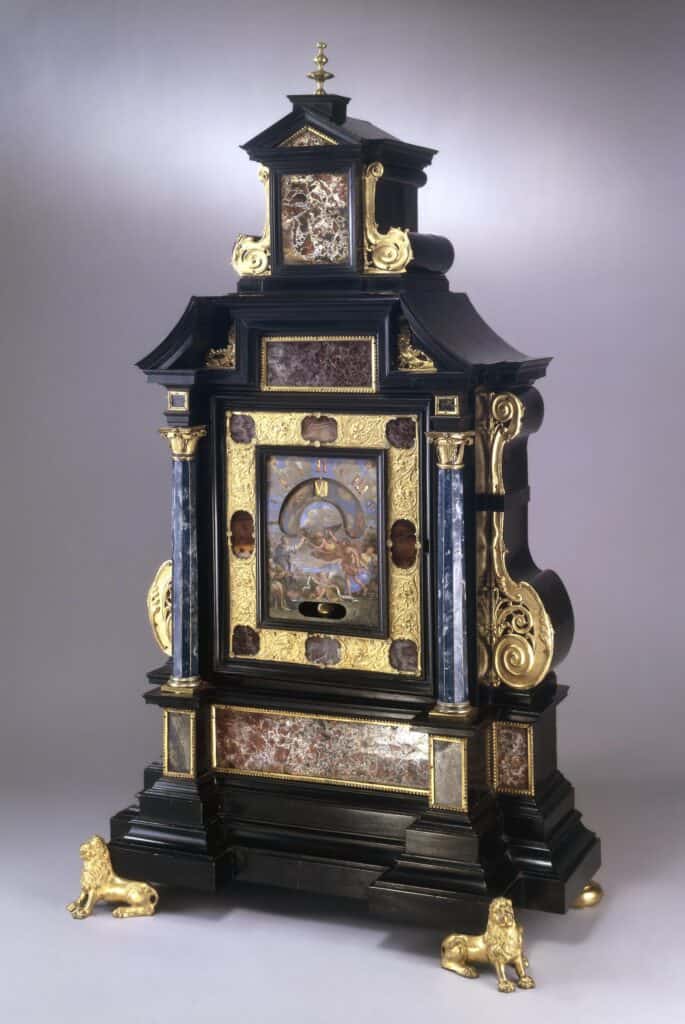
Examining these clocks reveals the ingenuity of their construction. The discreet aperture, hidden illumination and beautifully crafted cases speak to a level of craftsmanship that remains impressive nearly four centuries later. They are not merely timekeepers but historical documents, objects that capture the meeting of science, religion and art in Baroque Italy.
The Ancestor of Modern Night Displays
Perhaps the most remarkable aspect of Campani’s invention is how familiar its principle feels today. Modern bedside clocks employ illuminated numerals. Wristwatches use Super-LumiNova coatings to ensure legibility after dark. Digital displays rely upon LED technology to make information visible around the clock. Smartwatches glow with a touch of the screen.
All owe something, however indirectly, to the fundamental concept pioneered in Rome during the reign of Pope Alexander VII: the idea that time should be visible rather than merely audible. The Campani night clock represented a profound shift in the philosophy of timekeeping. Instead of waiting for bells to announce the hour, individuals could quietly and privately consult time whenever they wished. That transition from hearing time to seeing it anticipated centuries of development.
An Enduring Achievement
History often celebrates grand inventions such as the pendulum clock, the marine chronometer and the quartz movement. Yet smaller innovations can be equally transformative. The night clock emerged from a simple request by a pope seeking peaceful sleep. Through the genius of Giuseppe Campani, that request produced one of the most imaginative horological creations of the seventeenth century.
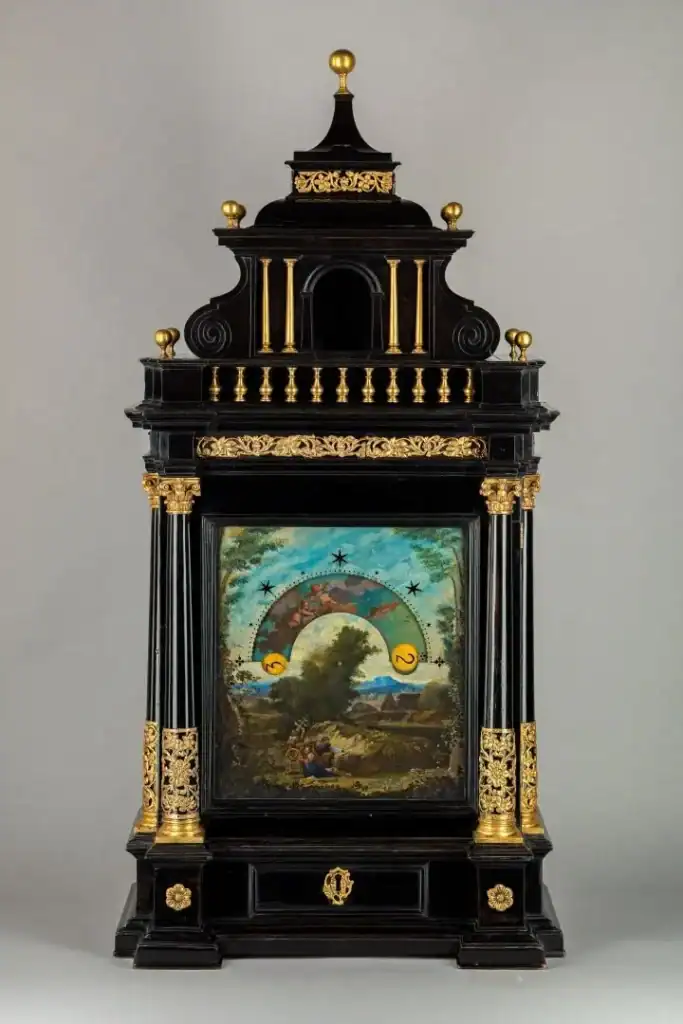
Today, the surviving examples (above) stand as reminders that innovation frequently arises from practical needs. They also reveal how craftsmanship and creativity can elevate utility into art. Four centuries before glowing LCD screens became commonplace, an oil lamp hidden within an elegant Roman clock quietly illuminated a single numeral in the darkness. In that softly glowing window lay the future of night-time timekeeping.