
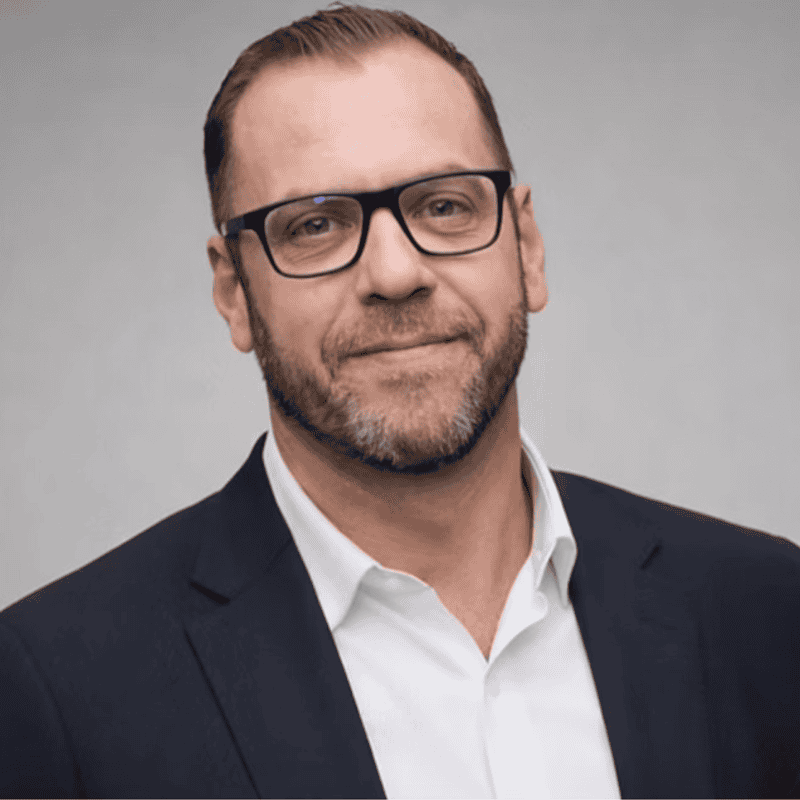
MrWatchMaster Meets…Ryan Goncalves
Next we meet Ryan Goncalves is President and CEO of Time Central. Ryan is a second-generation watch professional who was quite literally born and raised in the watch industry. He has over 36 years of hands-on experience, and has dedicated his life to horology, its craft, evolution, and the people behind it.
Ryan focuses on growth, mentorship, and using technology to ensure uncompromising quality. We hear how technology, and particularly AI, can help modernise the service side of the industry and his views on current business, favourite timepieces and future direction of the company.
MWM: How is business?
RG: I’m optimistic. I think there is a tremendous amount of opportunity in the watch repair and service industry right now, particularly for businesses that are willing to evolve and focus on creating a better customer experience.
We’re seeing renewed interest in traditional and mechanical watches, especially among a younger generation discovering mechanical and vintage pieces. As more people move beyond smartwatches and rediscover the experience of owning and wearing a traditional watch, I believe that creates significant long-term potential for the service and repair side of the industry.
There are still gaps in the market, both in Canada and internationally, and I think there are opportunities for independent service centres and small to medium-sized businesses to fill those gaps. Ultimately, that means growth for our industry, more opportunities for skilled watchmakers and technicians, and hopefully the creation of more jobs.
So overall, I’m very optimistic about where the business and the watch repair industry are heading.
MWM: What are your current business priorities?
RG: Our current priorities really come down to two things: expanding Time Central’s partnerships with Swiss watch brands and continuing to develop Loupe as a technology platform for the watch and jewelry service industry.
There is a significant shortage of highly qualified watchmakers around the world, and that creates challenges for brands when it comes to providing consistent, high-quality after-sales service. With Time Central, our focus is on building the infrastructure, expertise and partnerships that allow us to support those brands and become an extension of their after-sales service network.
At the same time, with Loupe, we’re looking at how technology, and particularly AI, can help modernise the service side of our industry. There is still an enormous amount of administrative work involved in managing a watch or jewelry repair. If we can use technology to reduce that workload, we allow watchmakers and service centres to spend more time doing what they do best.
But equally important is the customer experience. I think the watch and jewelry repair industry has an opportunity to become much more transparent, communicative and convenient for the end consumer. Our priority is really to bring those two sides together: helping brands and service centres operate more efficiently while giving the customer a significantly better experience.
MWM: Tell us something we don’t know about Time Central – Loupe Technologies Inc.
RG: Something people may not know is that Loupe came about very organically. It wasn’t created by looking at the watch industry from the outside, it came from decades of actually operating within it.
Time Central is a second-generation family business. I grew up around my father’s business, essentially learning the industry from the bench up, eventually taking over and expanding it. Through The Time Shop, we also operated as many as 42 retail locations, which gave us tremendous firsthand knowledge of both sides of the repair relationship: what service centres need to operate effectively and what retailers and their customers expect from the repair experience.
That experience played a major role in the creation of Loupe.
Loupe was designed specifically around the needs of service centres, particularly those servicing watches and jewellery on behalf of retailers, as well as service centres and independent watchmakers working directly with consumers. We wanted to improve that entire connection: from the service centre to the retailer and ultimately to the end consumer.
That’s an important distinction because Loupe was never intended to be simply repair-tracking software. It was designed to manage the entire service experience. That includes workflow and repair management, retailer communication, direct customer communication, estimates and approvals, notifications, payments, analytics and the day-to-day organization of a service business.
Over the years, I’ve had the opportunity to visit service centres around the world and see the sophisticated systems and processes that major Swiss watch companies have invested significant amounts of money developing and maintaining. I kept asking myself: how do we make those kinds of tools and capabilities accessible to the rest of our industry?
Ultimately, that is what Loupe is about. We want to create the link between the service centre, the retailer and the end consumer, while giving service centres and independent watchmakers the tools to become better organized, operate more efficiently and ultimately improve their profitability.
A lot of what we’re building comes directly from problems we experienced ourselves at Time Central. Loupe is really the culmination of everything we’ve learned from the bench, retail, service centres, Swiss brands and, most importantly, the end consumer.
MWM: Which watch do you wear?
RG: I have quite a few go-to watches because, like most watch enthusiasts, I believe there’s a watch for every occasion. There’s a watch you wear with a suit, something for a casual weekend, a sports watch, a cottage watch, they all have their place.
But if I had to choose one, it would be my Panerai Luminor. I’ve had it for many years, and it’s probably the watch that means the most to me. My father owned a Panerai, and several members of my family have them as well, so there’s a family connection to the brand.

More importantly, my Luminor was the first significant watch I bought for myself when I finally reached a point where I could afford to go out and buy the watch I really wanted. Because of that, it represents a particular time in my life and career, and it’s one watch I know I’ll never sell.
For more casual everyday wear, I’m also a Seiko guy and have a few of them in my collection. But if you ask me for my watch, it’s the Panerai Luminor.
MWM: Which watch would you like to own?
RG: This might sound a little unusual, but my grail watch would be the MB&F Legacy Machine 101.
I’ve followed MB&F for quite some time, and I’m fascinated by the creativity behind what they produce. Their watches bring together mechanical watchmaking, art and almost a sense of science fiction. Rather than hiding the mechanics, they celebrate them and make them part of the visual experience of the watch. That’s something I really appreciate.
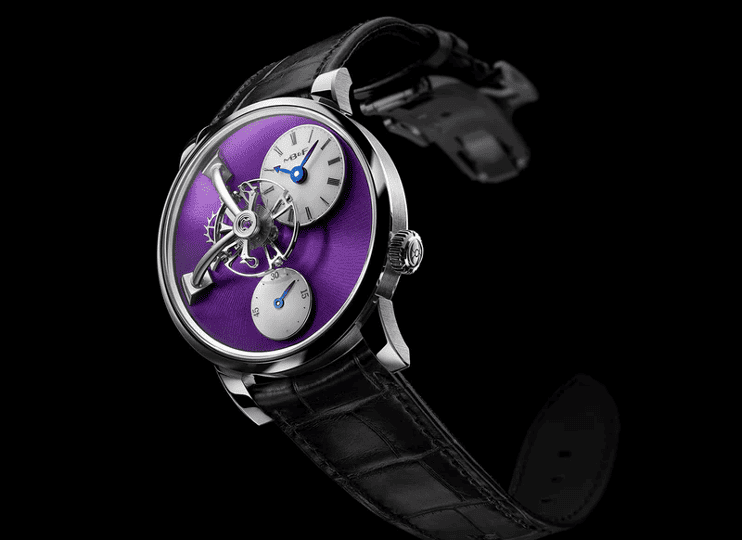
The LM101 in particular has always been a watch I’ve dreamed of owning. For me, it would represent more than simply adding another watch to my collection, it would be a personal milestone and something I hope to achieve one day.
I also think we’re going to see much greater appreciation for independent watchmakers over the next five to ten years. There is an incredible amount of creativity happening in independent watchmaking right now. These watchmakers are willing to think outside the traditional boundaries of what a watch should look like and create pieces that are as much mechanical art as they are timepieces.
I think that creativity is incredibly exciting for the future of our industry, and I’d love to see more people discover and appreciate what independent watchmakers are creating.
MWM: What do you like best about the watch business?
RG: What I like best about the watch business is the opportunity. I genuinely believe the service and repair side of this industry is extremely undervalued.
There are millions of people around the world who own watches, and we’re seeing another generation becoming interested in mechanical, luxury and vintage watches. Eventually, all of those watches need to be serviced or repaired. Yet I don’t think we’ve seen the same level of investment or entrepreneurship in watch and jewellery repair that we’ve seen in other areas of the industry.
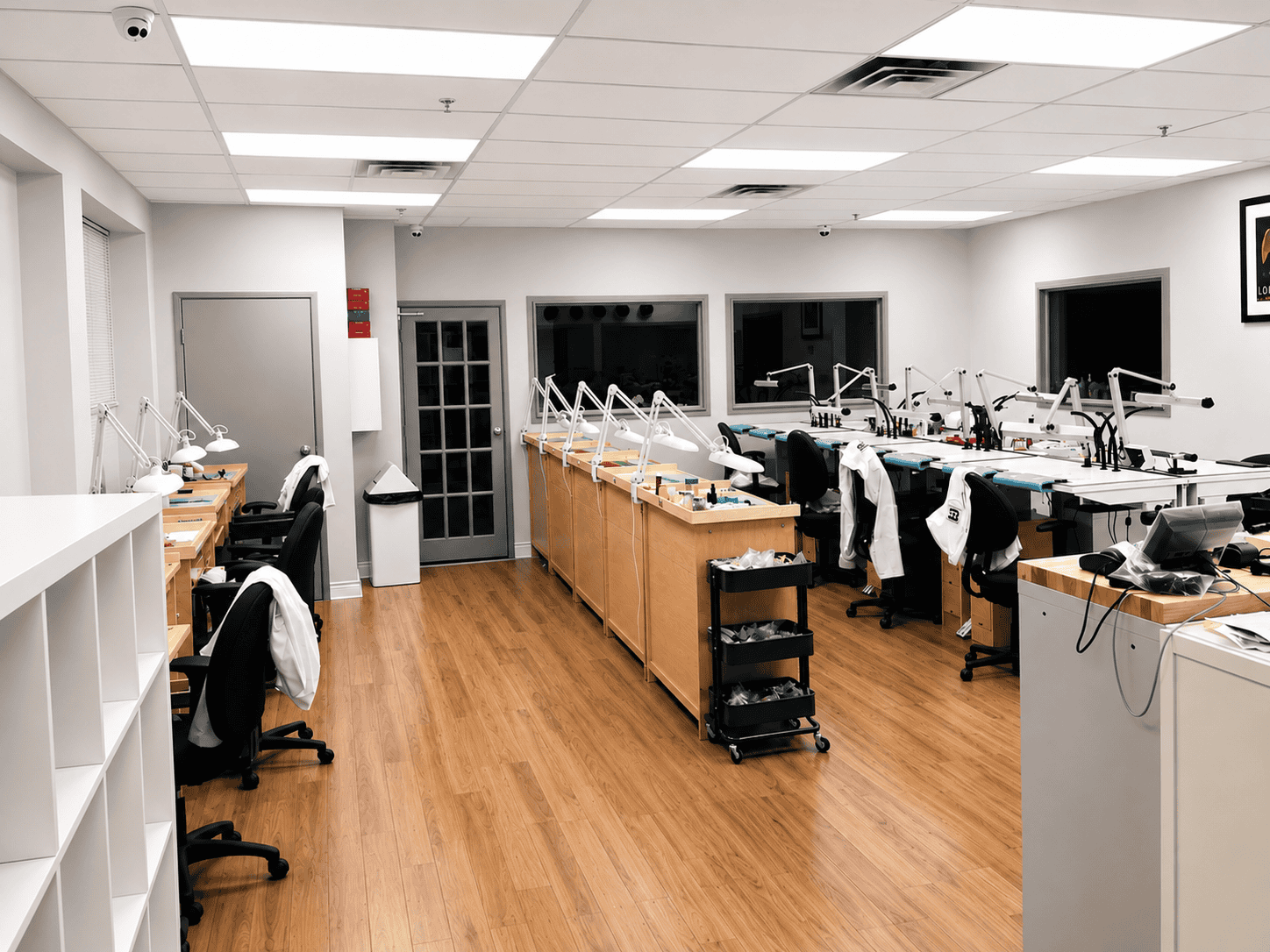
One of the most common things I hear from people when they find out what I do is, “I have a watch that needs to be fixed, but I don’t know where to take it.” To me, that statement alone tells you there is a tremendous gap in the market.
That’s what excites me. I think there is enormous potential for watchmakers, entrepreneurs and service centres that approach the business properly. Being a great watchmaker is obviously important, but today that has to be combined with great customer service, communication, transparency and technology.
If you can bring all of those things together, I think there is an incredible opportunity to build successful businesses in this sector. I’ve been in this industry most of my life, and what excites me is that I still believe some of its biggest opportunities are ahead of us.
MWM: What don’t you like about the watch business?
RG: What frustrates me most about the watch business is that the service and repair side of the industry hasn’t received the same attention or innovation as the sales side.
If you look at the automotive industry, selling the vehicle is only one part of the customer relationship. There is an entire ecosystem built around what happens afterwards, service departments, specialised software, customer communication systems, parts management and technology designed specifically to support that side of the business.
In the watch industry, particularly for independent service centres and watchmakers, that infrastructure really doesn’t exist at the same level.
A watchmaker can spend years developing incredible technical skills, gain experience working for a brand or service centre, and eventually decide to open their own business. Suddenly, they’re expected to understand customer service, retail, administration, inventory, estimates, communication and how to actually operate and grow a business. In many cases, they’re largely on their own.
Even the software available to them has traditionally been general repair or job-tracking software that has been adapted to watch repair rather than actually designed for it. There hasn’t really been a complete CRM built around the specific needs of our industry, from movements and parts databases to estimates, workflow, customer communication, notifications and the entire repair journey from intake to completion.
That frustration was actually one of the reasons we created Loupe. Instead of continuing to complain about what was missing, we decided to try to build it.
Ultimately, I want a great independent watchmaker to have access to the technology and tools that allow them to deliver an equally great customer experience. That’s one part of our industry I’ve wanted to see change for a long time.
MWM: What is next on the horizon for you?
RG: What’s next on the horizon is really the continued development and expansion of Loupe.
Loupe was originally developed as an advanced service management platform for medium to large watch and jewellery service centres, helping them manage everything from repair tracking and workflow to customer communication, estimates, payments and the overall service experience.
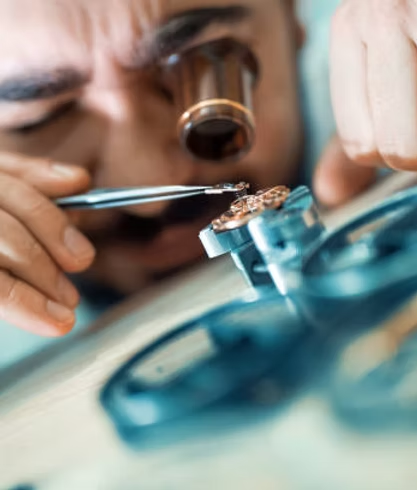
Now, we’re very excited about the next stage of that development. Over the next month or two, we’re preparing to launch a condensed version of Loupe specifically designed for the independent watchmaker and clockmaker.
We believe this is a segment of the industry that has been underserved when it comes to technology. An independent watchmaker may not need all of the capabilities of a large service centre, but they still need professional tools to run and grow their business. This version will bring together some of Loupe’s core capabilities, including repair tracking, CRM, automated customer notifications, online estimates and approvals, and online payment processing, in a simpler platform designed specifically for the needs of an individual watchmaker or clockmaker.
The other area we’re developing is the retailer side of the repair journey. We’re creating a streamlined repair platform for retailers that will allow them to offer their customers many of the same conveniences, repair tracking, customer notifications, online approvals and payment processing, while also creating a stronger connection between retailers and service centres operating within the Loupe ecosystem.
Ultimately, our vision is much bigger than simply creating software for a service centre. We want Loupe to help connect the entire repair ecosystem, from the customer and retailer to the independent watchmaker and larger service centre.
There is a tremendous amount of opportunity to modernize this part of our industry, and that’s what makes the next stage of Loupe so exciting for us.
Ryan Goncalves is a Friend of MrWatchMaster