
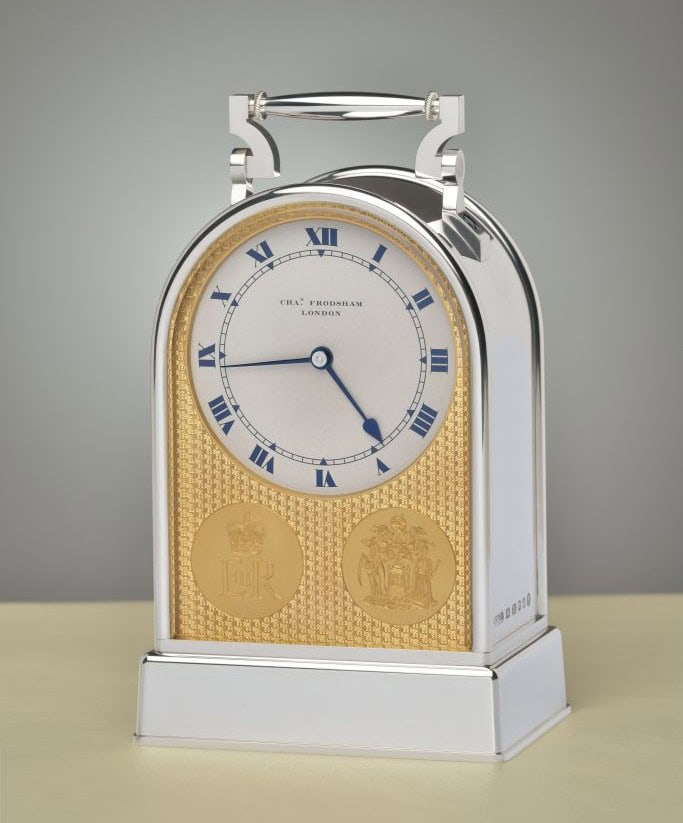
The Charles Frodsham & Co. Diamond Jubilee Carriage Clock: A Modern Tribute to a Royal Tradition
A series of features focusing on specific timepieces by Charles Frodsham & Co. on display at the Clockmakers’ Museum. The items are part of the ‘Charles Frodsham, Precise Time: Two Centuries in the Making’ display celebrating one of Britain’s great horological names.
In 2012, as Britain marked the Diamond Jubilee of Queen Elizabeth II, celebrating sixty years on the throne, a distinctive and deeply symbolic object emerged from one of London’s oldest horological companies. The Diamond Jubilee Carriage Clock, created by Charles Frodsham & Co., was more than a commemorative timepiece, it was a continuation of a centuries-old relationship between craftsmanship, precision timekeeping, and the British Royal Family.
By the mid-1850s Charles Frodsham had established himself as one of the period’s most eminent horologists. In 1854 upon the death of Benjamin Lewis Vulliamy, he purchased the goodwill of the business and, succeeded Vulliamy as Superintendent and Keeper of Her Majesty’s Clocks at Buckingham Palace. This prestigious title aided the sale of clocks, watches and chronometers worldwide, Charles having overseas representation and agents in America, France and Spain.
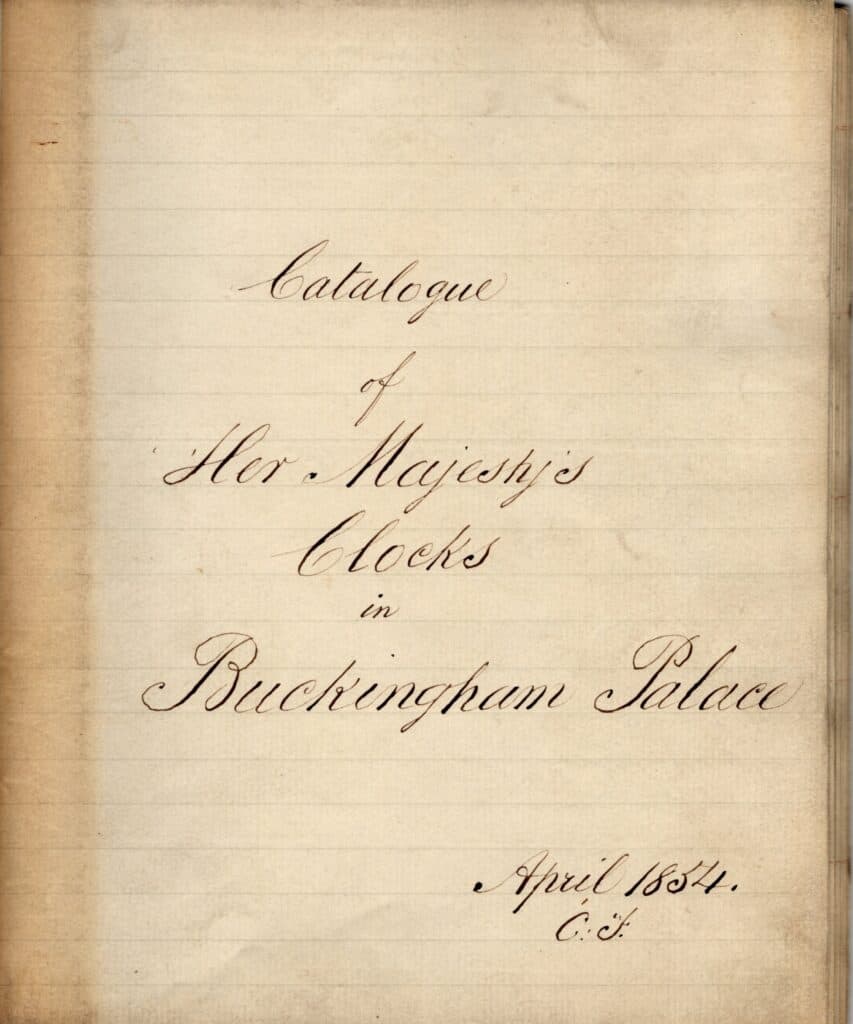
Upon Frodsham’s appointment as Superintendent and Keeper of the clocks at Buckingham Palace he conducted an inventory of all the clocks, noting the maker, any serial number, the location, and their condition (above).
Charles was a generous supporter and judicial advisor to the societies connected with horology, being one of the founding members, and later Vice President, of the British Horological Institute in 1858, and a Liveryman of the Worshipful Company of Clockmakers, in which he served as Master in 1855 and 1862.
Frodsham’s work was defined by technical excellence. He produced marine chronometers, regulator clocks, and highly refined carriage clocks, often incorporating innovations drawn from his chronometer practice, such as power reserve indicators (up-and-down dials), which were rare and costly refinements in portable clocks.
His reputation brought royal recognition. The firm became known as ‘Clockmaker to the Queen’, a title reflecting both the quality of its output and its enduring association with the British monarchy.
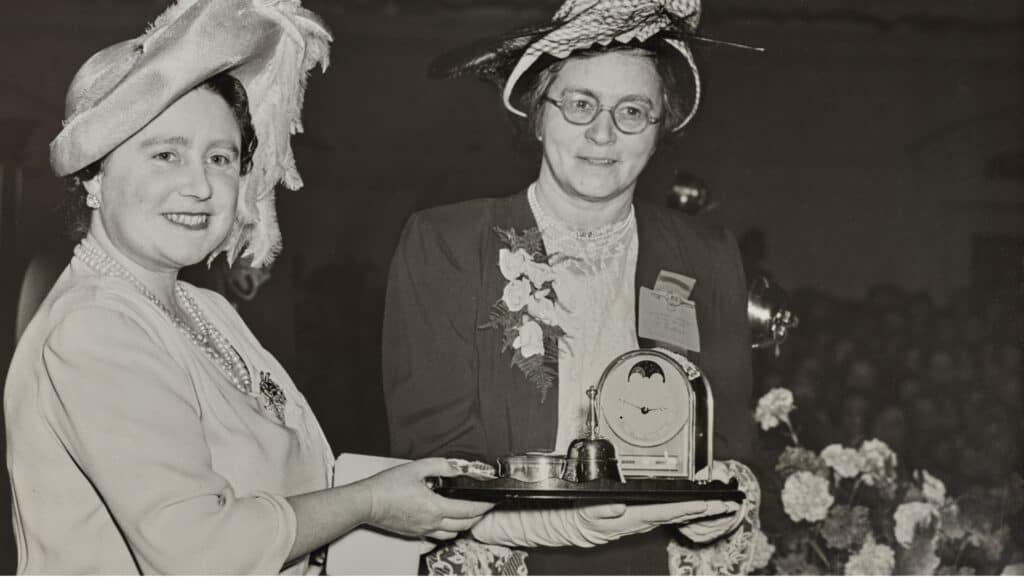
From the late 1940s through to the 1980s, the firm concentrated on the production of mantel and carriage clocks, producing amongst other items the silver perpetual calendar clock made for the Queen Mother (below) and the ‘Princess’ clock, presented in 1947 to HRH Princess Elizabeth on the occasion of her marriage.
Throughout the nineteenth and early twentieth centuries, Frodsham retailed and produced a wide variety of clocks, including carriage clocks often made in collaboration with leading French manufacturers and finished to the firm’s exacting standards. These pieces, whether simple timekeepers or complex repeating clocks, were frequently signed ‘Chas. Frodsham, London’ or ‘Paris’, underscoring the firm’s international reach.
The royal connection endured into the modern era. By the time of the 2012 Jubilee, Frodsham was not merely a historic name but a living representative of British horology, still producing limited, high-quality pieces in London.
The clock was commissioned by the Worshipful Company of Clockmakers, one of the City of London’s ancient livery companies, and later presented to the Queen. Its design drew upon historical precedents within the Frodsham archive, including early twentieth-century and even late nineteenth-century horological innovations, while incorporating a contemporary clarity of form.
At its heart, the Diamond Jubilee clock reflects the enduring appeal of the carriage clock, a portable form first popularised in the late eighteenth and early nineteenth centuries, and long associated with refinement, travel, and technical sophistication. In the hands of Frodsham’s modern craftsmen, this familiar form became a canvas for both historical homage and innovation.
The Diamond Jubilee Carriage Clock stands within a long tradition of commemorative timepieces. Since the nineteenth century, ‘jubilee clocks’ have marked significant anniversaries of British monarchs, from Queen Victoria’s Golden and Diamond Jubilees to the present day. Yet unlike public clock towers erected in towns and cities, the Frodsham Jubilee clock is intimate, designed for close appreciation and practical use, rather than civic display.
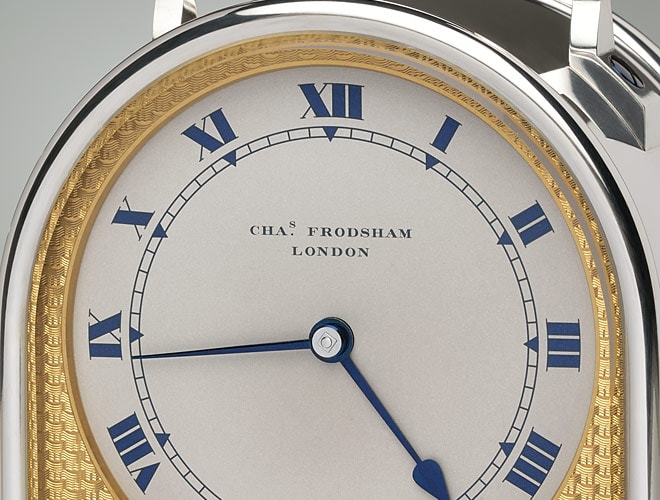
Its aesthetic, clean, legible, and subtly architectural, echoes both classical carriage clock proportions and the restrained elegance associated with British design. The dial, inspired by historic Frodsham pieces, i.e. the hour and minute hands are the same length, emphasises clarity and balance, while the movement within continues the firm’s longstanding commitment to precision engineering.
What distinguishes the Diamond Jubilee Carriage Clock is not only its craftsmanship, but its continuity. It links the present to a lineage that stretches back to the age of sail, when accurate timekeeping determined longitude. It reflects the enduring role of specialist makers in an age of mass production. And above all, it embodies the relationship between the British monarchy and those artisans whose work has, quite literally, marked the passage of time.
In celebrating sixty years of Queen Elizabeth II’s reign, the clock also celebrated something discreet but equally enduring, the persistence of excellence, passed down through generations, measured not only in seconds and hours, but in centuries.
Details of the Charles Frodsham & Co. Silver humpback timepiece, No. 3086
London 2012
Case: Solid silver, glazed back with silver shutters, ornate shaped handle, and concealed key drawer in the plinth. London hallmarked for 2012 with Jubilee mark, Sponsors mark C.F. & Co. Ld. – Charles Frodsham & Co. Ltd.
Dial and Hands: Silvered, Roman numerals, equal length blued steel spade hands, signed CHAs. FRODSHAM / LONDON. Set with in an engine turned brass mask with engraved roundels for Queen Elizabeth II’s cypher and the Clockmakers’ Company coat of arms.
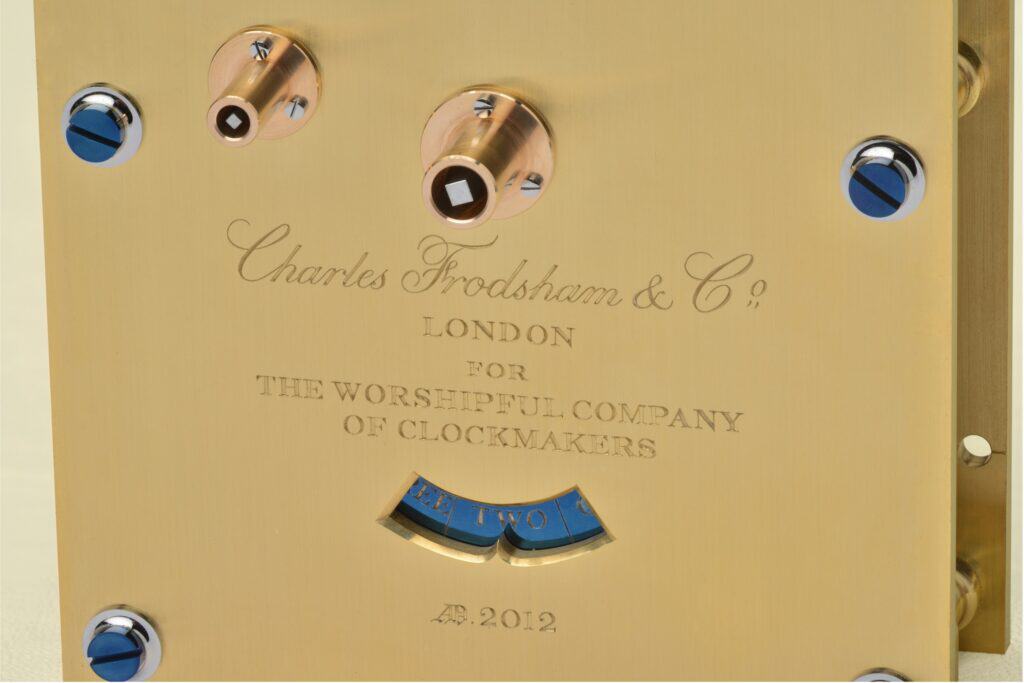
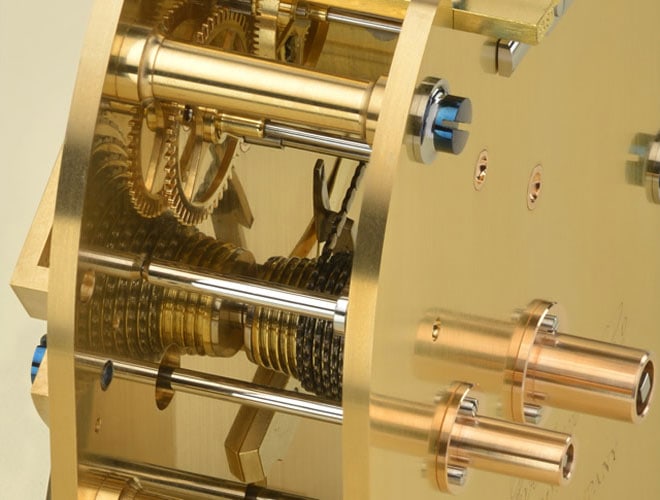
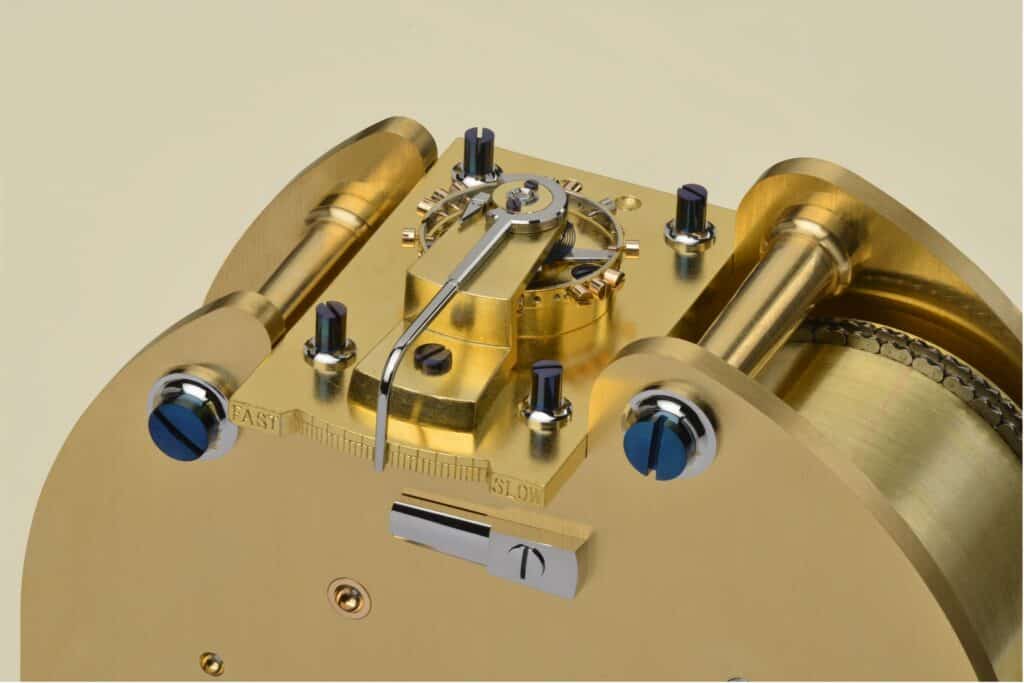
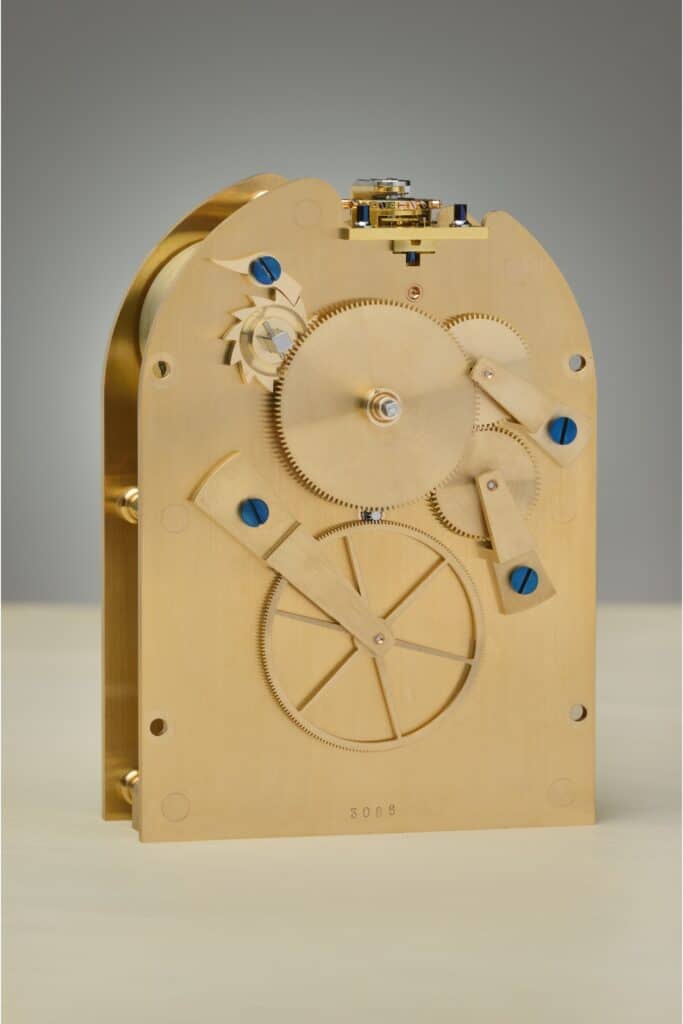
Movement: 8-day brass 6-pillar fusee and chain, repurposed train wheels & pinions and platform lever escapement from a 1920s Charles Frodsham clock. The backplate with bronze winding and hand setting shrouds and curved aperture with blued steel and gold state of wind indication. Signed Charles Frodsham & Co / LONDON / FOR / THE WORSHIPFUL COMPANY / OF CLOCKMAKERS / AD 2012
Provenance: Queen Elizabeth II
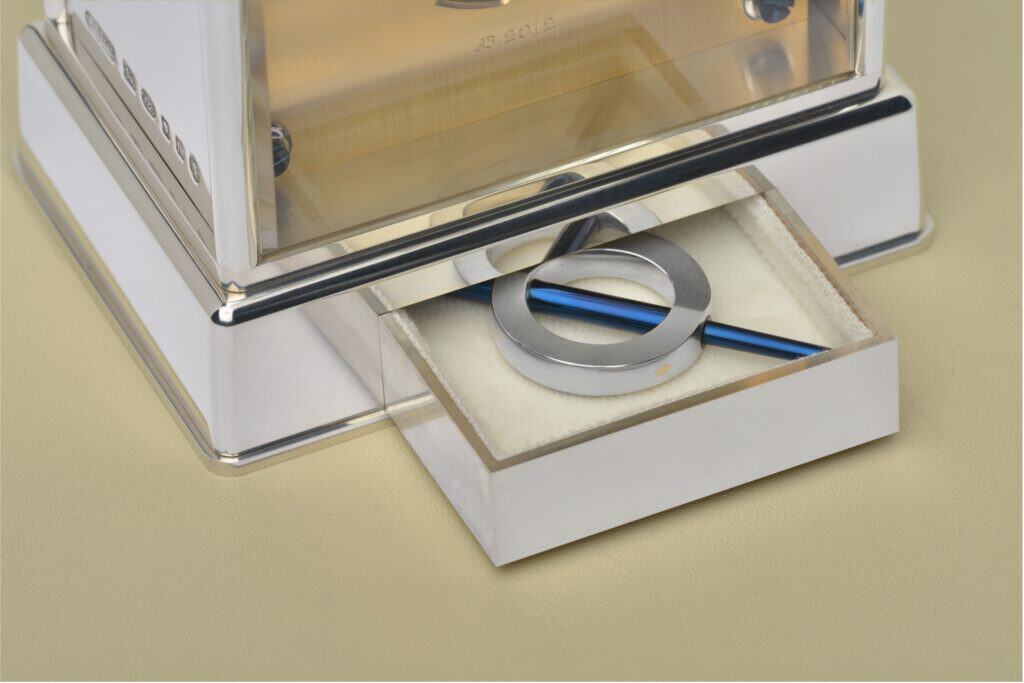
Notes: Gifted to Her Majesty Queen Elizabeth II by the Worshipful Company of Clockmakers on the occasion of her Diamond Jubilee in 2012. Accompanied by a silver, blued steel and gold winding key, a silk-lined leather presentation case with silver mounts, and a gold-tooled leather presentation book.
Lent by His Majesty The King / The Royal Collection and on display until the end of June 2026.
All photographs by Colin Crisford unless otherwise stated