
Why Early Chronograph Wristwatches Were Such A Superhuman Achievement
By Alan Wood
The genius behind vintage chronographs and why mid-century watchmaking was truly superhuman.
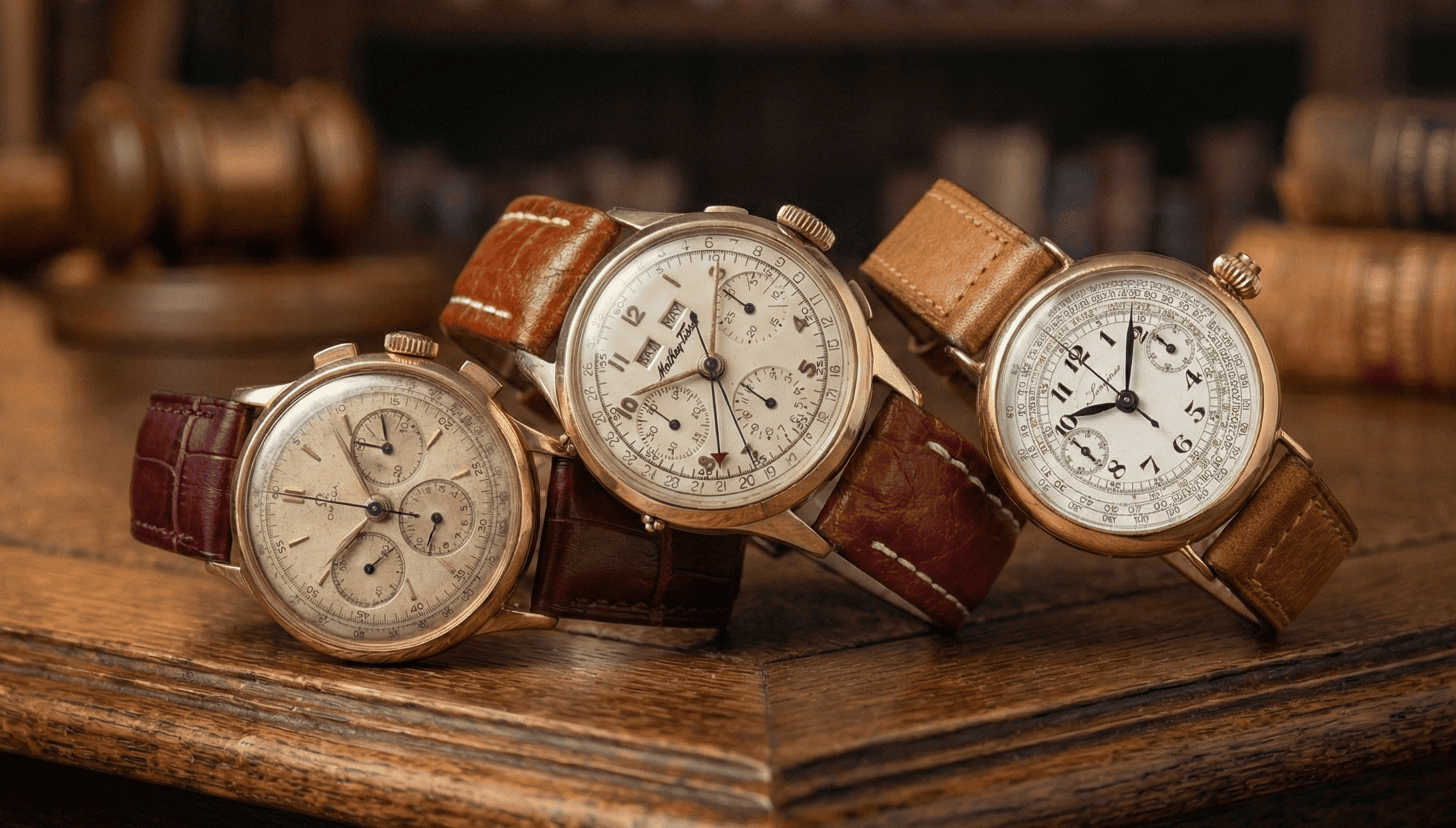
Among all the wonderful watches produced during the golden age of Swiss horology, few categories capture the imagination quite like mid-century chronographs. These wristwatches, created between the 1930s and the late 1960s, remain some of the most technically impressive, aesthetically beautiful and technically sophisticated mechanical objects ever made. Today, they are among the most rewarding vintage pieces to collect: historically significant, mechanically fascinating, highly wearable, and still remarkably reliable.
But what makes these chronographs so special? Why do collectors and watchmakers alike speak about them with such reverence?
To understand this, we need to look at the era itself — a moment in time when the greatest Swiss watch houses competed with extraordinary intensity, pushing the limits of what could be achieved by hand in a world long before computer-aided engineering.

Alan Wood, founder of Vintage Gold Watches, is a trusted vintage watch dealer with over 35 years of private collecting experience. His deep knowledge and infectious passion for mechanical timepieces have earned him a highly respected reputation in the industry. Vintage Gold Watches, established in 2011, has become a reputable dealer thanks to Alan’s expertise and a skilled team of restorers. Alan’s love for vintage watches started as a young Mechanical Engineer and grew into an obsession. He believes the finest watches were made in the 1950s, ‘60s, and ‘70s, and he is thrilled to share them with others.
A well-chosen watch says a great deal without speaking. For the collector who values quality, refinement and discretion, a vintage Swiss gold watch from the 1950s, 1960s or 1970s is the ultimate finishing touch. More than accessories, these watches are expressions of taste, craftsmanship and enduring style that can be worn and enjoyed for decades.
The Golden Age of Watchmaking, A Perfect Storm of Craftsmanship & Competition
The mid-20th century, particularly the 1930s through to the late 1950s, is widely recognised as the golden age of Swiss watchmaking. This was a period characterised by three crucial forces:
1. Exceptional Investment
Manufacturers poured immense resources into research, tooling, materials and movement development. Many brands were still run by families or founding watchmakers whose philosophy was simple: build the very best watch possible, regardless of cost.
2. Extraordinary Technical Expertise
Swiss watchmakers of this period had reached a mastery of precision engineering that bordered on the superhuman. With no computers and no automated machining, virtually everything was created, adjusted and refined by hand. A chronograph movement could take weeks to assemble and regulate properly.
3. Fierce Competition Between Brands
Omega, Universal Genève, Angelus, Mathey-Tissot, Longines, Breitling and others competed intensely to produce the most accurate, robust and innovative chronograph movements. Every year brought new refinements. Every improvement mattered.
These pressures combined to create watches whose quality would be economically impossible to replicate today. A standard three-hand watch is already a highly precise piece of engineering. But a chronograph is something else entirely.
Why Chronographs Were So Difficult And So Expensive To Build
Three Times As Many Parts
A mid-century chronograph typically contains three times the number of components found in a normal watch, hundreds of levers, springs, column wheels, hammers and gears, all interacting with microscopic tolerances. Each part had to be hand-adjusted by a master watchmaker.
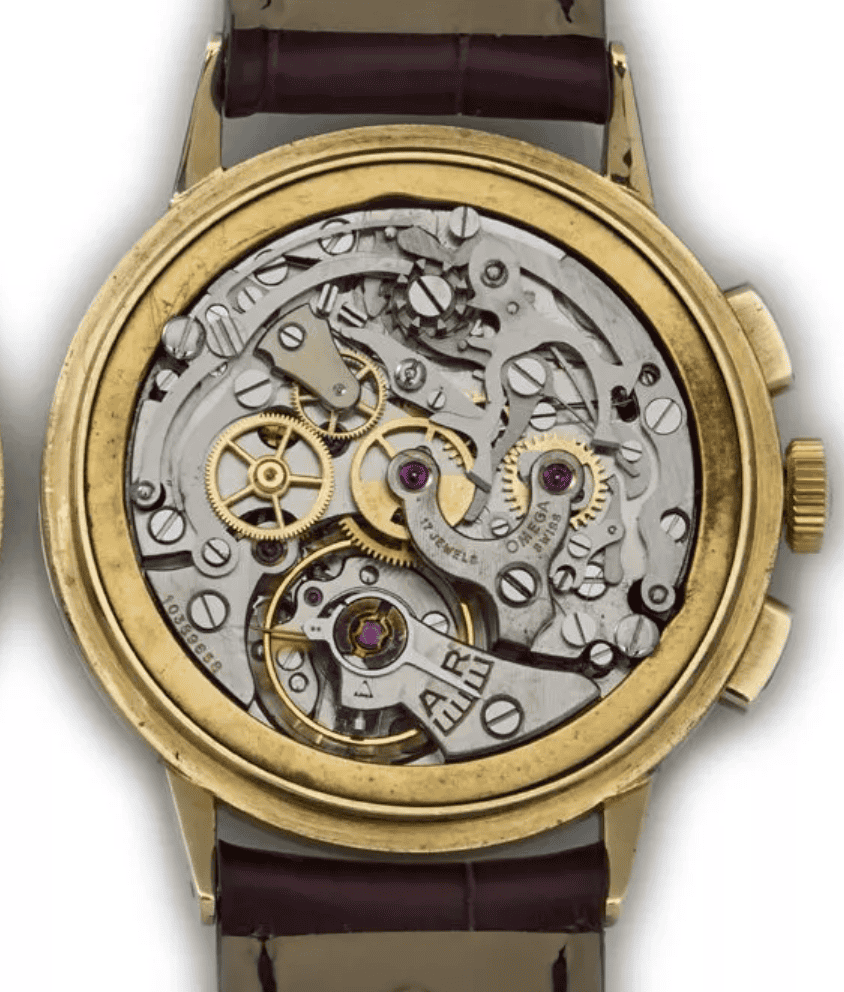
This complexity is the key reason chronographs were among the most expensive watches of their time. They required far more time, far more skill and far more precision to produce.
A Movement That Is Almost Sculptural
Open the back of a Universal Genève calibre 283, an Omega calibre 321, or an Angelus 215 and the visual impact is immediate. What you see is not a simple mechanism, but an intricate sculpture of polished steel, brass wheels and beautifully chamfered edges. Everything is arranged with mathematical elegance.
Collectors often say that if you want to understand why vintage Swiss watchmaking is so revered, simply look at the movement of a mid-century chronograph. Nothing else demonstrates the genius of the era quite as clearly.
Designed To Last a Lifetime And Then Some
Despite their complexity, these watches were engineered to be accurate, robust and reliable. With proper servicing, they remain perfectly usable today, a remarkable testament to the quality of their design. Our own vintage chronograph specialist can maintain every one of these movements using original specifications, something that speaks volumes about the integrity of their construction.
The Brands That Defined The Era
Several Maison’s produced truly exceptional chronographs during this period, each contributing something unique to the landscape of Swiss watchmaking.
Universal Genève

Often called the chronograph manufacturer, UG created the Compax, Tri-Compax and Uni-Compax ranges, icons in both design and engineering. Movements like the Cal.283 and Cal.285 showcased technical brilliance and beautifully balanced aesthetics.
Omega
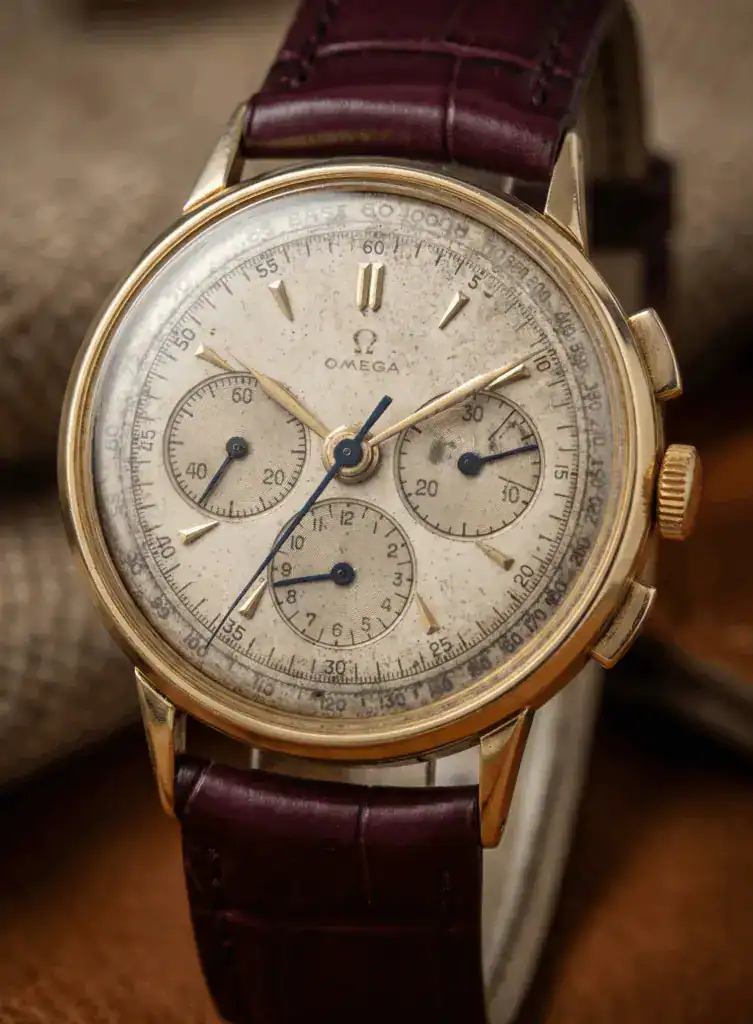
The early Omega Cal.321 is legendary and the forerunner of the Speedmaster and first watch on the moon. But before, Omega’s gold dress chronographs of the 1940s demonstrated the movement at its elegant peak: beautifully proportioned, precise and richly finished.
Longines
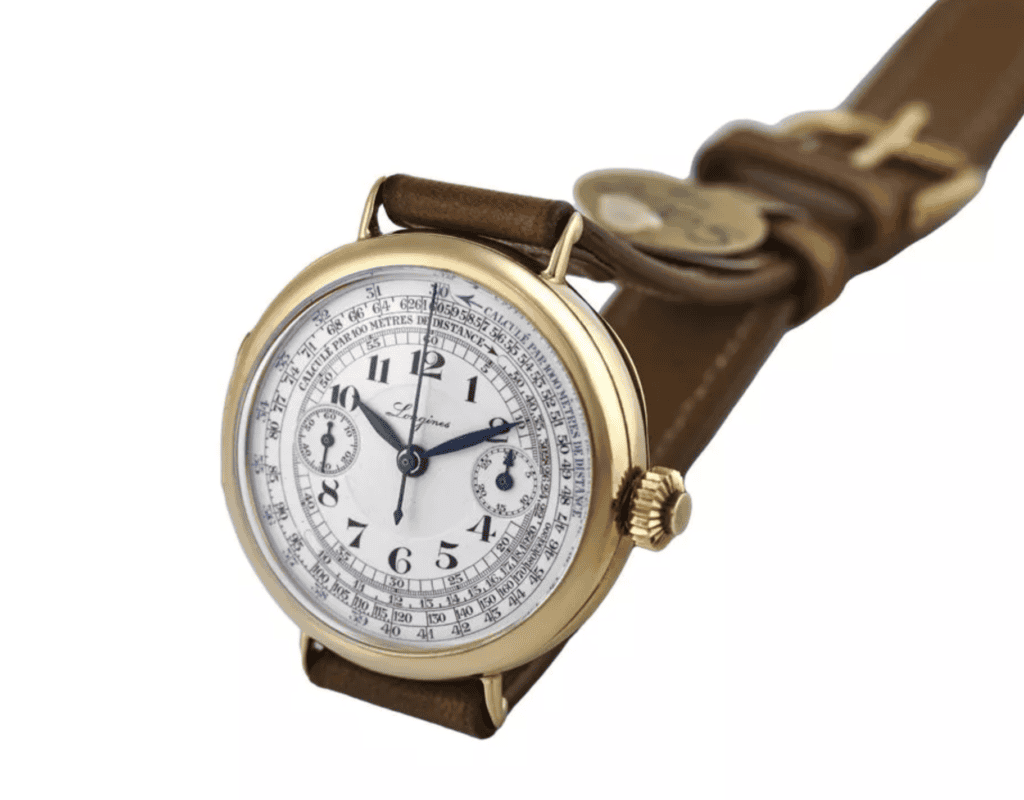
The original pioneer for airmen in the early days of flight. Longines produced some of the first chronograph wristwatches and these have become highly collectable today. Longines chronographs also developed a strong reputation in sports timing and exploration. Its movements were superbly designed and became legendary for their design and quality of manufacture.
Angelus
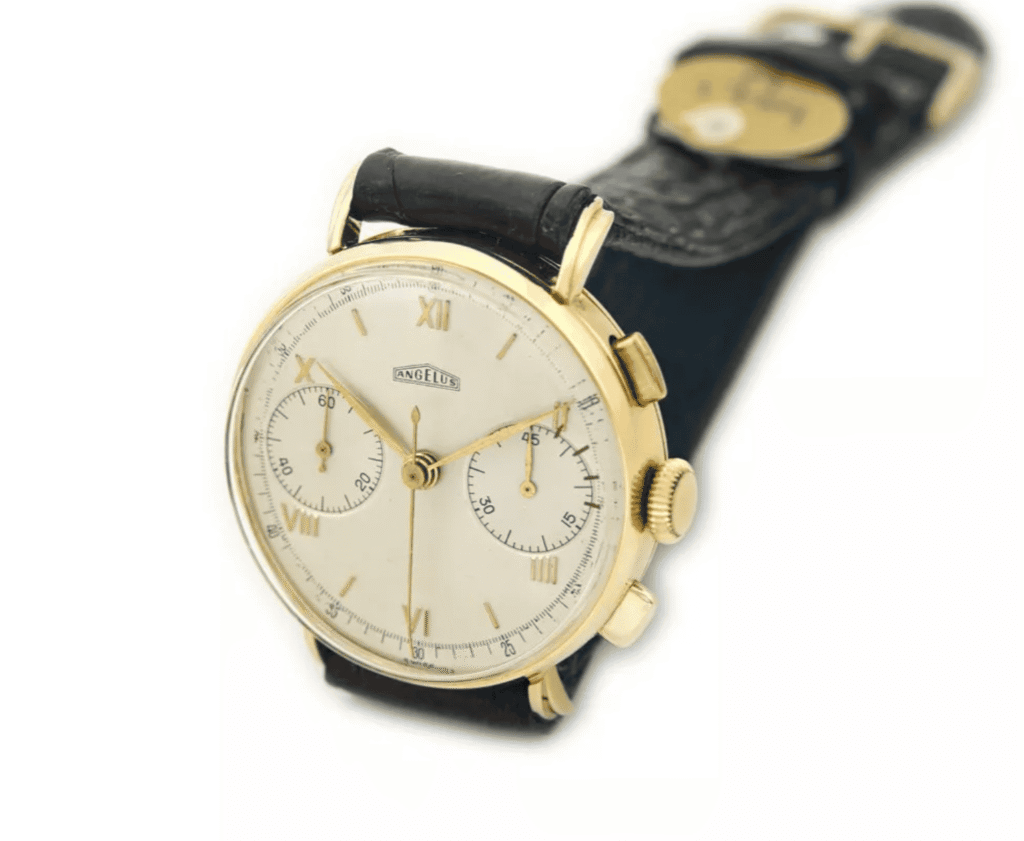
The Cal.215 is one of the finest chronograph movements of its era. Angelus specialised in complex mechanisms, and their 1940s and ‘50s chronographs are admired for their size, distinctive dials and superb engineering.
Mathey-Tissot
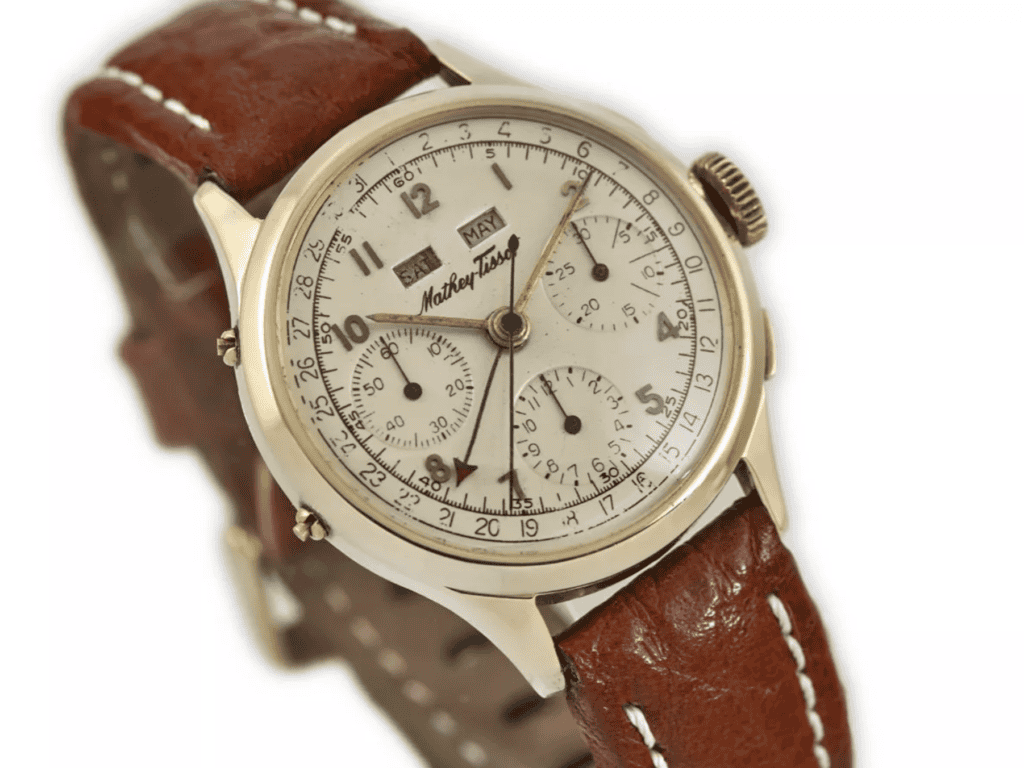
Best known among collectors for their beautifully executed triple-date chronographs, Mathey-Tissot movements such as the Cal.730 demonstrate just how high the level of craftsmanship was even outside the mainstream giants.
These watches were not mass-produced. Many were made in small numbers, and each was finished and regulated by hand. This rarity adds to their appeal today, especially when examples survive in original, well-cared-for condition.
Why Collectors Love Mid-Century Gold Chronographs Today
Beyond their mechanical wonder, these watches offer three powerful attractions to collectors:
1. Historical Significance
They represent the pinnacle of manually engineered chronograph design. No other era produced mechanical watches of this complexity with such consistent reliability and beauty.
2. Aesthetic Superiority
The proportions, dial designs, typography and case shapes of the period are widely regarded as timeless. Whether double-register or triple-register, these watches have a purity and clarity that modern chronographs seldom match.
3. Long-Term Scarcity
Every year, the number of good examples decreases. Many vintage pieces have been over-polished, damaged, incorrectly serviced or fitted with replacement parts. High-quality, original watches are becoming significantly harder to find.
This is why our own focus is on sourcing the very best examples available, pieces that are original, mechanically excellent, beautifully preserved and ready to wear.
In Summary: The Legacy of Superhuman Craftsmanship
Wristwatch chronographs from the mid-20th century are far more than beautiful timepieces. They are monuments to a moment in history when watchmaking was pursued with extraordinary passion, intelligence and artistry. They represent a peak of craftsmanship unlikely ever to be repeated.
For collectors, these miracles of micro-engineering offer the rare combination of history, engineering, wearability and long-term value, all in one elegant package.
Stay informed on vintage watch collecting with Vintage Gold Watches and learn more about sourcing and caring for classic timepieces by signing up for their newsletter.